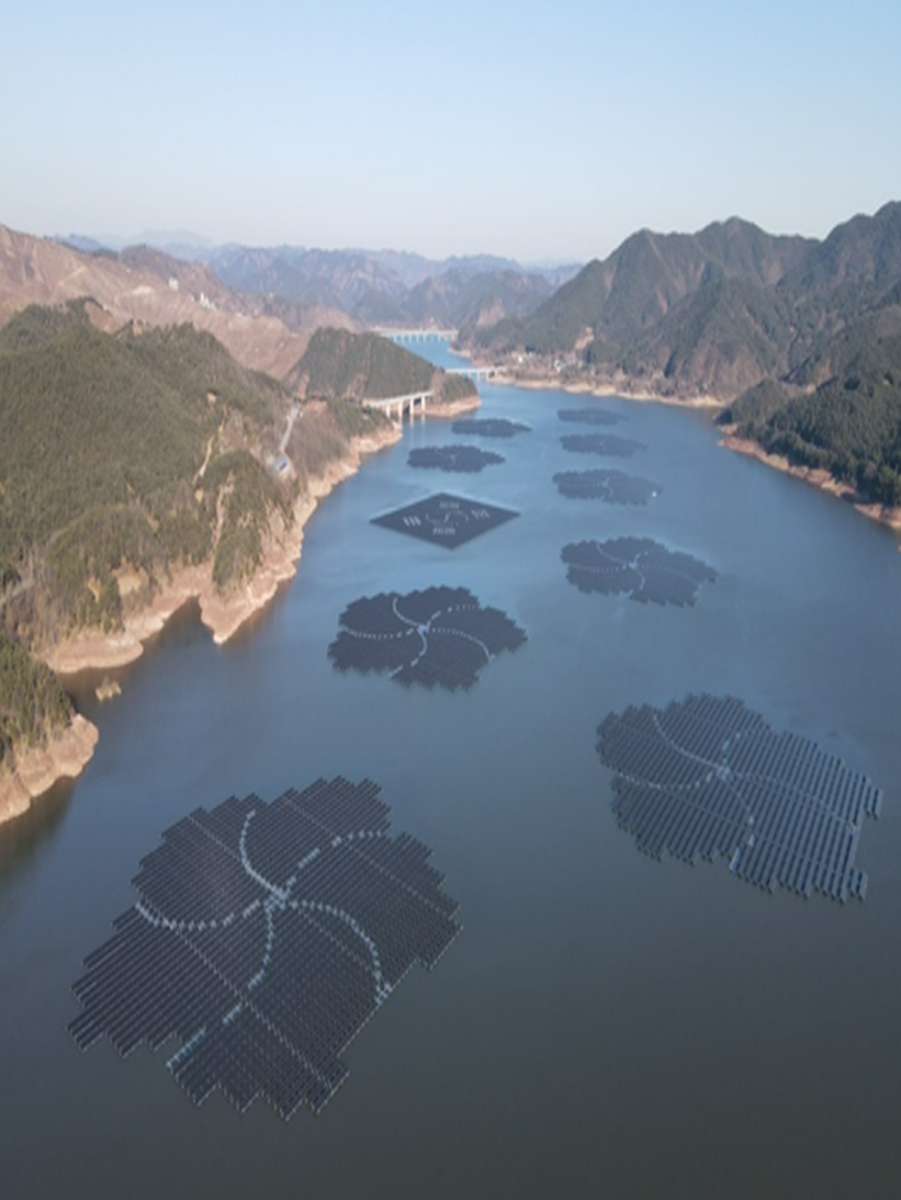
The Ihma Dam solar project is South Korea’s largest floating PV installation, located next to a multifunctional dam. The project has a resident participation model that allows those living within a radius of one kilometer to share the profits from the power supply.
The Ihma Dam floating solar power plant with a capacity of 47.2 MW has been put into operation South Korea.
Located at the Imha Dam east of Andong city in Gyeongsangbuk-do Province, the solar array is the largest floating PV installation located next to a multi-purpose dam in South Korea. The dam houses a 50 MW hydroelectric power station, which means the complex can now rotate transmitting floating solar energy during the day and hydropower at night.
Plans to add the solar panels to the dam first took shape in 2021, when the project was designated as South Korea’s first integrated renewable energy complex. Approval from the electric utility was obtained in 2023 and construction of the solar system began last year. A completion ceremony took place at the end of September with total project cost reaches KRW73.2 billion ($50.2 million).
The project was co-developed by Korea Hydro & Nuclear Power (KHNP) and Korea Water Resources Corporation, together with Gyeongsangbuk-do Province and Andong City, while Top Solar acted as the engineering, procurement and construction contractor.
Scotra, a Seoul-based specialist in the design, production and installation of floating solar structures, provided the floating core technology on which the modules, supplied by Korean manufacturer Shinsung E&G, were mounted.
The solar system consists of 16 floating structures arranged in patterns that resemble both the Korean flag, Taegeukgi, and Mugunghwa, the country’s national flower.
The combined solar-hydro power plant is now expected to generate approximately 61 GWh of clean electricity annually, enough to supply approximately 22,000 households, equivalent to 27% of all households in Andong.
This is what a Scotra spokesperson said pv magazine The project adopted a resident participation model, with 33 local villages investing through a dedicated legal entity. “Over 20 years, approximately KRW 22.2 billion in revenue will be returned to the community,” the company said. “This so-called ‘Sunlight Pension’ is expected to increase the income of local residents and contribute to regional economic revitalization.”
Details available on KHNP’s website add that the model will benefit approximately 4,500 residents living within a 1 km radius of the project to share the profits from the power supply.
South Korea installed 2.5 GW of new solar capacity last year, bringing cumulative PV capacity to more than 29.5 GW, the Korea Energy Agency said.
This content is copyrighted and may not be reused. If you would like to collaborate with us and reuse some of our content, please contact: editors@pv-magazine.com.
Popular content