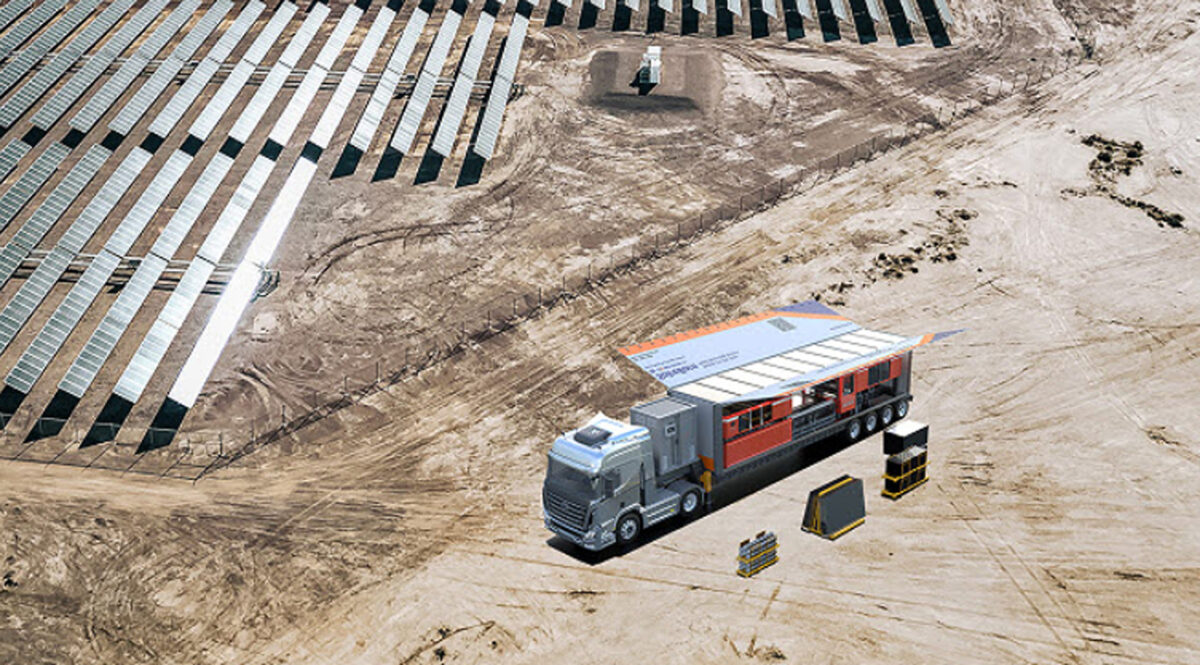
Won Kwang S&T has developed a mobile on-site solar panel recycling system for utility-scale PV installations. The SolreBorn unit can reportedly process up to 2.5 tons of modules per day and improve the economics of solar panel recycling through on-site dismantling and material recovery.
South Korea-based solar project developer Won Kwang S&T has developed a mobile on-site solar panel recycling system designed to reduce transportation costs, landfill waste and CO2 emissions associated with photovoltaic modules at the end of their life.
The system, called SolreBorn, is currently operating in South Korea and targets large-scale solar power plants that are being decommissioned or repowered.
“The system can recycle up to 2.5 tons of solar panels per day,” a company spokesperson said pv magazine. “It has a total power requirement of 35 kW, of which approximately 17% is supplied by solar energy.”
According to the spokesperson, the system works without chemical treatments and uses a partially heated, patented process to separate materials. However, the company declined to provide further technical details, citing ongoing final-stage testing.
The unit is semi-automatic, with manual input and output, and weighs approximately 13 tons. It is transported directly to the solar parks, where the panels are dismantled on site. Intermediate processed materials are then sent to local recyclers or centralized facilities for further treatment, depending on the material flow.
Won Kwang S&T says the system can recover aluminum, glass, silicon, copper and metal powders, with reported purity levels of 100% for aluminum and glass, 98% for silicon and 99% for certain metals, making them suitable for resale to refiners and recyclers.
The company also conducted a case study based on a hypothetical recycling scenario at a 14 MW PV plant in Nevada. The company estimates that transporting about 70,000 solar panels to a recycling facility 100 miles away would require 175 truckloads, cost about $43,750 and generate about 28.3 metric tons of CO₂ emissions.
In contrast, the company claims that using the SolreBorn system in the same scenario would reduce transportation needs to 27 vehicles, reducing estimated transportation costs to $6,750 and emissions to 4.37 tons of CO₂. The reduction is attributed to dismantling on site and volume reduction prior to transport elsewhere.
Won Kwang S&T did not reveal pricing for the system or outline plans for deployment outside South Korea.
In January, Won Kwang S&T entered into a strategic partnership with Victoria-based Livium, a clean energy technology recycling solutions company, to joint venture for the recycling of solar panels.
This content is copyrighted and may not be reused. If you would like to collaborate with us and reuse some of our content, please contact: editors@pv-magazine.com.
Popular content