

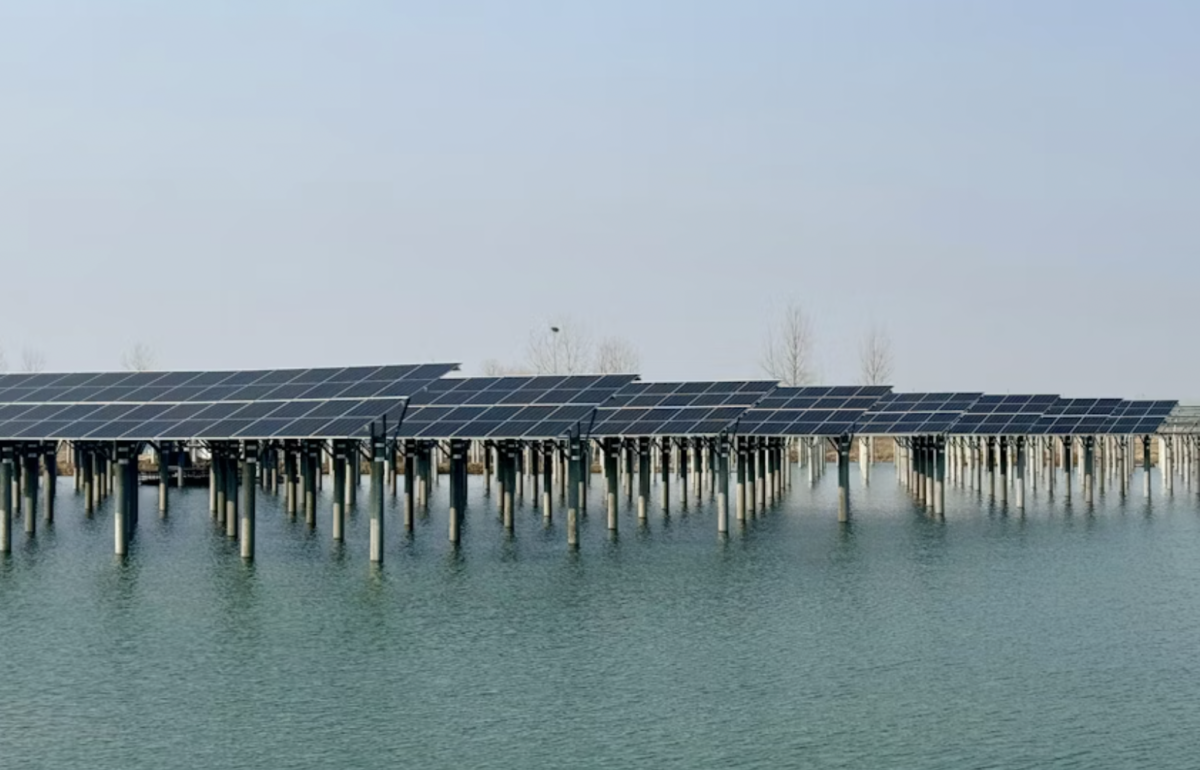
The Taiwanese government has unveiled plans to update environmental impact assessment (EIA) standards for solar projects, following storm-related damage to facilities and growing public concern over the deployment of floating PV systems.
Taiwan’s Ministry of Environment (MoE) said it will revise its EIA standards for PV projects, following public scrutiny of floating solar development and online claims that countries such as Singapore, Indonesia and South Korea already require environmental assessments before building such projects.
In July, Typhoon Danas damaged floating solar power installations in southern Taiwan, fueling public concerns about environmental risks and regulatory gaps. Media reports and online posts claimed the panels lacked storm protection and threatened nearby aquaculture. In response, seven solar industry groups said only 0.3% of capacity was affected and denied any risk of pollution. The incident has fueled scrutiny of floating PV monitoring and prompted online claims that other countries already require environmental impact assessments for such projects.
In response to these claims, Taiwan’s MoE said in a statement this week that most advanced economies do not require separate EIAs for floating solar installations. For example, Germany does not have a mandate for solar EIAs. Japan and South Korea, meanwhile, apply general EIA rules to solar energy, but have not established clear criteria for floating PV systems, according to the MoE.
Singapore has no defined threshold for triggering an EIA, the ministry added, noting that the Southeast Asian city-state’s 60 MW Tengeh Reservoir project has undergone an environmental review as part of a case-specific administrative process, but not under a national mandate. The 141 MW Kranji Reservoir project followed a similar administrative guidance process during permitting, Taiwanese authorities claimed.
The 100 MW Gajah Mungkur Reservoir project in Indonesia has voluntarily completed an environmental and social impact assessment to comply with international financing guarantees. Taiwan’s MoE said this process is similar to Taiwan’s screening mechanism for aquaculture and solar energy coexistence.
The 2.1 GW Saemangeum Reservoir project in South Korea required an EIA because of its size, not because it was a floating solar facility, Taiwanese authorities argued.
The ministry said Taiwan’s revised EIA standards will prioritize environmental protection and be based on scientific data and social consensus.
Taiwan’s broader solar strategy continues to evolve alongside the regulatory framework. In May, Taiwan’s Ministry of the Interior proposed new rules requiring most new, expanded or renovated buildings to have solar panels on their roofs. And in June, Lightsource BP secured TWD6 billion ($200 million) in financing for a 115 MWp solar project for fisheries in Chiayi County, underscoring the country’s growing focus on developing dual-use solar energy.
This content is copyrighted and may not be reused. If you would like to collaborate with us and reuse some of our content, please contact: editors@pv-magazine.com.
