

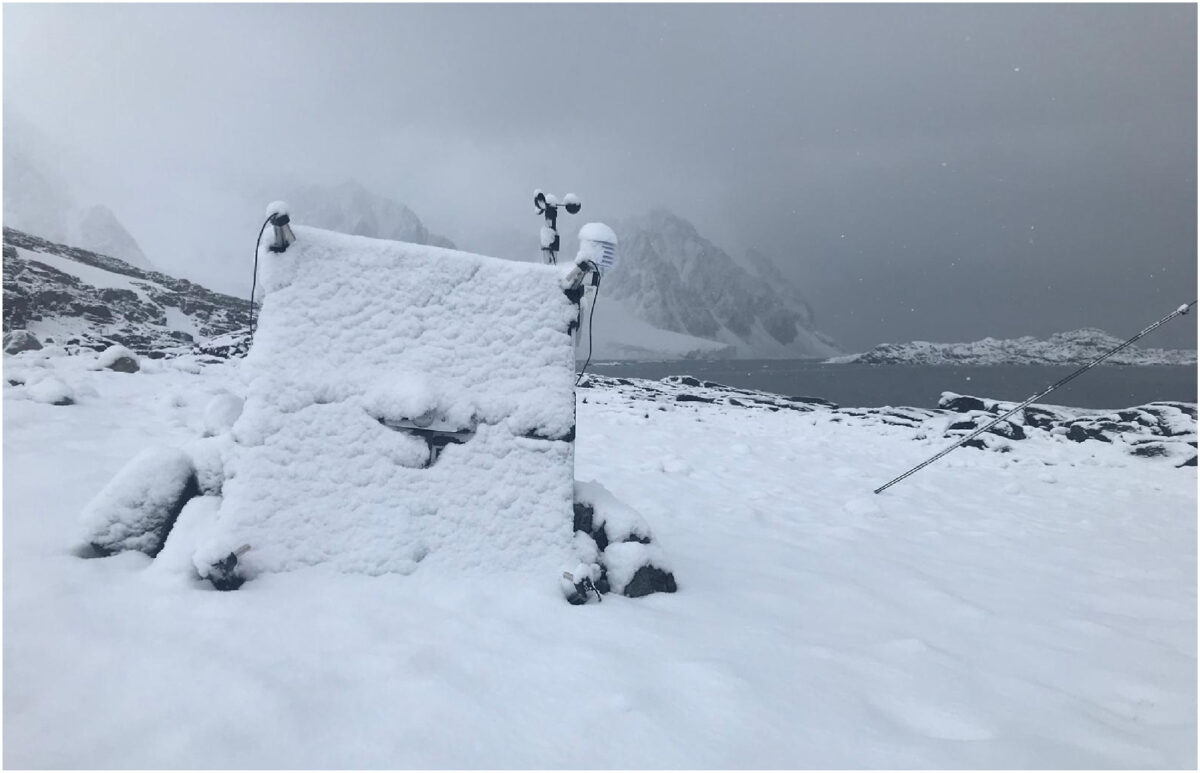
For decades, the Arctic has been dismissed as a solar dead zone. Long winters, heavy snowfall and extreme cold seemed to rule out solar photovoltaics as a serious energy option for communities above the 60th parallel. A new report from the IEA Photovoltaic Power Systems Program (Task 13) challenges this assumption, arguing that solar energy is not only viable in the Arctic, but is increasingly important to the region’s energy security.
The 77-page report, titled “Photovoltaics and energy security in the greater Arctic“ and written by researchers from the US, Canada, Sweden, Norway, Denmark and Finland, comes at a time when PV capacity in the Arctic is growing by 46 to 145% per year in some regions. Total installed capacity above 60°N now stands at around 1,400 MWp in 2023 – still a small fraction of global capacity, but the trajectory is unmistakable.
Seasonal problems
First, when planning a PV project at higher latitudes, seasonality must be taken into account: around the summer solstice in June, areas at high latitudes receive large amounts of solar radiation. In contrast, areas at high latitudes receive little solar radiation around the winter solstice in December (or none at all above the Arctic Circle at 66.56°N).
Bridging the gap between the intensity of summer and the scarcity of winter is the defining integration challenge for PV systems in the Arctic, and one that is discussed in detail throughout the report.
The case for Arctic solar energy
The report’s central argument rests on a counterintuitive insight: cold is not the enemy of solar panels. It is often an advantage.
Silicon PV cells produce more power at lower temperatures because the band gap of the semiconductor increases, causing the voltage to increase. The report cites data from a south-facing system in Alaska, where the average daytime module temperature was just 15°C, well below the standard test conditions of 25°C under which panels are rated. In cold climates, modules may also degrade more slowly, with an average performance loss of only -0.37%/year measured across 16 systems above 59°N, compared to -0.75%/year for systems in the continental United States.
Snow, meanwhile, is a double-edged factor. It can block panels and tension systems, but it also dramatically increases the albedo of the ground, potentially increasing the strengthening at the back of bifacial modules to levels unseen at lower latitudes. The report notes that the two-sided amplification increases with latitude precisely because of prolonged snow cover, increased diffuse light and low solar elevation angles. The recommendation is clear: bifacial modules should be the default technology choice for deployment in the Arctic.
Vertical arrays as a key for high latitudes
One of the most striking practical findings from the report concerns system orientation. East-west oriented vertical bifacial arrays are particularly promising above 60°N. Their nearly 90° tilt naturally sheds snow, avoiding the extended periods of zero production that fixed-tilt systems suffer in winter. They also produce power earlier and later in the day, better matching electricity demand curves and reducing the ‘cannibalization effect’ that depresses wholesale prices at midday.
Field data from a vertically mounted agrivoltaic system in Sweden (59.55°N) illustrate this point. In December 2023, the vertical system outperformed its south-facing fixed-tilt neighbor on 28 out of 31 days, averaging 6.1 kWh/kW/month, compared to just 1.32 kWh/kW for the tilted setup. On 14 of those days, the tilted system produced no results at all due to snow cover.
Hidden risks within foundations
However, there is one part of the report that deserves special attention from developers: the discussion about frost heave and permafrost. Two detailed case studies – a 699 kW system in Luleå, Sweden, and a 563 kW array in Fairbanks, Alaska – document costly structural failures caused by ground freezing that installers failed to adequately anticipate.
In Luleå, perforated C-profile posts ensured that the clay substrate got a grip on the scaffolding, causing visible deformation in the first winter. The entire racking system had to be replaced with deeper, non-perforated posts. In Fairbanks, spiral piles in a historically filled slough zone were jacked out of the ground and sunk, causing module failure and requiring partial disassembly and reinstallation at 18 feet (5.5 m) depth.
The lesson from both cases: standard geotechnical investigations designed for construction and road works are not suitable for PV racks in frost-sensitive soils. Developers should commission studies using a PV-specific methodology, and take into account the less obvious effect of the array itself.
In permafrost areas the problem becomes even greater. Monitoring data from an array in Kotzebue, Alaska, shows that snow drifts accumulating behind solar rows warm the permafrost, potentially destabilizing foundations over time. According to the report, solar panels can act as snow fences in these environments, and the long-term structural impacts remain poorly understood.
The problem of data scarcity
For developers looking to finance Arctic projects, the report identifies a persistent obstacle: the near-total absence of high-quality irradiation data above 60°N. Geostationary satellites decrease in accuracy above 65° latitude. Satellites in polar orbit have difficulty distinguishing snow from clouds. Ground-based measurement networks are scarce, and existing networks face unique maintenance challenges, such as rime icing on radiometer domes, malfunctioning tracking mechanisms, and limited site access in winter.
As a result, energy yield assessments for projects in the Arctic involve significantly greater uncertainty than those at lower latitudes, leading to complicated financing. The authors call for investments in heated, ventilated measuring instruments, strict maintenance protocols and extensive ground station networks in high-latitude areas.
The way forward
The country-level data in the report paints a picture of a region making rapid progress despite obstacles. Norway’s PV capacity above 60°N reached 173 MW in 2023, an annual growth of 145%, with the country aiming to generate 8 TWh of solar energy by 2030. Finland has passed the 1 GW mark nationally and expects to grow to 9.1 GW by 2030. Arctic Sweden’s installed base reached 350 MW with a five-year average growth rate of 58%/year, and utility-scale ground-mounted parks. are now entering the licensing pipeline at gigawatt scale.
In North America the story is different, but equally dynamic. Alaska’s total PV capacity was approximately 30 MW at the end of 2023, with the largest single installation at 8.5 MW and an announced 45 MW project for the Railbelt grid. More than 150 isolated, diesel-dependent rural microgrids are receiving funding for solar-plus-storage systems, some of which are already capable of 100% sustainable operation under favorable conditions.
The overarching message of this report is that the Arctic solar market is real, growing and has specific technical requirements that the global PV industry has not yet fully met. Bifacial vertical arrays, PV-specific geotechnical standards, Arctic snow loss modeling, and comprehensive irradiance data sets are not nice-to-haves, but rather the foundations upon which a credible high-latitude solar industry must be built.
Author: Ignacio Landivar
To access the full “Photovoltaics and energy security in the greater Arctic”, you can download it here.
IEA PVPS Task 13 focuses on international cooperation to improve the reliability of photovoltaic systems and subsystems. This is achieved by collecting, analyzing and disseminating information about their technical performance and sustainability. This creates a basis for their technical evaluation and develops practical recommendations to increase their electrical and economic efficiency in different climatic regions.
The views and opinions expressed in this article are those of the author and do not necessarily reflect those of the author pv magazine.
This content is copyrighted and may not be reused. If you would like to collaborate with us and reuse some of our content, please contact: editors@pv-magazine.com.
