

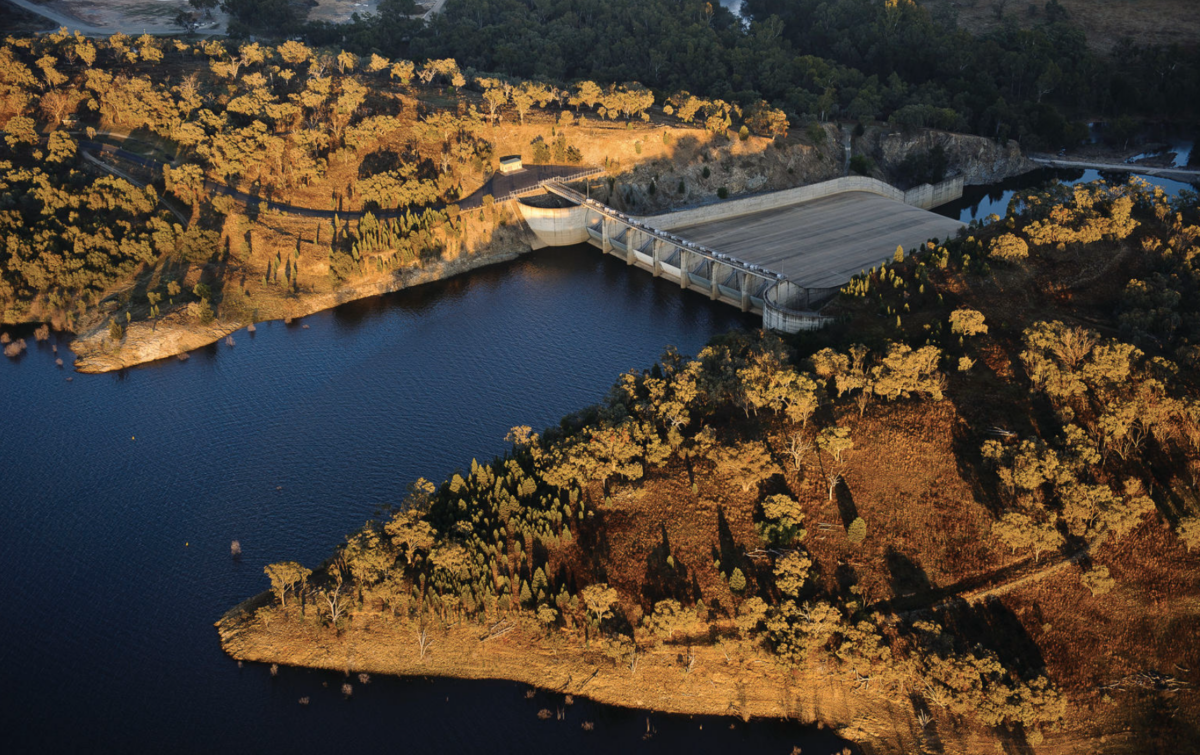
The New South Wales government in southeastern Australia has granted priority status to two large-scale pumped hydro projects, which provide long-term energy storage (LDES) to strengthen the reliability of the electricity grid.
The New South Wales government earlier this month granted priority planning status to two pumped hydro projects, with a total capacity of 1.8 GW, with the aim of accelerating the assessment of proposals to strengthen the reliability of the electricity grid and support the transition to renewable electricity.
Zen Energy’s AUD 3.5 billion ($2.47 billion) Western Sydney pumped hydroelectric power station project at Lake Burragorang and the AUD3.6 billion Phoenix Pumped Hydro project being developed by Acen Australia near Mudgee in central-west New South Wales have been declared Critical State Significant Infrastructure (CSSI).
While both projects are still in the early planning stages and will undergo further assessment and consultation with the community, New South Wales Energy Minister Penny Sharpe said the statement highlights their strategic importance to the state.
“These projects will help stabilize the electricity grid, support energy reliability during peak periods and support the transition away from coal-fired energy,” she said.
Batteries have emerged as the long-term energy storage technology of choice in Australia’s energy transition, with pumped hydro struggling to compete in terms of initial capital expenditure and construction complexity and timelines.
Australia’s flagship, massive pumped hydro project Snowy 2.0 project in New South Wales, has been plagued by cost increases and construction delays since its inception.
The project, a 2.2 GW expansion of Snowy’s existing pumped hydro system first announced in 2017, was originally scheduled to be operational in 2021 at a cost of approximately AUD 2 billion. The cost of the project is now expected to exceed AUD 12 billion and construction is expected to be completed by December 2028.
While the trials associated with the Snowy project have drawn criticism Of some, Sharpe said “long-term storage such as pumped hydro is essential to building a modern energy system that works for households, businesses and industry across New South Wales.
Acen Australia Managing Director David Pollington said the projects being designated as State Critical Infrastructure is a major step forward for pumped hydro storage as a technology and reflects the role the projects must play within the National Electricity Market (NEM).
“Phoenix provides the kind of affordable, critical infrastructure that shapes an evolving energy system, supports new renewable generation, smoothes price volatility in the wholesale energy market and unlocks opportunities across the electric grid,” he said.
Acen’s project, the first pumped hydro project to… Multi-year Energy Service Agreement Under the New South Wales Energy Roadmap, an energy generation capacity of 800 MW and up to 15 hours of storage is proposed.
“It will deliver reinforcement at a scale that can support renewable energy zones and manage extended periods of low wind or solar power,” the developer said.
The Western Sydney project being developed by Zen will have 1GW of power generation capacity and up to 16 hours of storage.
New South Wales Planning Minister Paul Scully said projects are a crucial step in delivering robust, long-term storage for the state’s evolving energy system. are the type of infrastructure that underpins a secure, low-emissions future.
“These two pumped hydro projects could play a crucial role in supporting our energy security, as together they could generate enough energy to power every home in Greater Perth during peak demand,” he said.
Scully said securing CSSI status provides clear momentum to streamline approvals and accelerate progress, but does not eliminate the need for research into the projects to undergo extensive review, including public exhibition and an opportunity for community submissions.
Zen has previously said that if all approvals and a social license are obtained, construction could begin on the site in 2027 and the property should be operational in 2031.
Acen said it expects the environmental impact statement for the Phoenix project to be submitted to the New South Wales government later this year. Construction is expected to begin in 2028 and completion is expected to occur in 2032.
New South Wales is targeting 16 GW of new renewable energy generation by 2030 42 GWh new long-term storage infrastructure by 2034.
This content is copyrighted and may not be reused. If you would like to collaborate with us and reuse some of our content, please contact: editors@pv-magazine.com.
