

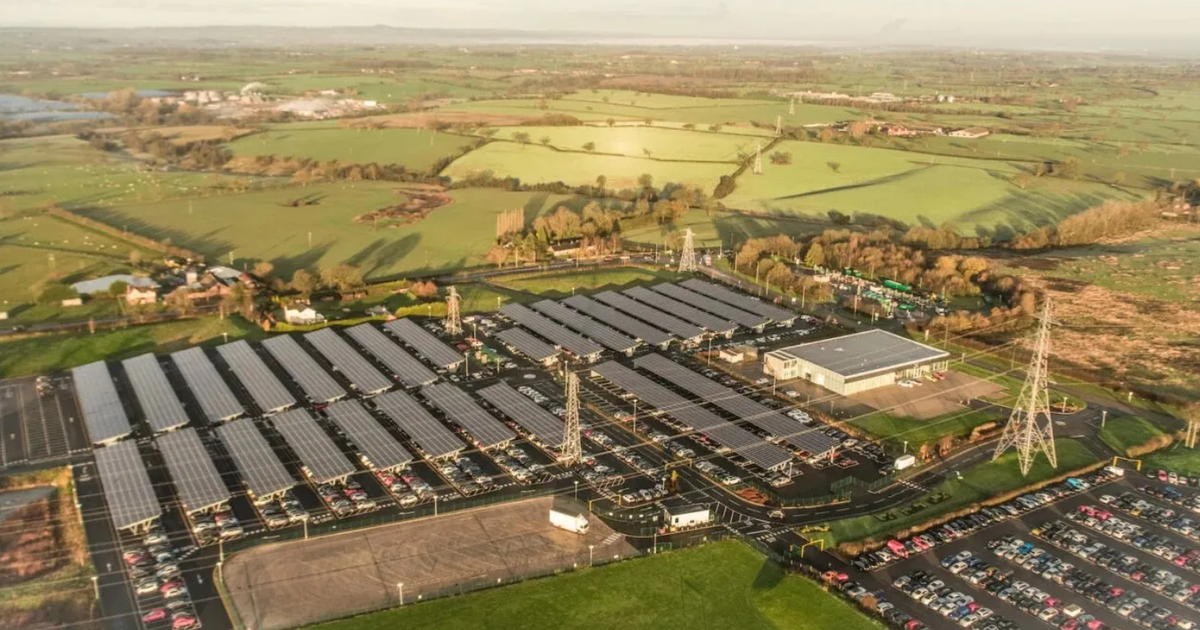
The UK government has published its response to the electric vehicle (EV) charging section of its consultation on solar carports, showing broad industry support for streamlining the deployment of EV infrastructure, while the core question of the solar mandate remains unanswered.
The government’s response relates to part 2 of the call for evidence, which focused on EV charging infrastructure and planning policy.
The consultation, that DESNZ launched in Maysought views on mandating solar canopies on new car parks alongside reforms to electric vehicle charging planning processes.
Of the 125 responses received during the consultation period from 7 May to 18 June 2025, the vast majority were in favor of simplifying the installation processes for EV charging points.
Respondents supported expanding permitted development rights for electric vehicle charging and calling for better training and guidance for officials from both industry and local governments.
The government confirmed that it will continue a series of consultations and policy developments based on these findings, although specific details remain limited.
Several respondents emphasized the importance of integrating solar and battery storage systems with EV infrastructure, and proposed incentives to encourage co-location and reduce demand on the electric grid.
Industry interest in smart charging and vehicle-to-grid (V2G) technologies emerged as a key theme, with stakeholders highlighting the potential of these solutions to increase demand flexibility. The response also addressed cross-paving charging solutions, although the government has not yet explained its position on these technologies.
Notably absent from this initial response is an analysis of Chapter 1, which addressed the core proposal to require sun canopies in parking lots. The government stated that “a response to section 1 of the call for evidence will be published here shortly”, leaving the solar industry awaiting clarity on the potential mandate.
The consultation’s focus on solar installations in car parks is in line with the growing recognition of the sector’s potential.
Previous analyzes have shown this British petrol stations alone could generate 124 GWh annually of solar installations, while commercial carport options remain largely untouched in retail and office developments.
The government’s Clean Power 2030 Action Plan calls for a rapid acceleration of solar deployment from around 18 GW currently to at least 45-47 GW by 2030.
Solar carports represent a major opportunity within this expansion, offering the dual benefits of renewable energy generation and electric vehicle charging infrastructure without requiring additional land use.
The partial response suggests the government is prioritizing EV infrastructure policy development while taking more time to consider the solar mandate proposal.
British government wants to reduce energy bills by covering policy costs
In other news, Britain confirmed yesterday (November 27) that this will happen reduce household energy bills by reducing green taxesat a cost to the Treasury of approximately £2.3 billion.
In yesterday’s Autumn Budget 2025 statement at Westminster, Chancellor Rachel Reeves outlined plans to reduce average household energy bills by around £150 by abolishing the Energy Company Obligation (ECO) scheme.
The Office for Budget Responsibility (OBR) Economic and Budget Outlook Report (which was accidentally released before the Budget was announced) states that the Government will also partly pay for the Renewable Energy Obligation Scheme from 2026 to 2029, at a cost of around £2.3 billion.
The RO scheme is a legacy subsidy for sustainable energy generation, with electricity suppliers currently passing on the costs to consumers.
The government will cover 75% of domestic RO until 2029, resulting in lower household energy bills over the next four years.
