

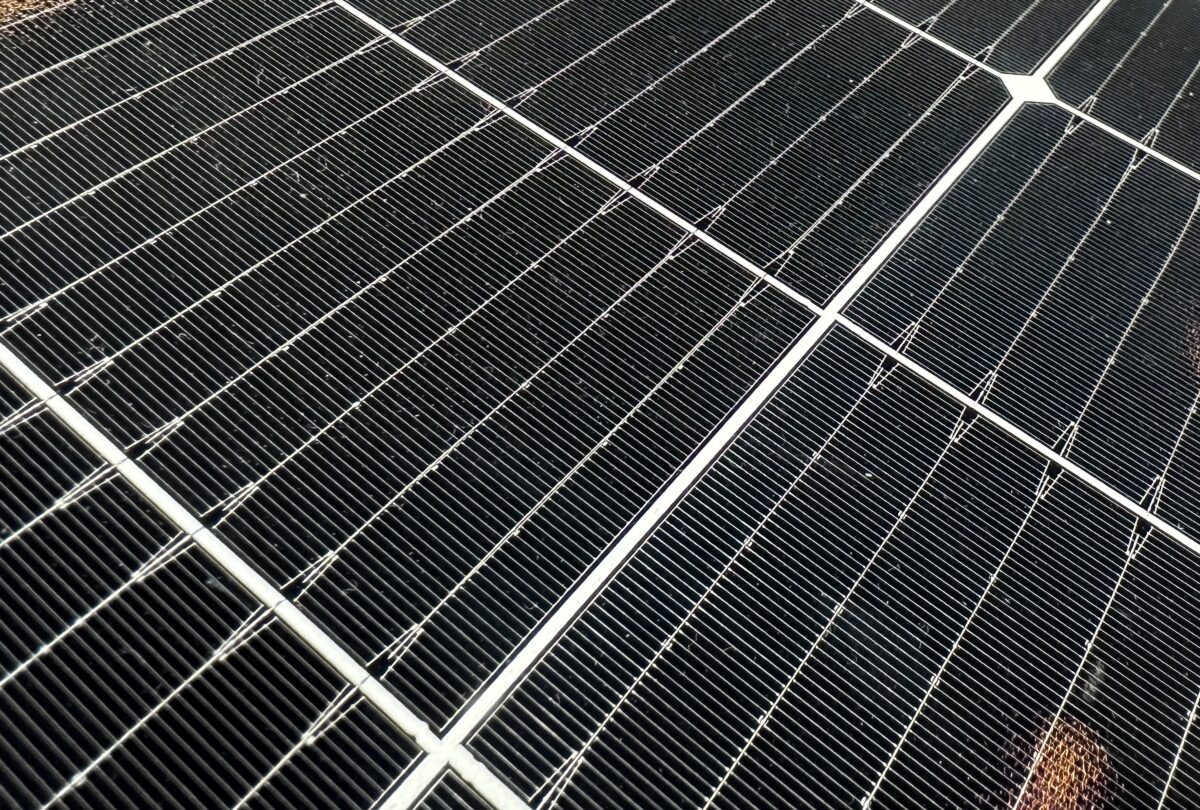
A new Perspectives study into the future of the global PV supply chain outlines how module prices, performance and lifespans may evolve over the next 25 years. The work reflects a collaboration between leading solar energy research institutions worldwide. One of the authors of the study, the director of the Fraunhofer Institute for Solar Energy Systems (ISE), said pv magazine that the efficiency of solar modules and cells could exceed 35% by 2050, with panel prices expected to fall by a factor of two.
An international research team of leading solar PV institutions and companies has identified the key R&D trends for what they call the new era of multi-terawatt solar photovoltaics.
The group members were all part of the 4th Terawatt Workshop, one of a series of high-level international PV workshops led by Germany’s Fraunhofer Institute for Solar Energy Systems ISE (Fraunhofer ISE), the The US Department of Energy’s National Laboratory of the Rockies and Japan’s Advanced Industrial Science and Technology (AIST).
In their new article: “Historical and future learning for the new era of multi-terawatt photovoltaics”, recently published in Nature energyThe group predicts continued improvements in the price, performance and reliability of PV systems, in addition to a growing focus on resource use, emissions and recycling in future design and production.
“The efficiency of solar modules could exceed 35% by 2050 via tandem structures,” says Andreas Bett, director of Fraunhofer ISE, in an interview with pv magazine. He added that cell efficiency could exceed 36%, with lower losses between cells and modules than today. “By the end of the first half of this century, solar panel prices could fall by a factor of two.”
Bett said both higher efficiency and lower costs will be critical to the energy transition, but he sees efficiency as the most important factor. “Higher efficiency means less material and less land are required for PV installations, which improves sustainability and reduces overall system costs,” he said, adding that the lifespan of solar panels will “certainly” exceed 40 years.
The researchers highlighted that the PV industry has consistently exceeded previous projections in terms of module cost, performance and integration. Innovations in tandem architecture and manufacturing are expected for PV technologies such as crystalline silicon (c-Si), cadmium telluride (CdTe) and copper, indium, gallium and diselenide (CIGS) that could and should enable new players to enter the market, creating a more globally diversified supply chain for cells and modules.
They also explained that the new tandem PV technologies will need to clearly define performance, ensure predictable energy yields, detect early failures and manage unknown degradation risks, with the latter also challenging for current Si modules and critical for emerging perovskite-based technologies.
The study predicts that global solar energy production capacity could reach around 3 TW by 2050 and highlights that sustainability-driven learning has already reduced costs and will become increasingly important for the PV industry to secure the resources needed for future growth.
“Topics for future PV community meetings, such as the 4th Terawatt Workshop that informed this perspective, may shift to addressing system and end-user needs,” the scientists concluded. “Investment, production and adoption today will deliver transformative dividends globally tomorrow in terms of economic growth, productivity, job creation and reduced pollution and poverty.”
The research group included scientists from the German Forschungszentrum Jülich GmbH, the Japanese solar glass manufacturer AGC Inc, the Finnish LUT University, the Chinese Yangtze Institute for Solar Technology, the British perovskite solar specialist Oxford Photovoltaics Ltd, the Chinese module manufacturer Trina Solar, the Saudi KAUST Solar Center, the King Abdullah University of Science and Technology (KAUST), the University of New South Wales (UNSW) in Australia, the American thin-film manufacturer First Solar, Japan’s National Institute of Advanced Industrial Science and Technology (NEDO) and Singapore-based PV manufacturer Maxeon, among others.
This content is copyrighted and may not be reused. If you would like to collaborate with us and reuse some of our content, please contact: editors@pv-magazine.com.
