
Close Menu
  • News
  • Industry
  • Solar Panels
  • Commercial
  • Residential
  • Finance
  • Technology
  • Carbon Credit
  • More
    • Policy
    • Energy Storage
    • Utility
    • Cummunity
What's Hot

Mitsubishi Electric Trane announces new heat pump line for hydronic heating – SPE

March 6, 2026

Origis is developing a 413 MW solar portfolio in West Texas

March 6, 2026

New Jersey expands state community solar program by 3 GW

March 6, 2026
Facebook X (Twitter) Instagram
Solar Energy News
Friday, March 6
  • News
  • Industry
  • Solar Panels
  • Commercial
  • Residential
  • Finance
  • Technology
  • Carbon Credit
  • More
    • Policy
    • Energy Storage
    • Utility
    • Cummunity
Solar Energy News
Home - News - The entire solar supply chain has now moved to the US
News

The entire solar supply chain has now moved to the US

solarenergyBy solarenergyOctober 30, 2025No Comments3 Mins Read
Facebook Twitter Pinterest LinkedIn Tumblr Email
Share
Facebook Twitter LinkedIn Pinterest Email

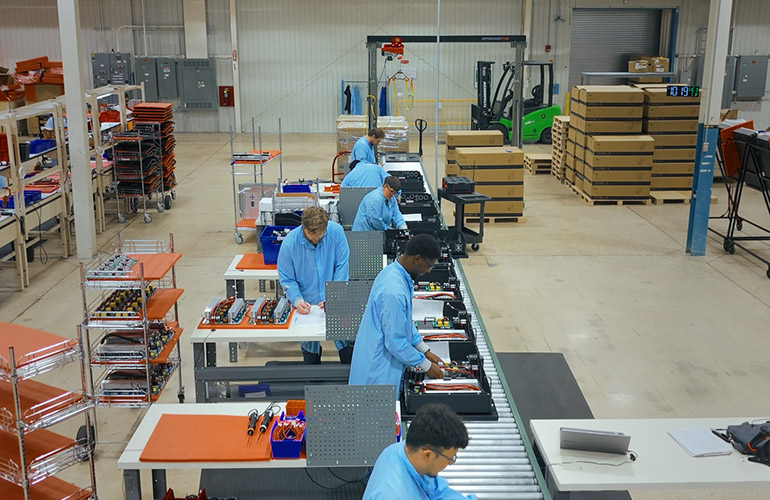
EG4’s production facility in Texas.

New data from the Solar Energy Industries Association (SEIA) shows that the entire solar supply chain has been redesigned and that U.S. manufacturing capacity has grown in every segment of the solar and storage supply chain. With news of Corning’s new ingot and wafer facility coming online in the third quarter, the United States now has the capacity to produce every major part of the solar supply chain. However, this progress could all be in jeopardy if the Trump administration continues its attacks on solar energy.

According to SEIA Solar & Storage Supply Chain DashboardSince the end of 2024, U.S. manufacturing capacity has increased in every major segment of the solar and storage supply chain. As of October 2025, the United States has surpassed 60 GW of domestic solar panel production capacity, a 37% increase from December 2024.

The strong increase in the production of downstream components such as modules has ensured that there is sufficient demand for upstream production. Since the end of 2024, solar cell production capacity in the US has more than tripled, from 1 GW to 3.2 GW.

Battery cell production for stationary electricity storage applications has increased to over 21 GWh, enough to power the city of Houston from dusk to dawn.

“This growth is a testament to the power of American innovation,” said Abigail Ross Hopper, president and CEO of SEIA. “We’re building factories, hiring American workers and showing that solar energy means ‘made in America’ energy.”

U.S. solar inverter production has grown by nearly 50% since the end of last year, with capacity increasing from 19 GW to 28 GW. US production of mounting systems has also continued to grow since 2024: by 14% and with 23 new factories.

See also  Dunamis provides HV infrastructure for Lightsource bp

The U.S. solar manufacturing pipeline remains robust, with 23 GW of solar module capacity, more than 34 GW of solar cell capacity, 25 GW of inverter capacity and 95 GWh of battery cell capacity under construction or announced. But the Trump administration’s policies, regulations and trade actions that have contributed to uncertainty in the industry could slow this progress and dampen demand for the products produced by U.S. solar and storage manufacturers.

“We are seeing strong growth today, but that momentum is not guaranteed. If the administration continues on this path, they risk encouraging investment abroad, stifling job creation, raising costs for consumers, and transferring America’s manufacturing advantage to our competitors,” Hopper continued. “This industry has proven what is possible when companies have the certainty to invest. If the government does not reverse its damaging actions that have undermined market certainty, energy costs will rise even further and the next wave of factories and jobs could be at risk.”

News item from SEIA

Source link

chain entire moved solar supply
Share. Facebook Twitter Pinterest LinkedIn Tumblr Email
solarenergy
  • Website

Related Posts

Origis is developing a 413 MW solar portfolio in West Texas

March 6, 2026

New Jersey expands state community solar program by 3 GW

March 6, 2026

How to address imbalance datasets in solar panel dust detection

March 5, 2026
Leave A Reply Cancel Reply

Don't Miss
Solar Industry

The impact of dust on PV systems in dry coastal environments

By solarenergyOctober 31, 20250

A Saudi-Egyptian research team examined the effects of four types of dust on photovoltaic panels…

SolarEdge Rebounds on Q1 WIND AREA – PV Magazine International

May 7, 2025

Solar Servicing acquires mosaic activa, resumes PV -Loingen

September 25, 2025

mixed evidence from the German hydrogen market – SPE

October 17, 2025
Stay In Touch
  • Facebook
  • Twitter
  • Pinterest
  • Instagram
  • YouTube
  • Vimeo
Our Picks

Mitsubishi Electric Trane announces new heat pump line for hydronic heating – SPE

March 6, 2026

Origis is developing a 413 MW solar portfolio in West Texas

March 6, 2026

New Jersey expands state community solar program by 3 GW

March 6, 2026

How to address imbalance datasets in solar panel dust detection

March 5, 2026
Our Picks

Mitsubishi Electric Trane announces new heat pump line for hydronic heating – SPE

March 6, 2026

Origis is developing a 413 MW solar portfolio in West Texas

March 6, 2026

New Jersey expands state community solar program by 3 GW

March 6, 2026
About
About

Stay updated with the latest in solar energy. Discover innovations, trends, policies, and market insights driving the future of sustainable power worldwide.

Subscribe to Updates

Get the latest creative news and updates about Solar industry directly in your inbox!

Facebook X (Twitter) Instagram Pinterest
  • Contact
  • Privacy Policy
  • Terms & Conditions
© 2026 Tsolarenergynews.co - All rights reserved.

Type above and press Enter to search. Press Esc to cancel.