

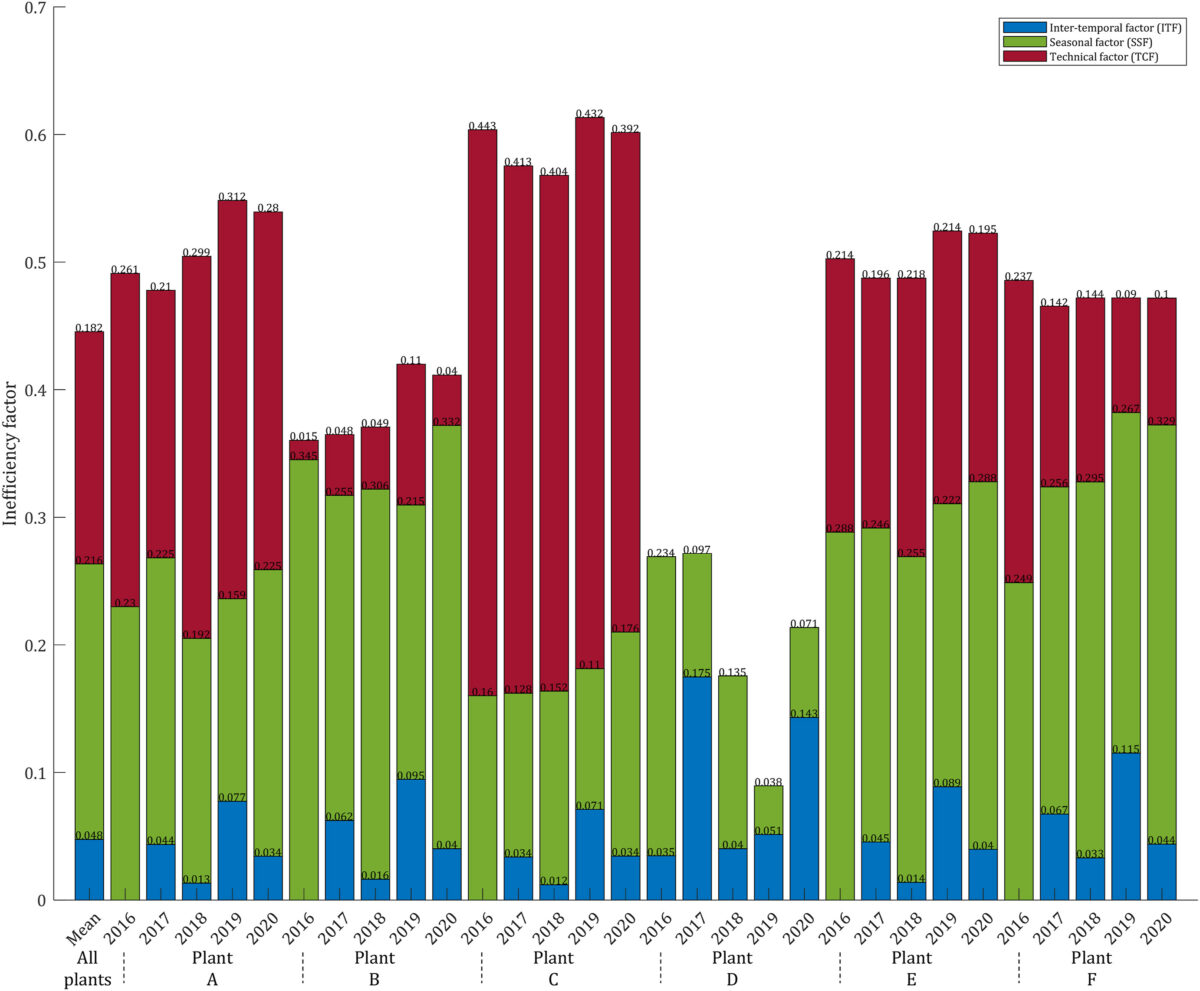
Scientists in Japan have investigated the impact of seasonal, meteorological factors on the performance of solar energy installations and found that the average inefficiency of energy generation has reached a significant level. The findings suggest that optimal location for power plants requires careful consideration of meteorological and geographic data.
Scientists from Japan’s Oita University investigated the impact of seasonal and meteorological factors on the efficiency of electricity generation in ground-mounted solar power plants.
For their modeling, the researchers used meta-frontier data envelopment analysis (DEA), which assesses the relative efficiency of decision making units (DMUs) – in this case power plants – against their limits or best achievable performance.
“The meta-frontier DEA framework has been implemented to quantify the impact of seasonality and technical factors on generation efficiency at the monthly level,” they explained. “This study also combines the Monte Carlo method with DEA to identify the impact of variable input and output factors on the uncertainty of generation efficiency values and discuss the robustness of the results.”
The scientists examined six existing utility-scale PV power plants in Japan, two in Oita Prefecture, three in Kumamoto Prefecture and one in Yamaguchi Prefecture. Data points were collected monthly from January 2016 to December 2020.
With the exception of one facility, all installations had a DC/AC ratio greater than 1, indicating that the rated capacity of the PV array is greater than the rated capacity of the inverter. Therefore, electricity generation that exceeds the inverter’s capacity is partially cut off when solar radiation reaches a certain level, and during periods of lower solar radiation, this improves electricity generation as there is no bottleneck at the inverter.
“Factories A, B and D underwent an expansion of the PV power systems, increasing the rated capacity of the PV array, the DC/AC ratio and the number of installed modules,” the academics pointed out. “Installation C consists of PV modules composed of monocrystalline solar cells, while the other factories have PV modules composed of polycrystalline solar cells.”
To calculate the inefficiency of the plants, the researchers took four parameters into account – solar radiation, temperature, number of modules and the nominal capacity of the PV arrays – and compared these with the measured, actual electricity production. DEA-based efficiency (DBE) from 0 to 1 was used to compare different years and stations, with a higher value indicating higher performance.
“Looking at the average DBE over the entire analysis period, Plant D has the highest DBE value of 0.796, while Plants B and F have DBE averages of only 0.615 and 0.527, respectively, for the entire analysis,” the researchers said. “The average inefficiency factors intratemporal factor (ITF), seasonal factor (SSF) and technical factor (TCF) were 0.048 [proportion to DEA-based inefficiency (DBI): 10.7%]0.216 (48.5%) and 0.182 (40.9%) respectively.”
According to the results, the average power generation inefficiency during the study period was 0.445, mainly due to seasonal and technical factors.
“Using PV modules with higher electricity production levels can increase the DC/AC ratio, increasing power generation, improving efficiency and contributing to a stable power supply, thereby reducing daily and seasonal fluctuations in power generation. Because these factors are difficult to control once a power plant is in operation, it is important to select an optimal location for power plants based on meteorological and geographical data,” the scientists conclude.
Their results were presented in “How do seasonal and technical factors affect the generation efficiency of photovoltaic power plants?,” published in Renewable and sustainable energy assessments.
This content is copyrighted and may not be reused. If you would like to collaborate with us and reuse some of our content, please contact: editors@pv-magazine.com.
