
Close Menu
  • News
  • Industry
  • Solar Panels
  • Commercial
  • Residential
  • Finance
  • Technology
  • Carbon Credit
  • More
    • Policy
    • Energy Storage
    • Utility
    • Cummunity
What's Hot

Dutch solar owners asked to switch off during peak periods to ease the distribution crisis

June 7, 2026

The hydrogen flow: Toyota demonstrates its racing prototype on liquid hydrogen

June 7, 2026

Era of electrification exposing Australia’s weakest link

June 6, 2026
Facebook X (Twitter) Instagram
Solar Energy News
Sunday, June 7
  • News
  • Industry
  • Solar Panels
  • Commercial
  • Residential
  • Finance
  • Technology
  • Carbon Credit
  • More
    • Policy
    • Energy Storage
    • Utility
    • Cummunity
Solar Energy News
Home - Policy - The Netherlands is recording more negative energy prices – SPE
Policy

The Netherlands is recording more negative energy prices – SPE

solarenergyBy solarenergyAugust 16, 2024No Comments3 Mins Read
Facebook Twitter Pinterest LinkedIn Tumblr Email
Share
Facebook Twitter LinkedIn Pinterest Email

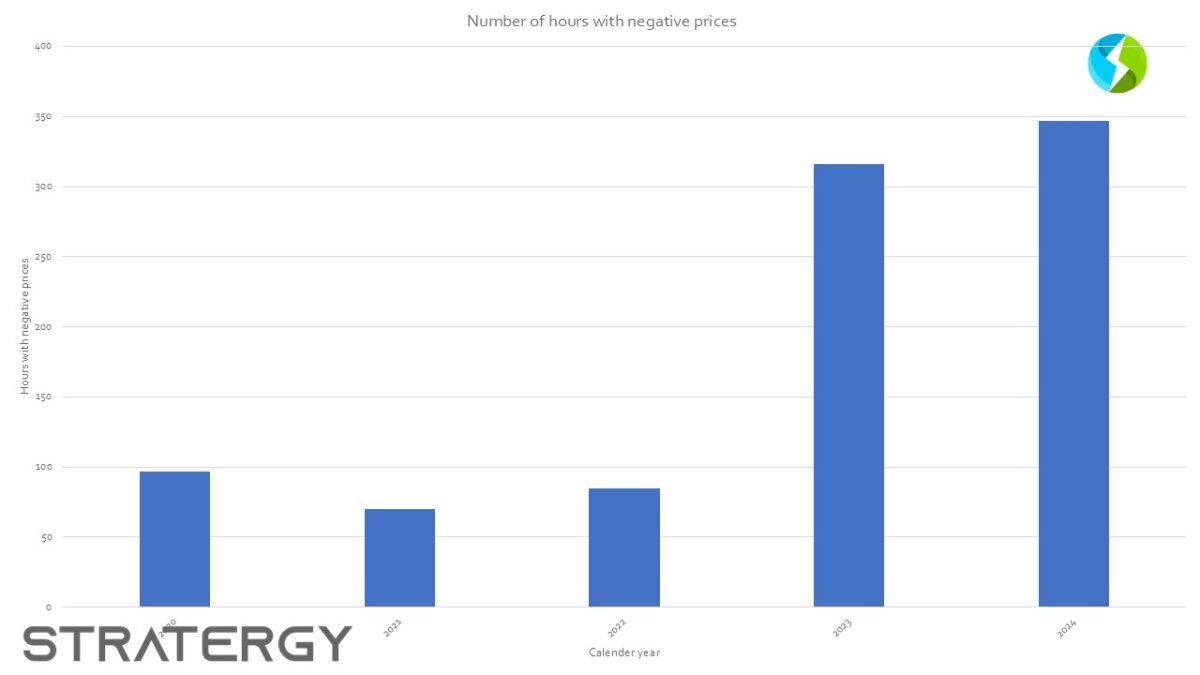
The Netherlands has recorded more hours of negative energy prices between January 1 and August 17 than in all of 2023. The Dutch research agency Stratergy has noted a clear link between expected solar and wind energy and negative hourly prices in the coming day. market.

August 16, 2024 Emiliano Bellini

Dutch EPEX SPOT Day-ahead market registered 347 hours of negative prices between January 1 and August 14, according to figures from the Dutch consultancy Stratergy. In 2023, the total number of hours of negative prices was 316 for the full year.

“The expectation is that the total this year will be between 450 and 550 hours, depending on further developments in gas prices,” says analyst Jan Willem Zwang. pv magazine. “There is a clear connection between the expected solar and wind energy for the next day and the negative hourly prices on the day-ahead market. Negative prices are most common during the day in the summer months, especially on weekends, public holidays and during holiday periods when expected consumption is lower. Furthermore, it is clear that slightly stronger winds during the nights and the colder months directly contribute to negative hourly prices.

Zwang said growth in solar and wind capacity is expected to significantly increase the number of hours with negative prices in the coming years. He predicts a substantial increase in negative price hours as renewable energy capacity increases.

“By 2025 we will probably see between 550 and 750 hours,” he added, noting that these results depend on the development of gas prices and the bidding strategies of renewable energy producers. “By 2026 between 800 and 1,200 hours. For 2027, 2028 and 2029, forecasts vary between 1,000 and 1,500 hours.”

See also  The scoop for solar policy: July 2024

Producers are increasingly expected to avoid selling on a day-ahead basis when prices are negative, especially for new products SDE++ scheme. Zwang added that congestion and capacity-restricting contracts could lead to fewer and less severe negative day-ahead prices, even though more hours of negative prices have been observed this year.

“For example, last year July had 65 hours of negative prices at an average price of -€51.67 ($56.75)/MWh, while this year 81 hours of negative prices were recorded at an average price of -€22.76/ MWh,” he says. said.

In 2020, the average negative price was –€9.57/MWh, but in the following two years it was -€14.82/MWh and -€34.61/MWh respectively. In 2023 this amounted to €26.06/MWh and so far this year it was €22.26/MWh.

This content is copyrighted and may not be reused. If you would like to collaborate with us and reuse some of our content, please contact: editors@pv-magazine.com.

Popular content

Source link

Energy negative Netherlands prices recording SPE
Share. Facebook Twitter Pinterest LinkedIn Tumblr Email
solarenergy
  • Website

Related Posts

Dutch solar owners asked to switch off during peak periods to ease the distribution crisis

June 7, 2026

The hydrogen flow: Toyota demonstrates its racing prototype on liquid hydrogen

June 7, 2026

Era of electrification exposing Australia’s weakest link

June 6, 2026
Leave A Reply Cancel Reply

Don't Miss
Solar Industry

Global prices for solar panels vary due to varying demand expectations

By solarenergyJanuary 18, 20250

In a new weekly update for pv magazineOPIS, a Dow Jones company, provides a brief…

Hitachi Energy unveils AI-based solar forecasting solution – SPE

December 12, 2024

The consultation on Fenwick Solar Farm is nearing its end

May 25, 2024

SSE, Gilkes Energy must be plans for pumped hydroplage project

March 20, 2025
Stay In Touch
  • Facebook
  • Twitter
  • Pinterest
  • Instagram
  • YouTube
  • Vimeo
Our Picks

Dutch solar owners asked to switch off during peak periods to ease the distribution crisis

June 7, 2026

The hydrogen flow: Toyota demonstrates its racing prototype on liquid hydrogen

June 7, 2026

Era of electrification exposing Australia’s weakest link

June 6, 2026

‘Come out from behind your screen, our industry is ultimately about people’

June 6, 2026
Our Picks

Dutch solar owners asked to switch off during peak periods to ease the distribution crisis

June 7, 2026

The hydrogen flow: Toyota demonstrates its racing prototype on liquid hydrogen

June 7, 2026

Era of electrification exposing Australia’s weakest link

June 6, 2026
About
About

Stay updated with the latest in solar energy. Discover innovations, trends, policies, and market insights driving the future of sustainable power worldwide.

Subscribe to Updates

Get the latest creative news and updates about Solar industry directly in your inbox!

Facebook X (Twitter) Instagram Pinterest
  • Contact
  • Privacy Policy
  • Terms & Conditions
© 2026 Tsolarenergynews.co - All rights reserved.

Type above and press Enter to search. Press Esc to cancel.