

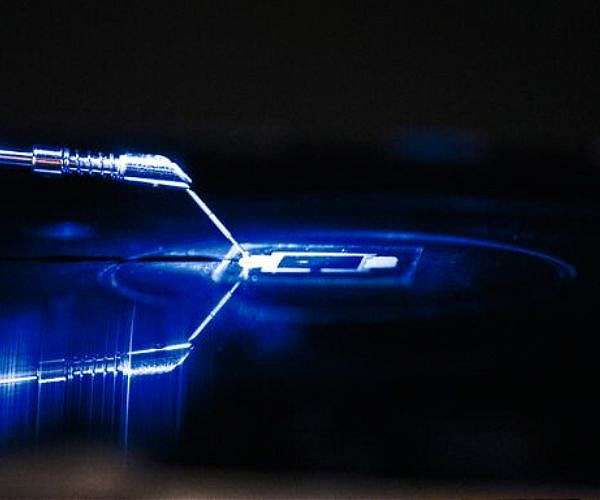
Researchers from the National University of Singapore (NUS) have developed a vapor deposition process that significantly improves the long-term and high-temperature stability of perovskite-silicon (Si) tandem solar cells. The work demonstrates vapor deposition on micrometer-textured industrial silicon wafers, matching the wafer structures used in commercial solar energy production and bringing tandem devices closer to real-world use.
The process enables conformal, high-quality perovskite layers on micrometer-scale textured silicon wafers, meeting a key requirement for mass production. The tandem cells achieve an energy conversion efficiency of more than 30 percent and maintain operational stability after 2,000 hours, including a T90 lifespan of more than 1,400 hours at 85 degrees Celsius under 1 solar illumination, equivalent to 1,000 watts per square meter. These performance and stability data place the devices among the most durable perovskite-Si tandem solar cells reported and indicate a route to commercial photovoltaic modules.
The research team is led by Assistant Professor Hou Yi, a Presidential Young Professor in the Department of Chemical and Biomolecular Engineering at the NUS College of Design and Engineering and head of the Perovskite-based Multijunction Solar Cells Group at the Solar Energy Research Institute of Singapore (SERIS). The results are reported in the journal Science in an article published on December 19, 2025.
For rooftop, large-scale and industrial solar installations, tandem cells must be able to withstand prolonged exposure to high temperatures, humidity and strong sunlight. Achieving such durability on industrial textured silicon wafers, rather than on specialized laboratory substrates, is essential for manufacturing and certification. Although vapor deposition is considered an industry-compatible approach, it has not previously produced stable, high-quality perovskite films on real industrial silicon with large surface textures. By demonstrating this combination, the NUS team addresses a central manufacturing barrier and shows that the devices can achieve the high temperature stability required for deployment.
“Achieving both high efficiency and long-term durability on industrial textured silicon is essential for tandems to become commercially viable,” said Assistant Prof. Love.
During vapor deposition, organic perovskite precursor molecules typically have difficulty adsorbing evenly onto the steep pyramid textures typical of industrial silicon wafers, leading to poor film formation and rapid degradation under heat. The NUS team designed a specialized molecule that binds to the silicon surface and promotes the adsorption of organic precursors during deposition, supporting smooth perovskite film growth with the target composition. This molecular strategy improves the film quality over the textured surface and contributes to the operational stability of the devices.
The resulting tandem vapor deposition devices exhibit strong thermal endurance. They operate stably for more than 1,000 hours under continuous illumination and maintain their performance during extended exposure to 85 degrees Celsius, one of the demanding accelerated aging tests used in the solar energy industry. Such high-temperature stability in perovskite-based tandem cells remains unusual and is more notable because it is demonstrated on industrial textured wafers using a scalable process.
“With vapor-deposited perovskites, we tackle two fundamental challenges at once: compatibility with real industrial silicon wafers and stable operation under heat,” says Assistant Prof. Hou. “This is the first evidence that vapor-grown perovskite tandem cells achieve the required durability for commercial deployment, bringing us closer to practical and reliable tandem solar modules.”
The team plans to scale up the vapor deposition technique from small-area test cells to large-area tandem modules and integrate the process into pilot production lines. “Our next phase is to demonstrate durable full-size tandem modules under real operating conditions,” said Assistant Prof. Love. “This will bring us one step closer to commercial implementation.”
Research report:Optimal perovskite vapor distribution on textured silicon for very stable tandem solar cells
