

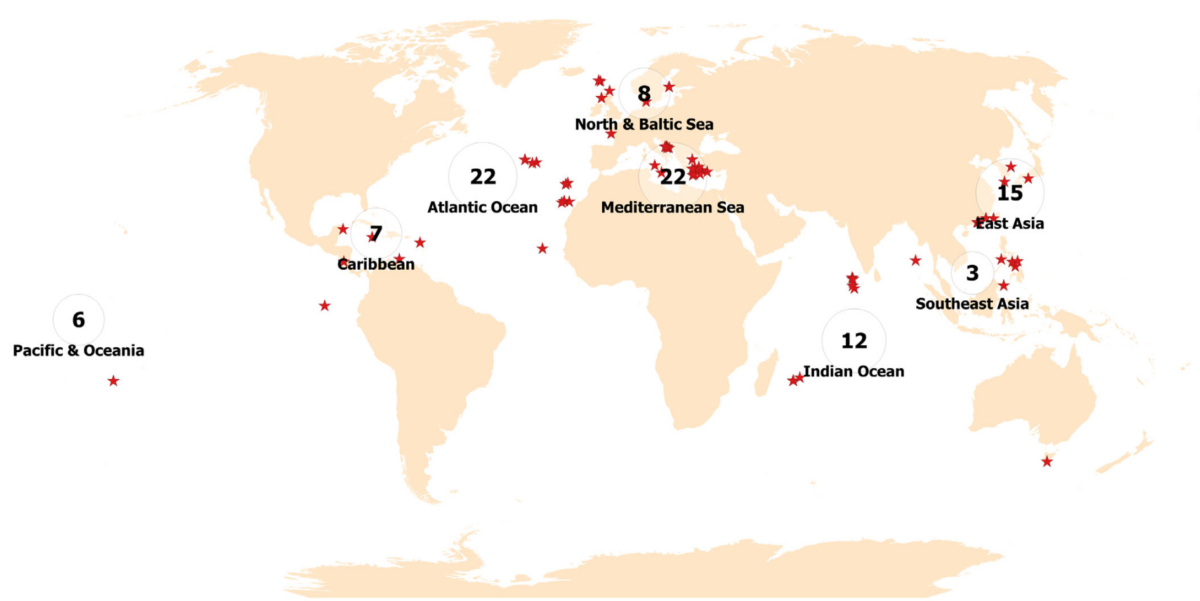
More than 740 million people live on islands that are very suitable for the use of renewable energy. Yet many island states remain highly vulnerable to climate change and dependent on expensive fossil fuels. creating persistent macroeconomic pressures and reducing competitiveness.
An extensive overview shows that very sustainable energy processes are technically feasible and economically feasible on islands. Nevertheless, research gaps remain. Many tropical islands are underrepresented, studies on fully renewable systems are limited and multisectoral integration outside the energy sector is rare. Technology and resource assessments often ignore the sustainability of biomass, hydrogen, synthetic e-fuels and ocean or geothermal energy, while their environmental and social impacts remain underexposed. Methodologies vary, and transition pathways that go beyond a 60% renewable energy supply, including interconnection and alternative energy carriers, are hardly explored.
Against this backdrop, a series of studies from LUT University and its collaborators highlight opportunities for islands in the Caribbean, Indian Ocean and Pacific Oceans to achieve carbon neutrality by 2050. These studies emphasize high electrification, rapid adoption of renewable energy, and the integration of advanced ocean-based energy technologies, including wave power, offshore wind energyAnd floating offshore solar PV systems. Together, these solutions provide a blueprint for a sustainable, safe and low-carbon future for island communities.
Solutions for tropical islands worldwide
It is possible to pilot highly renewable energy systems on tropical islands, and variable energy sources, especially solar energy, will lead the transition. The expected momentum of solar energy on tropical islands is caused by excellent resource conditions and fast improving economic competitiveness. Solar PV dominates the energy industry landscape and is responsible for 67-94% of total electricity generation, while wind energy contributes 6-30% across the world. Caribbean. Similar results are reported for the cases of Hawaii, Indonesia, New Zealand, Maldives, Sri Lanka, Seychelles, Puerto Ricoand the Philippines.
Space limitations do not prevent tropical islands from becoming energy self-sufficient and carbon neutral. Offshore technologies provide a scalable path to a sustainable energy future while strengthening the blue economy. A diversified portfolio of offshore renewable energy technologies, including floating offshore solar PV, offshore wind turbinesAnd wave powermay become essential for the profound defossilization of archipelagic lands, as evidenced by the cases of the Maldives, HawaiiAnd Seychelles. Although wave energy is limited in the Maldives and Seychelles and shows greater potential in Moloka’i and Hawai’i, it consistently increases the diversity of island energy systems and complements solar and wind-dominated generation.
In New Zealand, as an example of a non-tropical island, wave energy is less central to cost-optimized energy system analyzes because the energy system can largely transition from a hydropower-oriented to a solar-oriented offering. Wave energy could further diversify the energy mix at marginal additional cost to harvest one of the best wave energy sources in the world, with a excellent complementarity of solar and wave energy sources during the year. Floating marine solar has also been shown to be competitive conversion of thermal energy in the ocean in another study in the Maldives.
Solar-to-X Economy, not just for landlocked countries
Multi-generation solar-dominated energy industry systems on tropical islands can be effectively described as: Solar to X economicsin which cheap solar PV electricity serves as the basis for a vibrant e-fuels, e-chemicals and e-materials industries. Cheap renewable electricity and e-hydrogen are the cornerstone of a carbon-neutral energy system on tropical islands, embedded in a power-to-X framework. The power-to-X approach used in the reported studies makes this possible deep defossilization of sectors that are difficult to combatbenefiting from flexibility options. Although tropical islands could be energy self-sufficient, studies often focus on e-fuel imports due to land restrictions, while avoiding e-hydrogen imports due to technical challenges and issues. high hydrogen transport costs. The import of e-Fuel can play a key role in cost-effective sustainable energy systems on the islands. In the Caribbean they reduce land use and system costs by 7-16% while fuel supply and electricity trading will decline by up to 70% by 2050. The same way, inside Hawaiia 100% renewable energy system with e-fuel imports represents the lowest cost scenario and can be achieved without offshore technologies. In the MaldivesSystem costs are expected to rise from €105.7 per MWh in 2017 to €120.3 per MWh in 2030, before falling to €77.6 per MWh in 2050 with imported CO2-neutral e-fuels for transport.
Early adoption of solar, wind and batteries in the Caribbean can reduce emissions and lower transition costs, despite an accelerated approach that increases costs by 3 to 12% in the short term. Caribbean network interconnections further reduce system costs by 11%, reduce levelized electricity costs by 14%, reduce CO2 emissions2 reduce emissions by 4% and make renewable energy sources 7 to 24% cheaper than fossil alternatives. In Indonesia, a highly renewable energy pathway reduces system costs by 42% annually and achieves carbon neutrality by 2050, with electricity priced at €37 ($43.4) per MWh, about 10% cheaper than a moderate renewable scenario and 57% cheaper than a coal-dominated system. The same way is in Sri Lanka highly renewable energy routes will entail significantly lower cumulative annual transition costs until 2050, with less renewable or conventional alternatives exceeding costs by 41-51%. In this regard, updated cost assumptions for energy system analyzes are an important element for relevant insights.
Flexibility as the key to a safe and cost-effective future
Security of supply is often highlighted as an issue in systems dominated by variable renewable energy sources, especially solar energy. Flexibility in these energy systems is provided by storage technologies, including batteries for short-term variability, pumped hydro storage for short- to medium-term flexibility, and gas storage for seasonal variability. Gas storage, which for islands can take the form of buoyancy energy storage systemsserves a dual purpose: balance the energy system and act as buffer for e-fuel production. Additional flexibility is provided by demand response, smart charging and vehicle-to-grid technologies. In addition to storage and demand response, also electricity networks, diverse power-to-X conversionand limited containment form a portfolio of flexibility options. These technologies are essential for ensuring the reliability of a resilient Solar-to-X Economy.
Adopting renewable energy can significantly reduce energy system costs on tropical islands. Hybrid solar-PV batteries are proving to be particularly cost-effective, and integrating solar-based solutions within a Solar-to-X economy delivers both environmental and economic benefits. Key elements for defossilization include cheap renewable electricity, energy storage, electrification, e-fuel imports, sector coupling and network interconnections. Together, these measures enable resilient, cost-effective and sustainable energy systems. Power-to-X technologies play a critical role in supporting carbon neutrality, energy security and driving economic growth in island nations.
Authors: Ayobami Solomon Oyewo, Ashish Gulagi, Gabriel Lopez, Dominik Keiner and Christian Breyer
This article is part of a monthly column from LUT University.
Research at LUT University includes various analyzes related to energy, heat, transport, desalination, industry and negative CO2 emission options. Power-to-X research is a core subject at the university, integrated into the focus areas Planetary Resources, Business and Society, Digital Revolution and Energy Transition. Solar energy plays a key role in all aspects of research.
The views and opinions expressed in this article are those of the author and do not necessarily reflect those of the author pv magazine.
This content is copyrighted and may not be reused. If you would like to collaborate with us and reuse some of our content, please contact: editors@pv-magazine.com.
