

The Planning Inspectorate has approved two UK renewable energy projects after they were refused at local government level.
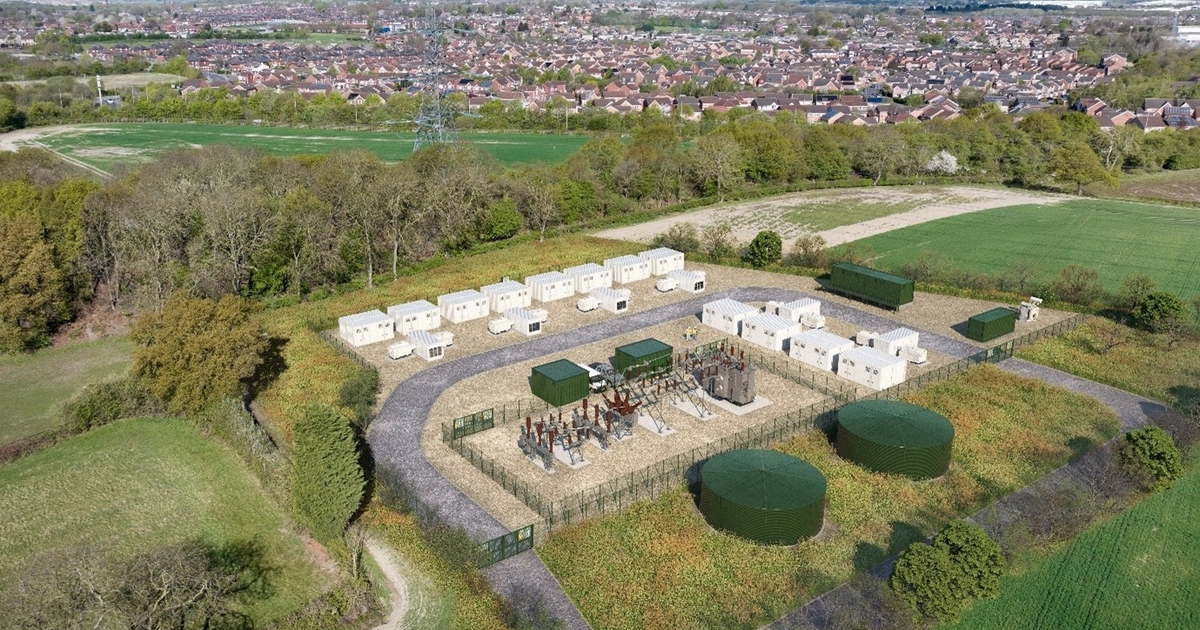
Battery energy storage system (BESS) developer, owner and operator Root-Power has been successful in its appeal against a refusal decision for a 50MW BESS at Featherstone, near Wakefield.
The local planning committee refused the project in July this year because it is in the Green Belt, despite the planning officer recommending it be approved subject to conditions.
In its appeal, Root-Power argued that the project will actually be built on gray belt land, which does not contribute to the Green Belt’s objectives – preventing urban sprawl and protecting the countryside – a position the Planning Inspectorate agreed with.
Construction on the project will begin in 2028 and is expected to be commercially operational in 2029, following upgrade works at the Featherstone Substation, where it will be connected to the electricity grid.
Rivington continues recently acquired project
Rivington Energy, the parent company of British developer Renewable Connections, has announced that it has been granted planning permission for a solar and storage project in Hartlepool on appeal.
The 42 MW solar project, combined with a BESS of 64 MWh, is one of them three projects that the company took over from operator Gridserve early October. The project was first submitted to Hartlepool Borough Council in March 2023. In March 2025 it was refused by the planning committee, despite being recommended for approval.
In July this year, before the takeover of the project was completed, Renewable Connections launched the appeal process on behalf of Gridserve.
Plans for one similar project by RWEconsisting of a 49.9 MW solar power plant combined with a BESS, have recently been rejected by the city council, although there is a clear trend in the UK with many projects initially refused being granted permission at the appeal stage.
The number of denials is rising as the public questions support for renewables
As Solar Media Market Research analyst Josh Cornes noted in a recent articlerefusal rates at local planning authority level are increasing annually, with 50 projects, for a total of 2.4 GWp, in the appeal process from September 2025.
While the government has taken a development-oriented approach in much of its policies, in view of its Clean Power 2030 target. For example, a update of the National Planning Policy Framework (NPPF) The plan, implemented by the government in December, stipulates that planning authorities must give “significant weight to the benefits associated with renewable and low-carbon energy generation and the proposal’s contribution to a net zero future” when assessing applications.
However, some local residents see the development of solar energy as industrialization of the local countrysideand as a risk to food security if solar farms replace traditional agriculture, which is the rationale behind this another sun denial. That project was also approved after appeal.
There is plenty of information available to allay these fears and developers spend a significant amount of public consultation trying to explain that solar energy can co-exist with agriculture.
