

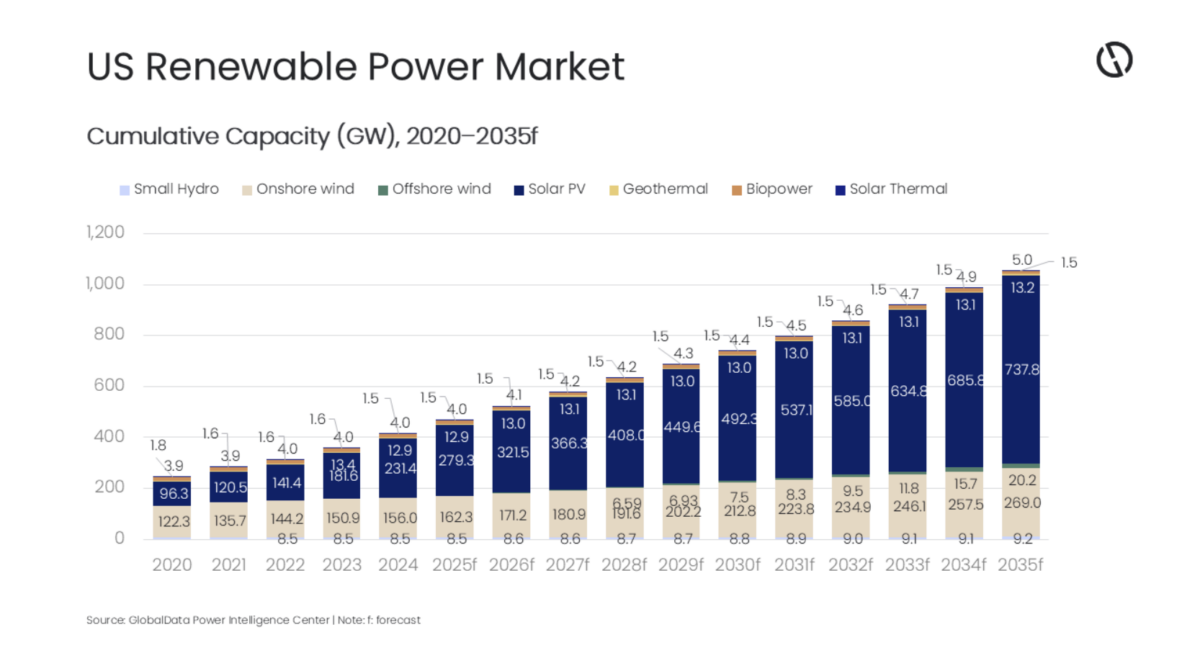
According to the latest analysis from GlobalData, the US will add between 41 and 52 GW of solar energy annually through 2035.
The USA is on track to deploy 737.8 GW of solar energy by the end of 2035, according to an analysis by the London-based consultancy Global data.
GlobalData says the US will add 47.9 GW of solar power in 2025, slightly less than current record of 49 GW deployed in 2024.
Annual deployment is then expected to decline, with GlobalData projecting an increase of 42.2 GW of solar in 2026, 44.8 GW in 2027, 41.7 GW in 2028 and 41.6 GW in 2029. By the end of the decade, cumulative solar capacity in the US is on track to reach 449.6 GW.
Annual deployment is expected to begin increasing in early 2030, with GlobalData expecting 42.7 GW of new solar in 2030, 44.8 GW in 2031, 47.9 GW in 2032 and 49.8 GW in 2033. The US is expected to cross the 50 GW threshold in 2034 and 2035, with annual deployments of 51 GW and 52 GW, leading to 737.8 GW by the end of 2035.
Total renewable energy capacity in the US is expected to reach 1.06 TW by 2035, according to GlobalData’s analysis, more than doubling from the 414.5 GW recorded at the end of 2024.
The consultancy’s analysis shows that solar deployment over the next decade will be driven by government purchasing targets, distributed generation policies, net billing and net metering frameworks, and large-scale utility contracts in key markets such as Texas, California and the Midwest.
However, trade and tariff measures introduced in 2025 have increased cost pressures and uncertainty for renewables that rely on imported components, while higher input costs have slowed project lead times, increased capital requirements and contributed to delays and cancellations.
Mohammed Ziauddin, energy analyst at GlobalData, said that despite policy shifts and rate-related cost pressures, renewable energy will remain the main driver of capacity growth in the U.S. energy sector through 2035.
Ziauddin added that between 2025 and 2030, investment in renewable energy is expected to reach approximately $442.2 billion, which he said reflects the scale of continued solar and wind energy development in key regional markets.
“Solar and wind energy continue to expand at scale, supported by government policies and private sector demand, while investments in gas and nuclear power address capacity adequacy and longer-term system needs,” Ziauddin concluded. “Together, these trends will transform the U.S. electricity system into a more diversified and resilient market over the long term.”
This content is copyrighted and may not be reused. If you would like to collaborate with us and reuse some of our content, please contact: editors@pv-magazine.com.
