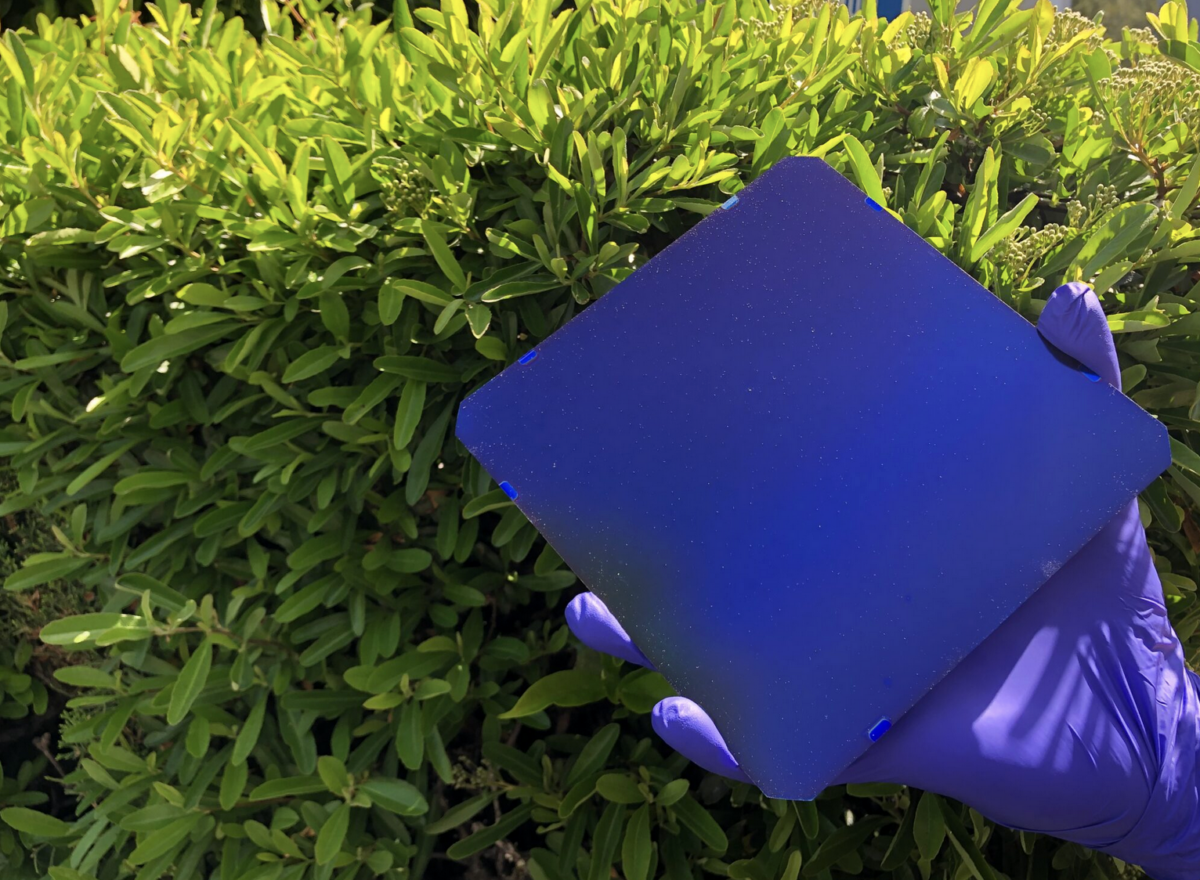
U.S.-made perovskite tandem cells from Swift Solar were used in a U.S. Department of Defense hybrid microgrid as part of a recent cybersecurity demonstration.
Swift Solar, a US manufacturer of perovskite tandem solar cells, has revealed that its technology has been deployed in a US Department of Defense cybersecurity demonstration, marking one of the first operational deployments of perovskites.
The perovskite solar cells were integrated with the Rapid Deployment Hybrid MicroGrid (RDHM), developed by Resilient Energy & Infrastructure. The modular microgrids are designed for rapid installation and movement and are built into shipping containers. They can be used in disaster relief, military operations or remote energy generation applications.
The deployable microgrid uses multiple energy inputs including a diesel generator and battery energy storage system along with the perovskite solar cells. The microgrids were part of the U.S. Department of Defense’s Cyber Fortress security demonstration in Virginia Beach, Virginia, in August 2025. The demonstration was attended by U.S. Army operational energy specialists and private sector partners such as Amazon Web Services.
“By strengthening operational energy resilience, U.S.-made perovskite solar technology can directly meet the growing energy demands of the modern battlefield and increase overall military readiness,” said Dr. Andre Slonopas, chief of cyber fortress at the U.S. Army.
Perovskite tandems typically involve depositing a thin layer of perovskite solar cells on top of conventional silicon-based solar cells, boosting electricity production. Perovskites are actively being researched high output and relatively low production costsalthough progress needs to be made in terms of long-term operational sustainability as they degrade much faster than silicon-based solar cells.
Swift Solar said its tandem product shows no degradation more than 3,000 hours of operation at high temperatures. The company says its perovskite solar cells generate up to 30% more power than traditional solar cells, improving the energy density and power-to-weight ratio of the modular system.
“For our mobile RDHMs, where space, weight and maneuverability are mission-critical factors for operational energy, we anticipate that Swift Solar’s perovskite will dramatically increase the energy density we can deploy, while increasing energy resiliency for military operations,” said Paul Maloney, CEO of Resilient Energy & Infrastructure.
Swift Solar’s perovskite tandems are backed by exclusive intellectual property from the Massachusetts Institute of Technology, Stanford University and the US National Renewable Energy Laboratory (NREL), with more than 40 patents and more than $60 million in funding from leading venture capitalists, strategic investors and government agencies, including the US military.
Swift Solar said commercial production of its perovskite tandems will increase over the next 24 months. The company said that’s it focused on ‘gigawatt scale’ production by 2030.
Swift Solar developed a novel internally vapor deposition technology for its production process. The new method is a non-batch process that solves two problems associated with the use of established vapor processing in the production of perovskite material: the slow rate of deposition and the non-continuous nature of batch processing.
“Our deposition approach enables the continuous deposition of a fully absorbing perovskite material in less than five minutes,” said Swift Solar researcher Tobias Abzieher. pv magazine. “Solar cells fabricated with these materials also significantly outperform previously achieved efficiencies from vapor-processed inorganic perovskite solar cells.”
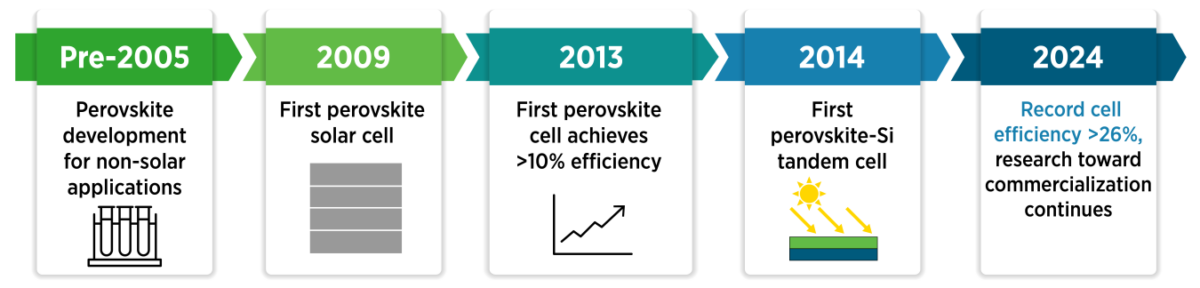
Solar perovskites have made rapid progress in both efficiency and sustainability as developers compete fiercely to bring their products to market.
“Perovskite-silicon tandem cells will achieve a record efficiency of 34.8% by 2025, compared to 27.3% for record silicon cells and approximately 20% for standard solar panels today. That’s a 30% jump in power for the same footprint,” Swift Solar said in a press statement.
This content is copyrighted and may not be reused. If you would like to collaborate with us and reuse some of our content, please contact: editors@pv-magazine.com.
Popular content