

In this blog, Nicholas Baker, co-founder of Green Partners Adjusting (GPA), founding sustainable energy loss expert, explores how losses on solar energy projects are increasingly falling out of the hands of project owners.
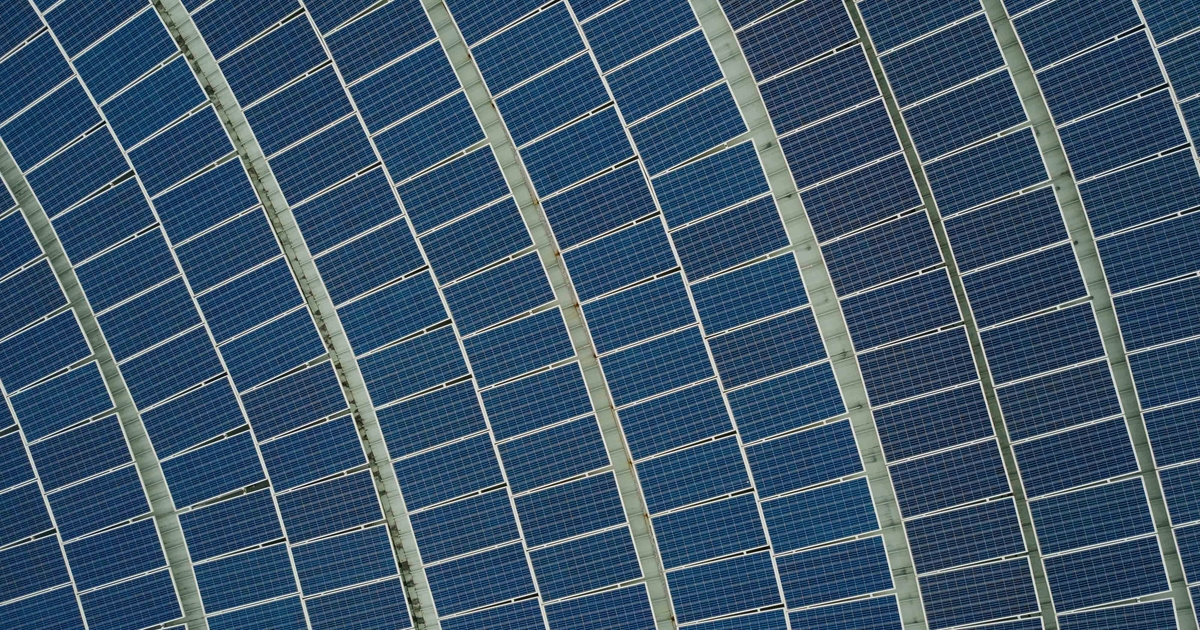
As the European solar sector matures, the size of utility projects has grown dramatically. Fifteen years ago, a typical solar farm might have generated 10 to 20 MW. Today, developments of over 250 MW are becoming commonplace, with 100 MW sites now more standard across the European continent. This scale ensures efficiency and lower energy costs, but also increases the financial risks if something goes wrong.
This increasing exposure to large losses is an increasing trend we see in our business interruption loss (BI) data, which are increasingly associated with single points of failure, particularly in network and transmission infrastructure that are outside a project’s control. As projects grow larger, a single failure at the connection point can take an entire factory offline. Although the asset itself remains intact, the result is the same: total loss of income for as long as the grid outage lasts.
When grid failures cause business interruptions
Historically, most losses on solar projects resulted from on-site errors – such as inverter damage, faulty trackers or internal cabling issues – where the owner could claim physical loss or damage under standard BI cover. In these cases, coverage typically extends to twelve months, with a 20 to 30 day waiting period or a deductible average daily value – exclusion periods not covered by an insurance policy.
However, GPA’s analysis shows that the largest losses are now caused by contingent business interruption (CBI), when grid or third-party infrastructure fails. These are among the most difficult losses to manage. Project owners have little visibility or influence over the grid operator’s repair schedules and in many cases cannot even get definitive confirmation of the cause of the failure, both of which can prevent or delay an insurance response. Because the event is outside the project boundary, there are no availability guarantees under the Operations & Maintenance Contract and there are limited recovery options until grid access is restored.
CBI cover is often taken out on similar terms as direct BI cover, but with more restrictive terms: longer waiting periods of 45-60 days or limited indemnity periods of six months. These terms have evolved little since the days when solar projects averaged 5 to 10 MW. For the current power stations of more than 100 MW, they no longer correspond to the financial reality of a disruption. A 30-day waiting period could represent millions in irreparable losses before the insurance kicks in.
A changing loss landscape
GPA’s claims experience shows how acute these risks have become. A single fault in a grid transformer or substation can halt the generation of hundreds of megawatts of capacity. For projects financed under tight debt structures or seller PPAs, even a few weeks of downtime can undermine cash flow, delay repayment schedules and impact covenant compliance.
The severity of these events also fluctuates dramatically depending on the seasons. Using actual generation data from UK projects, GPA modeled the potential 60-day revenue loss for solar power plants of different capacities. Losses ranged from £145,000 for a 5MW site to £10.8m for a 373MW plant – the largest currently operational in Britain – rising to more than £17m for the largest project currently in planning. During the summer months with lots of light, the income effects can be many times greater than in winter.
* Largest operational UK project
** Largest project with UK planning approval
Building resilience beyond policy
The structure of most BI and CBI policies often leaves owners exposed in the early stages of a loss. In practice, most grid failures are repaired long before the six or twelve month compensation limit has been reached. The real vulnerability lies in the first 30 to 60 days, when the deductible – or “waiting period” – still applies and the policy has not yet responded.
But even beyond project insurance coverage, technical and contractual measures play a crucial role in mitigating these risks. GPA recommends that developers and investors engage with network operators early to understand fault response procedures, agree on access to spare parts and develop contingency plans for interconnection failures. These steps can help reduce downtime and ensure that insurance coverage, when activated, can respond smoothly.
Owners should also review how grid outage scenarios are modeled in their financial forecasts and insurance valuations. The shift to hybrid assets – combining solar power generation with battery storage – will create new interdependency risks that require integrated policy structures and a more flexible understanding of the source of losses.
Strengthening the foundations of large-scale solar energy
As the solar market continues to grow in both capacity and complexity, project stakeholders will need to anticipate the operational realities of single-point-of-failure exposure and its financial implications. It is now essential for investors, lenders and insurers to understand where these vulnerabilities lie – especially at the grid interface – to maintain confidence in the economics of large-scale solar. By combining robust technical planning with a well-structured approach to risk transfer, the industry can ensure its assets remain resilient, bankable and ready to deliver on Europe’s clean energy ambitions.
