

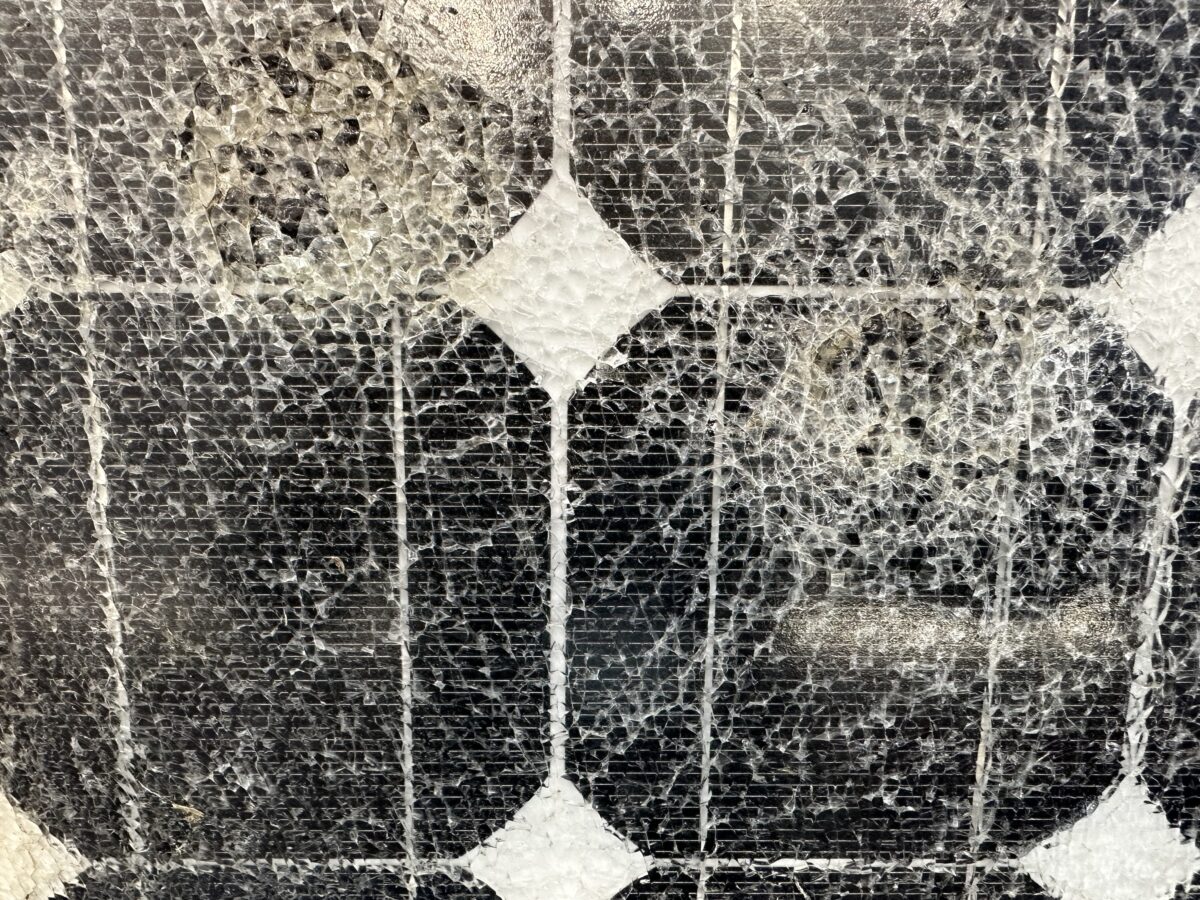
A new review examines the impact of large hail on PV systems, covering damage, testing methods and mitigation strategies. Researchers highlight the risks in Europe and the US and explore ways to improve module resilience.
A European research group has published a comprehensive overview of hail-induced damage to PV modules, examining laboratory tests, simulation studies and outdoor analyses.
“Large hail causes billions in economic losses annually, affecting crops and property worldwide. An emerging concern is the impact of hail on renewable energy plants, especially PV, with significant damage reported in Europe and the US, increasing research interest,” the team said. “As global PV installations grow, the threat that hail poses to system reliability is becoming increasingly important. The current literature on this topic is fragmented and regionally focused. This review addresses this gap.”
The researchers report that Europe experienced 9,882 large hail events in 2023, resulting in one death, at least 328 injuries and billions in economic losses. In July 2023 alone, Northern Italy suffered 6 billion euros in hail damage. The research also points to a hailstorm in 2019 at a large-scale PV installation in Texas, where 400,000 of the 650,000 modules had to be replaced.
The review covers several research topics including module construction, focusing on glass thickness, encapsulant and cell technology in hail events. It also explores new testing methods such as digital image correlation (DIC) and high-speed imaging. Simulation studies assessed variables such as glass thickness, ice ball diameter and hail speed, as well as the effects of turbulence, temperature and multi-hazard stress.
Outdoor studies include analyzes from the US, Austria, Croatia and Italy, as well as past and ongoing mitigation strategies. Passive mitigation strategies examined included glass thickness and module tilt angles. Active strategies include single-axis trackers that adjust tilt and protective nets deployed above systems.
The researchers noted that future laboratory studies could examine additional parameters such as module and ice ball temperatures, impact angle, variations in ice density, irregularly shaped hailstones and the interval between multiple impacts. For installed systems, assessing module response under varying wind conditions and PV technology is critical.
“Future research could also refine models to more accurately predict hail events, evaluate active mitigation techniques such as mobile grid systems, and improve the design of PV systems based on site-specific hail and wind characteristics,” the team added.
The evaluation highlights that while PV modules must meet the IEC 61215 standard for commercialization, the IEC TS 63397 standard provides a more stringent testing framework, allowing for more accurate identification of hail-related damage.
The “Large Hail Effects on Photovoltaic Systems: An Overview of Damage, Testing, and Mitigation‘Research article was published in Energy reports. Scientists from Italy’s University of Catania and the European Severe Storms Laboratory (ESSL) in Germany contributed to the research.
This content is copyrighted and may not be reused. If you would like to collaborate with us and reuse some of our content, please contact: editors@pv-magazine.com.
