

At the end of October the Illinois General Assembly passed the Clean and Reliable Grid Affordability Act (CRGA), significant landmark legislation that will make Illinois’ electric grid more resilient, add new clean energy capacity, and meaningfully reduce ratepayers’ energy bills. The bill is nearly 1,000 pages long, with dozens of provisions focused on affordability. But one of the most transformative pieces is the development of a new large-scale solar + storage battery and community program.
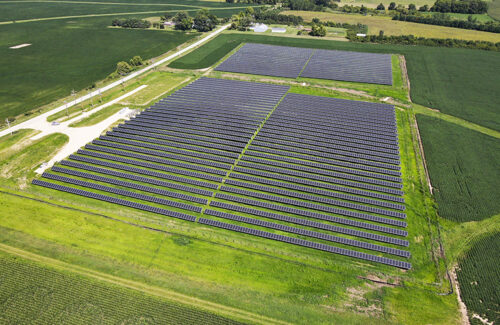
A community solar project in Kingston, Illinois completed by Nexamp.
The timing couldn’t be more timely. The U.S. Energy Information Administration projects that 63 GW of new utility-scale electricity generation capacity will be added in the United States in 2025, an increase of nearly 30% from 2024. Of the 63 GW projected for 2025, solar and battery storage together account for about 81% of the additions.
While existing projections focus on utility-scale development, these projections miss the untapped potential at the distributed energy scale. Community solar, available in 23 states, has brought clean energy to renters, low-income households, and those without access to rooftop solar. Energy storage is the missing piece the community has been waiting for: it keeps the sun powering things even when the sun goes down. The CRGA turns access to clean energy into true resilience, and other states should take note and implement similar policies.
Lower taxpayer bills
After one of the most expensive summers on record for electric bills, states urgently need solutions that can provide immediate and lasting relief to ratepayers. Solar + storage is one of the most effective solutions available. Traditional community solar helps households access clean energy and save through bill credits, but without energy storage, community solar is essentially an accessible resource: it gives people access to clean energy when the sun is shining. When cheap solar energy is stored during the day and used during the expensive evening rush hour, families see immediate, measurable savings on their monthly bills.
Build resilience

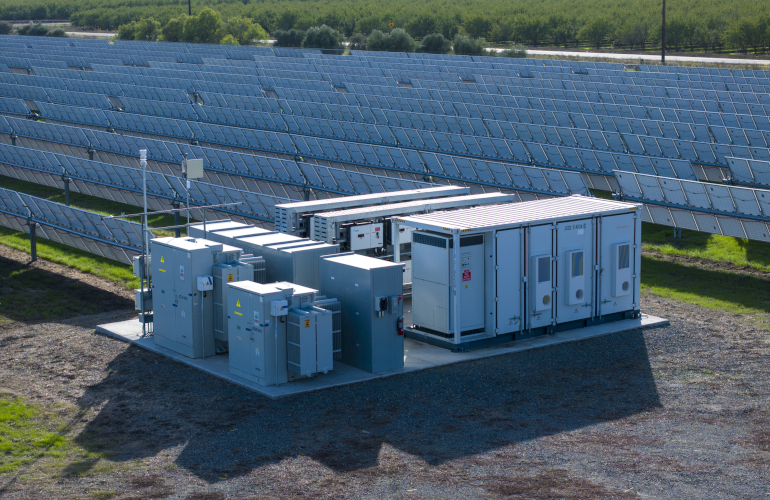
An energy storage installation at a solar project. Credit: ForeFront Power
In addition to savings, community solar + storage strengthens local networks and reduces the need for costly network upgrades and utility backups, which are often passed on to customers. Storage can alleviate congestion, smooth peaks in demand and help utilities avoid expensive spikes in capacity prices.
Storage also allows communities to maintain critical services when the power grid goes down. When combined with community solar, batteries can help keep critical infrastructure powered during emergencies.
Growing demand for energy
As energy demand rises nationwide, states must deploy their resources quickly and cost-effectively. Community solar + storage meets this need better than any other energy source on the market. Solar energy projects can be permitted and built in a fraction of the time it takes to build gas plants or transmission lines, and battery storage can be added modularly and scaled as needed.
Distributed projects also support local economic development and provide capacity close to load, reducing pressure on high-voltage infrastructure. At a time of growing energy demand, states that prioritize community-based solar energy storage will be best equipped to keep pace with growing demand.
A strategic response to OBBBA
Now that the One Big Beautiful Bill Act (OBBBA) is in effect, federal tax credits for most clean energy technologies are being phased out, creating uncertainty for states trying to achieve their climate, reliability, and affordability goals. But one crucial exception remains: battery storage is still eligible for the federal investment tax credit (ITC). Under current rules, storage projects that begin construction before January 1, 2033, remain fully eligible, and the credit will not be fully phased out until December 31, 2035. This gives states a meaningful but limited runway to expand storage implementation, while federal support is still available.
By quickly scaling up solar and storage programs, states can ensure that the clean energy they’ve already built continues to deliver value despite federal rollbacks.
Integrating storage into community solar is not just a climate strategy, it is an affordability and reliability strategy. States that act now will protect taxpayers, stabilize their grids, and safeguard clean energy progress. States that take swift action to integrate storage into community solar and broader energy programs can deliver the reliability, affordability and protection of clean energy – exactly when customers need it most.
Illinois has shown the nation what forward-looking clean energy policies can achieve. With rising energy demands, escalating climate risks and changing federal policies, states cannot afford to wait. Community solar + storage is the next frontier in energy equity, reliability and affordability – and Illinois is leading the way. It is time for other states to follow suit.
Stephanie Burgos-Veras is a senior policy manager at the Coalition for Community Access to Solar Energya national trade association. She is a public policy advocate, campaign strategist and community organizer with a decade of experience turning bold ideas into actionable policy. She currently lives in New York City with her family.
