

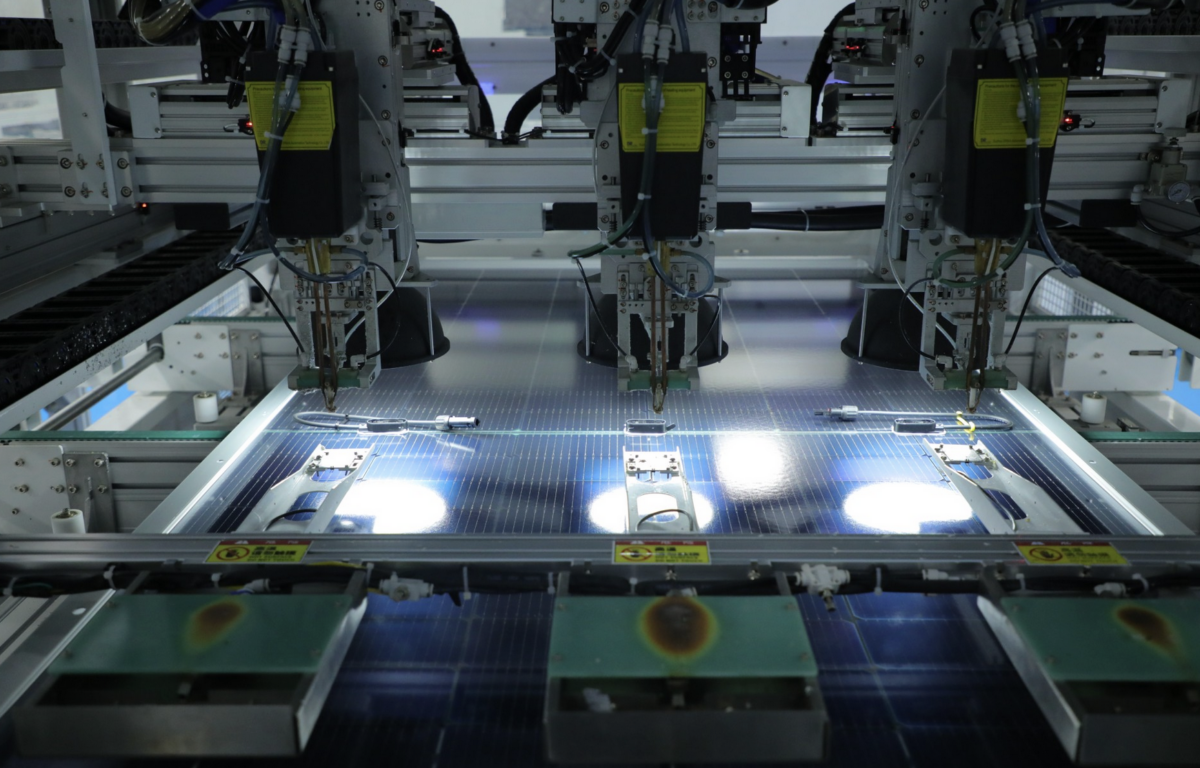
According to CareEdge Ratings, India’s solar panel manufacturing capacity is expected to reach 220 GW by FY 2028, supported by government incentives, growing domestic demand and increasing export opportunities. The capacity of solar cells is expected to approach 100 GW in the same period.
India’s module manufacturing capacity has expanded from around 72 GW in March 2024 to nearly 118 GW by July 2025, while cell capacity has grown from 8 GW to around 27 GW. Wafer production remains limited to 2 GW, although several Indian companies are planning expansions of more than 30 GW, representing investments of more than INR 240 billion ($2.9 billion).
CareEdge said the capacity expansion reflects accelerating installations, policy support and greater access to financing. Current production capacity is estimated at 50 GW to 60 GW for modules and 8 GW to 10 GW for cells, leaving a cell import dependence of 40 GW to 45 GW. Most imports come from China.
To reduce this dependence, India has introduced measures such as the Approved List of Models and Manufacturers (ALMM), which requires the use of domestic modules for certain projects, and the upcoming ALCM/ALMM rules for cells to promote local manufacturing.
“The planned module capacity of over 215 GW to 220 GW by FY 2028 is expected to entail investments of over INR 140 billion rupees, with an estimated 25% to 30% of the panels likely to be exported,” said Tanvi Shah, senior director at Care Analytics and Advisory.
“Domestic cell manufacturing capacity is expected to reach around 100 GW, supported by cumulative capital expenditure of over INR 550 billion,” said Nitu Singh, associate director at Care Analytics and Advisory.
CareEdge said India’s solar exports will increasingly drive growth as production exceeds domestic demand. Exports rose sharply from INR 8.7 billion in FY 2019 to INR 94.6 billion in FY 2025, peaking in FY 2023-2024 when shipments briefly surpassed imports. Much of that growth came from U.S. buyers diversifying offerings outside of China.
Exports fell in fiscal 2025 after stricter scrutiny under the Uyghur Forced Labor Prevention Act, but recovered in early 2026 as developers accelerated deliveries ahead of tariff deadlines. Imports fell by 54% over the same period, indicating progress toward self-sufficiency in solar energy production.
In value terms, exports to the United States increased by INR 11.04 billion in the first four months of fiscal 2026, while shipments to Kenya increased 55 times year on year.
This content is copyrighted and may not be reused. If you would like to collaborate with us and reuse some of our content, please contact: editors@pv-magazine.com.
