

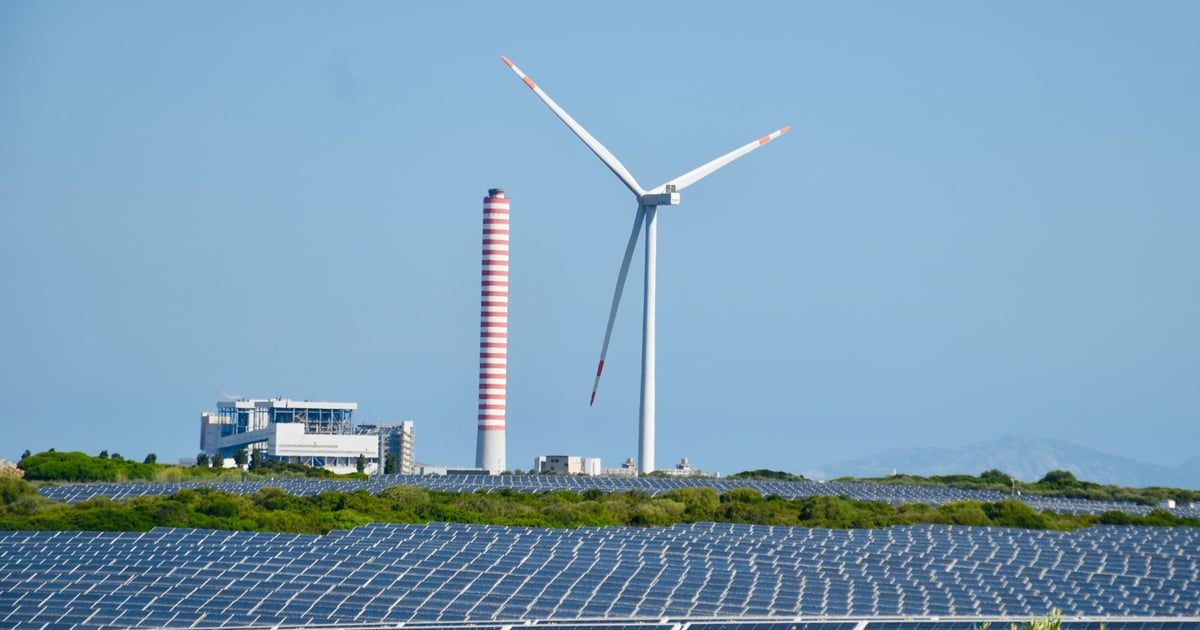
The influence of gas prices on UK energy prices is declining due to the government’s Contracts for Difference (CfD) renewable energy programme, according to a new report from energy think tank Ember.
Ember said 15% of the UK’s energy generation has already been decoupled from the price of gas, which is “helping to suppress energy prices”. Ten gigawatts of operational renewables – three-quarters of the wind, solar and hydropower built between 2023 and 2025 – are covered by the CfD scheme, which provides a fixed price for power that is independent of wholesale gas prices.
Given the falling costs of renewable energy development, solar energy prices in particular are now below gas prices before the Middle East energy shock, and both solar and wind energy are significantly cheaper than the average price of gas energy in March and April 2026, after the war in Iran caused gas prices to rise.
In 2025, auction prices stood at £65/MWh for solar and £91.20/MWh for wind, compared to average gas prices in January-February of £89.3/MWh and £108/MWh in March-April.
Ember expects the share of renewables, independent of gas prices, in the UK energy mix to reach 36% by 2030 as the latest CfD auction will support 9.7GW of wind and 4.9GW of solar and the subsequent auction has been brought forward to summer 2026. Up to 36GW of wind and solar is in development by 2032 under the CfD scheme.
“Amid the daily volatility, a more stable future for the energy system is gradually emerging,” said Frankie Mayo, senior energy analyst, UK, at Ember. “Renewables are already helping to keep wholesale energy prices in check, and not a moment too soon. With many more wind and solar projects set to be built under a price-setting system over the next five years, Britain can expect this foundation to grow in the future, eroding the impact of gas price spikes.”
Ember’s data shows that the share of gas in the energy mix could at some point cause prices to rise dramatically.
At the extreme, the report said that when gas accounts for 60 to 70% of energy supply (for example by the end of 2024), the average day-ahead power price will have reached £195.96/MWh. In contrast, a mix of just 10-20% gas delivered an average day-ahead price of just £0.9/MWh in mid-2025.
On average, the difference is still large: “By 2025, hours with gas under 20% of the grid mix averaged £60/MWh compared to £130/MWh in hours when gas was over 50% of the mix,” Ember said.
Energy Secretary Ed Miliband has previously said he would seek to reduce the impact of gas on UK energy prices, including measures to encourage greater CfD participation and extension of the Electricity Generator Levy (EGL) windfall tax for older, more expensive renewable energy plants. Miliband said: “The era of fossil fuel security is over, and the era of clean energy security must come of age.”
Despite these developments, energy market analyst Cornwall Insight has predicted that the energy The price ceiling will “inevitably” rise in June 2026 possibly by as much as 20%, due to the volatility of fossil fuel prices caused by the war in Iran and the closure of the Strait of Hormuz.
