

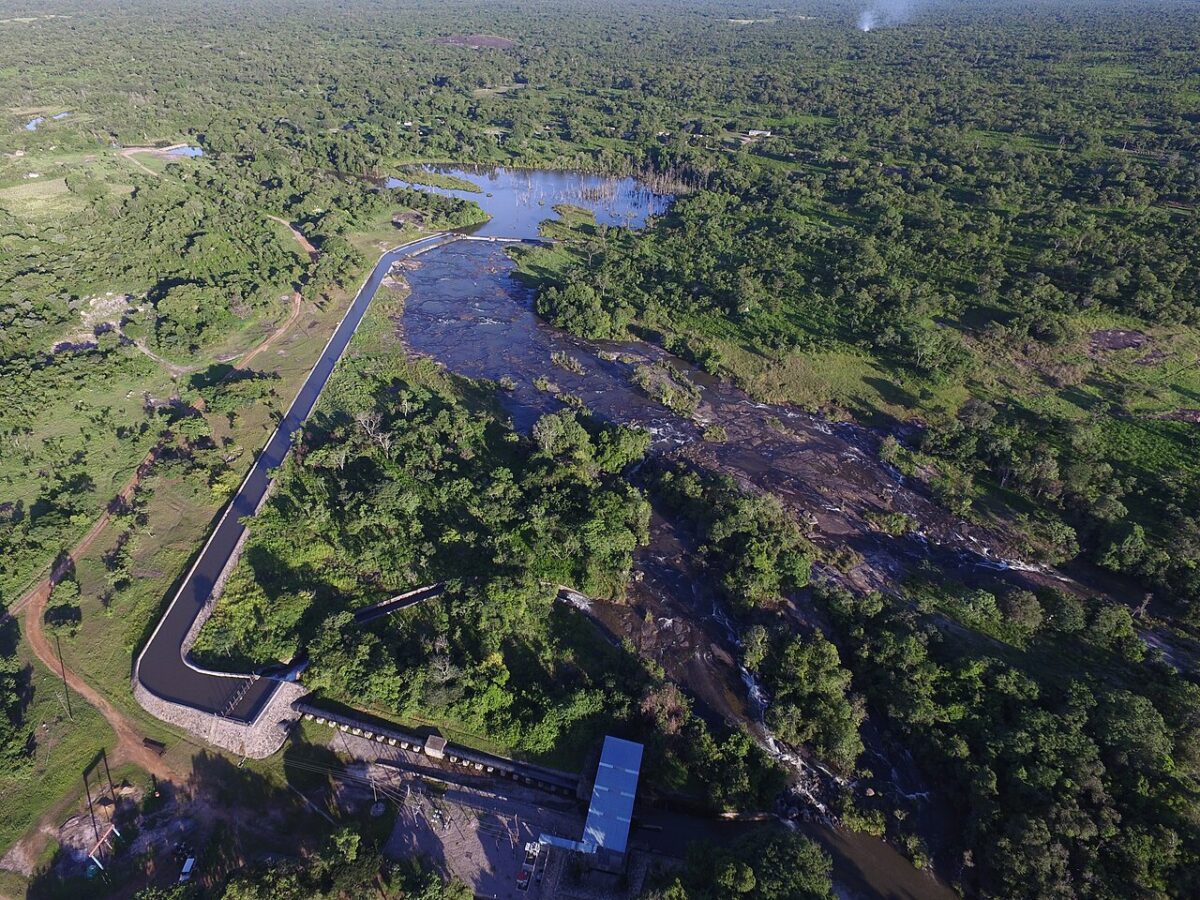
Hydropower plays an important role in the energy transition. It is a renewable energy source and contributes to reducing global emissions. In Switzerland, hydropower supplies almost 60% of domestic electricity generation. According to the Swiss government statisticsSwitzerland is the fourth largest hydropower producer in Europe, after Norway, Austria and Iceland.
Hydropower also plays a major role in balancing the electricity grid, compensating for fluctuations in solar photovoltaic (PV) and wind energy generation through pumped storage. Electricity is used to pump water to reservoirs at higher altitudes during periods of low energy demand. When demand is greatest, water is routed through turbines at lower altitudes to produce electricity.
Environmental costs of large hydroelectric power stations
There are some significant drawbacks to dealing with this age-old renewable energy. Large hydropower projects are expensive to build and the capital costs are prohibitive. Another crucial disadvantage is the environmental costs of these large installations. According to Scienceinsights.orgMost hydroelectric reservoirs require far more land per unit of energy produced than any other major source of electricity. We have all seen TV reports of flooded land and villages when large dams were built. Most of the world’s hydroelectric capacity comes from these reservoir dams. Flooding an area of land can destroy both communities and terrestrial ecosystems. Scienceinsights reports that Brazil’s Balbina Dam flooded more than 2,300 square kilometers of Amazon rainforest to produce a relatively modest amount of electricity.
The other environmental costs are for marine life, especially fish. Dams built on rivers prevent fish from migrating. Salmon moving upstream to spawn in freshwater streams are prevented by dams, even though some of them have built-in passages to alleviate the problem. Dams can also affect water temperature and cause fluctuations in water flow, both of which affect marine life.
What is small and micro-hydro?
Experts call small hydropower systems “run-of-the-river,” and such installations generally do not require a huge amount of energy storage. According to this paper From this equipment supplier to small hydropower plants, run-of-the-river hydropower systems use turbines that can operate on large watersheds and generate energy at high or low river flows, regardless of what is in the watercourse at the time. However, some of the larger hydropower projects operate with a river dam and can store a small amount of energy.
According to Energy Education websitesystems are classified as micro, mini or small depending on the amount of power they can generate at any given time. Micro systems generate less than 100 kilowatts (kW) of electricity, while mini systems go up to 1 megawatt (MW), while small hydro systems reach 50 MW.
But the classification of hydropower projects varies among different countries. Pierre Maruzewski is chairman of IEC TC4the technical committee that develops standards for hydropower turbines. He is also a hydro expert at the French state-owned electricity company company EOF. He has a different view of what a small turbine is.
“In France, EDF classifies hydropower systems as small if they generate 7 MW, and pico systems as 20 kW. In China or the US, hydropower plants are so much bigger that for them 50 MW is small, but we don’t build hydropower plants on the same scale,” he explains.
One of the advantages of microsystems is their cost. According to Energypediathey can cost as little as $1,000 and up to $20,000 to install, depending on size, location and energy requirements.
Microsystems can power individual homes and even small communities. Their impact on the environment is negligible compared to larger hydropower systems. The only condition is that there is a river flowing nearby. However, seasonal variations must be taken into account. During hot summers, river flows can decrease and generate less electricity. And generally permission must be sought from local authorities and environmental agencies before installation, which may take some time.
Competing with solar energy for energy access in emerging countries
Market research agency Coherent market insights estimates that the global market for small hydropower plants will be worth $300 billion by 2026. The same company expects it to grow to $3.77 billion by 2033, representing a compound annual growth rate (CAGR) of 3.5%. This includes microsystems, which are estimated to lead the market with a 61.1% revenue share by 2026, due to “their compact design and scalability.”
Microsystems have enormous potential to enable energy access in developing countries, especially in sub-Saharan Africa, where off-grid systems enable rural communities to be supplied with electricity. According to 2025 from the International Hydropower Association World hydropower prospectsAfrica has more than doubled its development over the past three years combined, bringing 4.5 GW of new hydropower capacity into service by 2024. Hydropower already supplies 20% of the continent’s total electricity, the report says, and there is huge scope for further development, with only a small portion of the 600+ GW of the continent’s potential currently being exploited. The report notes several major projects, including the start of Tanzania’s Julius Nyere project, the Grand Ethiopian Renaissance Dam adding 800 MW with its third and fourth units, as well as the 600 MW Karuma plants in Uganda and the 420 MW Nachtigal plants in Cameroon in full operation. However, financing these large hydropower projects remains a challenge in Africa, despite the involvement of many private companies.
Micro-hydro systems, on the other hand, can help to electrify regions and areas with little or no access to energy and at relatively low cost, while being more reliable than other renewable energy sources. However, they compete with solar photovoltaic (PV) projects.
Uganda is an example of this. As Winnie Grace Onziru, Senior Standards Officer at Uganda’s National Bureau of Standards, explains: “The majority of our grid-supplied energy comes from hydropower. It therefore made sense to also look at small and micro hydropower technology for off-grid projects, and several have been established across the country.”
But, says Onziru, most of the rivers used for these small and micro projects dried up during Uganda’s recent terrible droughts: “So the government decided to switch to solar PV. The main criticism of solar PV energy in the beginning was its lack of energy efficiency: you had to cover one roof with solar panels just to get enough energy for lighting! But the technology has improved enormously since then, with thin-film developments and other developments, meaning solar panels are now the preferred option in Uganda for accessing electricity on the countryside.”
According to Pierre Maruzewski, small and micro hydropower projects show enormous growth potential, not only in emerging countries but also in Europe, with France as a typical example. “Of all the hydropower projects we have installed in the country, more than half – 237 to be precise – are small hydropower installations. And we expect this segment of the market to grow even further in the future. That is why we have set up a specific unit within EDF that will deal with small hydropower.
What standards for small hydropower?
IEC TC 4 has a working group to standardize small hydraulic turbines. The group is working on the maintenance of IEC 62006 which specifies acceptance testing of small hydropower installations. The standard applies to installations with impulse or reaction turbines with a unit capacity of up to approximately 15 MW. The same experts are also working on revising IEC 61116a guide to the electromechanical equipment of small hydropower installations. The directive applies to power stations with a capacity of less than 5 MW and to turbines with a diameter of less than 3 meters.
“We work closely with ISO TC/339, which develops standards for the planning and design of small hydropower installations. We have formed a joint working group with the TC and they refer to our turbine standards and we refer to theirs,” explains Maruzewski.
As pressure to meet our zero emissions targets increases, small hydro is a cheap, environmentally friendly, reasonably flexible and renewable option that is gaining popularity.
Author: Catherine Bischofberger
The International Electrotechnical Commission (IEC) is a global non-profit membership organization that unites 174 countries and coordinates the work of 30,000 experts worldwide. International IEC standards and conformity assessment are the basis of international trade in electrical and electronic goods. They facilitate access to electricity and verify the safety, performance and interoperability of electrical and electronic devices and systems, including, for example, consumer equipment such as mobile phones or refrigerators, office and medical equipment, information technology, electricity generation and much more.
The views and opinions expressed in this article are those of the author and do not necessarily reflect those of the author pv magazine.
This content is copyrighted and may not be reused. If you would like to collaborate with us and reuse some of our content, please contact: editors@pv-magazine.com.
