
Close Menu
  • News
  • Industry
  • Solar Panels
  • Commercial
  • Residential
  • Finance
  • Technology
  • Carbon Credit
  • More
    • Policy
    • Energy Storage
    • Utility
    • Cummunity
What's Hot

Fraunhofer ISE develops colored film technology for patterned solar panels

April 23, 2026

Thermoacoustic heat pumps are on the verge of commercial breakthrough – SPE

April 23, 2026

The federal court has halted Trump administration orders that hinder solar and wind energy development

April 23, 2026
Facebook X (Twitter) Instagram
Solar Energy News
Thursday, April 23
  • News
  • Industry
  • Solar Panels
  • Commercial
  • Residential
  • Finance
  • Technology
  • Carbon Credit
  • More
    • Policy
    • Energy Storage
    • Utility
    • Cummunity
Solar Energy News
Home - Technology - Reducing silver use in heterojunction solar cells via cheap copper wires – SPE
Technology

Reducing silver use in heterojunction solar cells via cheap copper wires – SPE

solarenergyBy solarenergyJanuary 21, 2025No Comments3 Mins Read
Facebook Twitter Pinterest LinkedIn Tumblr Email
Share
Facebook Twitter LinkedIn Pinterest Email

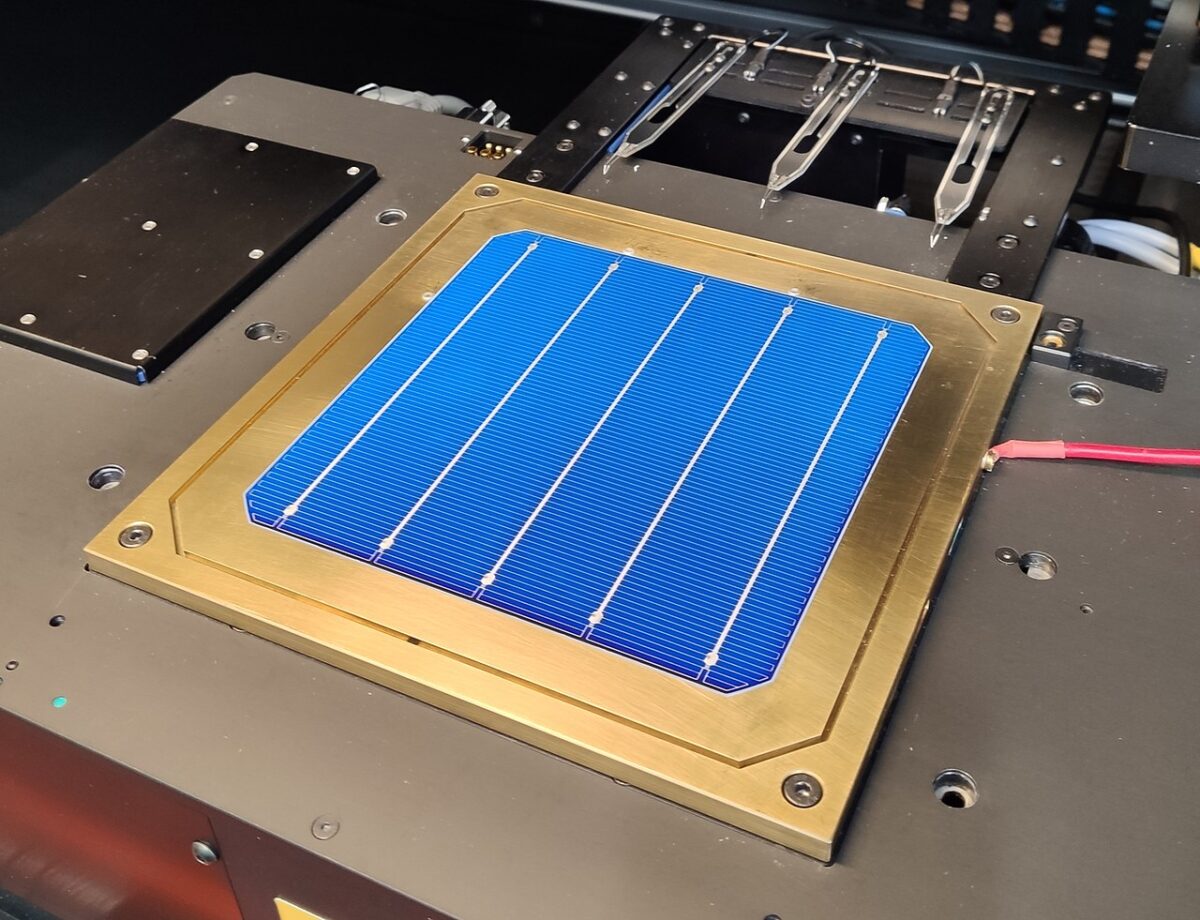
A research team in Germany has proposed using direct wire connection to reduce silver consumption in heterojunction solar cells. The scientists used cheap copper wires as electrodes with conductive paste applied in discrete pads to replace the traditional metallization and interconnection process.

January 21, 2025
Emiliano Bellini

A research team led by the German research center Forschungszentrum Jülich GmbH has proposed using direct wire bonding (DWB) as a low-temperature method for interconnecting finger-free heterojunction (HJT) solar cells at the front using cheap, highly conductive copper (Cu) -wires.

“Our study demonstrated the connection of low-cost Cu wires to HJT solar cells as electrodes with conductive paste applied in discrete pads to replace the traditional metallization and interconnection process,” the scientists said. “The paste used in this structure is cured at low temperatures during the lamination process, making it suitable for heterojunction and perovskite-silicon tandem solar cells.”

In the newspaper “Silver reduction by direct wire connection for silicon heterojunction solar cells”, which was recently published in Solar energy materials and solar cellsthe research team explained that all their experiments were conducted with M2+ commercial metallization-free heterojunction solar cells with a length of 156.75 mm and a diameter of 210 mm. The devices are screen printed with a 0-rail metallization layout with 250 fingers on the back and 96 fingers on the front. The cells were cut from the edge into 5 cm × 5 cm squares, leaving only three unpassivated edges.

For the front of the cell they used copper wires with a diameter of 30 μm, using silver-coated copper paste in ‘small’ dots along the wires. “After connecting six Cu tab wires with a diameter of 250 μm, covered with low-temperature solder wires with a pitch of 8.28 mm for the rear contact, the cell is laminated into a module with dimensions of 20 cm x 20 cm at 150 C for 1,060 s, annealing the paste,” they further explained.

See also  Solimpeks presents air-water heat pump for residential and commercial applications – SPE

The research team then attached three 1 mm wide, silver-coated Cu ribbons to the printed rails of the cells via electrically conductive adhesive, applied in dots with a pitch of 1.65 cm.

The cells built with this architecture were tested in a series of simulations and the line resistance of the Cu wire was found to be six times lower than that of a silver finger and 13 times lower than that of fingers of silver-clad Cu paste, which academics say this ensures power transport over longer distances. “By combining the advantages of Ag-coated Cu paste at the contact points with the lower line resistance of Cu wires, DWB shows promise in achieving performance comparable to traditional metallization and interconnection methods,” they pointed out.

Their analysis also found that a solar panel built with the proposed solar cells achieved an energy conversion efficiency of 20.19%, compared to 20.43% for a benchmark panel with six conventional tabbed wires on the front.

Despite the slightly lower efficiency, the proposed cell configuration offers significant advantages in terms of paste consumption, with the scientists confirming that it is comparable to those of modules with the 0BB solution with the lowest consumption. “However, the DWB provides superior cost savings by eliminating the need for bonding materials,” they concluded.

This content is copyrighted and may not be reused. If you would like to collaborate with us and reuse some of our content, please contact: editors@pv-magazine.com.

Popular content

Source link

cells cheap copper heterojunction Reducing silver solar SPE wires
Share. Facebook Twitter Pinterest LinkedIn Tumblr Email
solarenergy
  • Website

Related Posts

Fraunhofer ISE develops colored film technology for patterned solar panels

April 23, 2026

Thermoacoustic heat pumps are on the verge of commercial breakthrough – SPE

April 23, 2026

The federal court has halted Trump administration orders that hinder solar and wind energy development

April 23, 2026
Leave A Reply Cancel Reply

Don't Miss
Policy

ACME Solar signs 450 MW PPA in India, commissions new 38 MW/82 MWh BESS – SPE

By solarenergyMarch 6, 20260

ACME Solar has signed two power purchase agreements (PPAs) for a total of 450 MW…

European solar gains wiped out by storms and floods in September – SPE

October 12, 2025

Ground versus roof mounted solar panels for your home in Colorado

May 8, 2024

Copeland releases heat pumps for sanitary water – SPE

January 19, 2026
Stay In Touch
  • Facebook
  • Twitter
  • Pinterest
  • Instagram
  • YouTube
  • Vimeo
Our Picks

Fraunhofer ISE develops colored film technology for patterned solar panels

April 23, 2026

Thermoacoustic heat pumps are on the verge of commercial breakthrough – SPE

April 23, 2026

The federal court has halted Trump administration orders that hinder solar and wind energy development

April 23, 2026

Zendure launches battery ranges for residential PV – SPE

April 23, 2026
Our Picks

Fraunhofer ISE develops colored film technology for patterned solar panels

April 23, 2026

Thermoacoustic heat pumps are on the verge of commercial breakthrough – SPE

April 23, 2026

The federal court has halted Trump administration orders that hinder solar and wind energy development

April 23, 2026
About
About

Stay updated with the latest in solar energy. Discover innovations, trends, policies, and market insights driving the future of sustainable power worldwide.

Subscribe to Updates

Get the latest creative news and updates about Solar industry directly in your inbox!

Facebook X (Twitter) Instagram Pinterest
  • Contact
  • Privacy Policy
  • Terms & Conditions
© 2026 Tsolarenergynews.co - All rights reserved.

Type above and press Enter to search. Press Esc to cancel.