
Close Menu
  • News
  • Industry
  • Solar Panels
  • Commercial
  • Residential
  • Finance
  • Technology
  • Carbon Credit
  • More
    • Policy
    • Energy Storage
    • Utility
    • Cummunity
What's Hot

Fraunhofer ISE develops colored film technology for patterned solar panels

April 23, 2026

Thermoacoustic heat pumps are on the verge of commercial breakthrough – SPE

April 23, 2026

The federal court has halted Trump administration orders that hinder solar and wind energy development

April 23, 2026
Facebook X (Twitter) Instagram
Solar Energy News
Thursday, April 23
  • News
  • Industry
  • Solar Panels
  • Commercial
  • Residential
  • Finance
  • Technology
  • Carbon Credit
  • More
    • Policy
    • Energy Storage
    • Utility
    • Cummunity
Solar Energy News
Home - Technology - Vertical two-sided agrivoltaic systems are feasible at high latitudes with a row spacing of 8 meters – SPE
Technology

Vertical two-sided agrivoltaic systems are feasible at high latitudes with a row spacing of 8 meters – SPE

solarenergyBy solarenergyNovember 13, 2025No Comments3 Mins Read
Facebook Twitter Pinterest LinkedIn Tumblr Email
Share
Facebook Twitter LinkedIn Pinterest Email

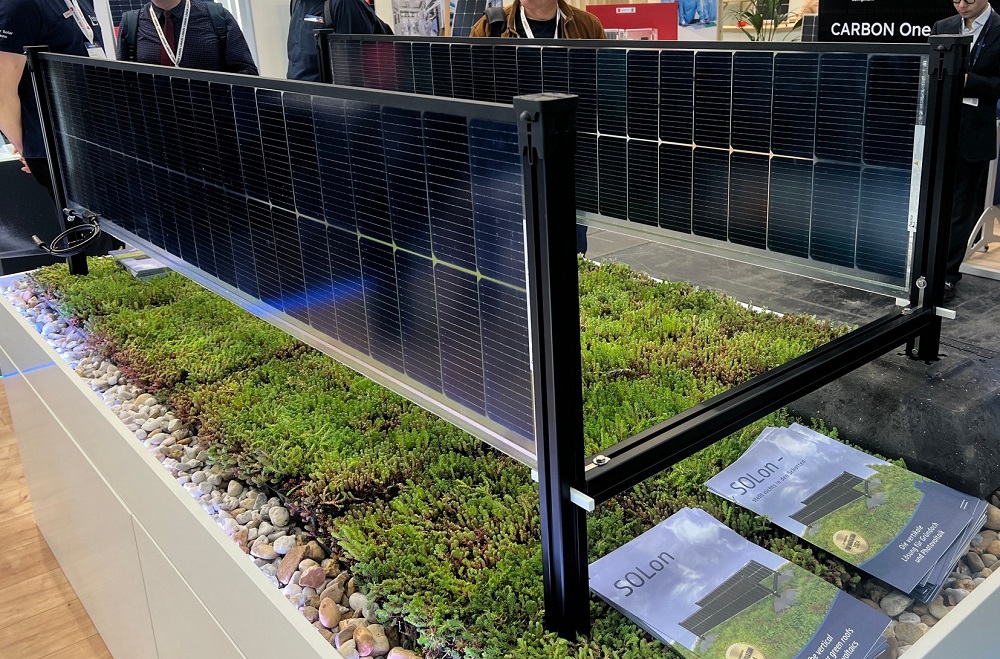
New research from Finland shows how the distance between solar panels plays a key role in determining power and crop yield. The scientists found that crops at a distance of 8 meters received at least 75% of the irradiation, which is expected to have minimal impact compared to a no-shade scenario.

November 13, 2025
Emiliano Bellini

Scientists from the University of Turku in Finland have investigated the impact of solar panel row spacing on power and crop yield in vertical two-sided agrivoltaic projects at high latitudes and found that a spacing of at least 8 meters is necessary to ensure project viability.

In the study “Performance evaluation of high-latitude agrivoltaic systems with vertically mounted bifacial panels”, published in Applied energythe researchers explained that their work addresses a gap in the literature regarding high-latitude APV systems.

“This work is computational, with a focus on energy production and factors affecting the agrivoltaic system, and is needed to motivate further experimental studies,” they stressed. “The purpose of the crop irradiation study was to estimate how to avoid excessive shading of crops in an agrivoltaic system.”

Using PVsyst, the research team modeled an east-west oriented agrivoltaic system consisting of 15 module rows in a landscape configuration, with a ground clearance of 1 m and agricultural land between the rows. A clearance of 0.5 m was left on each side of the panels to account for areas inaccessible to agricultural implements. A driving distance of 5 to 100 meters was simulated. Two additional south-facing systems have been created for benchmarking.

With these simulations, the researchers aimed to assess the degree of shade at high latitudes, evaluate how panel-induced shade affects energy generation and crop yield, and determine how crop type affects albedo.

See also  Solargis updates software for design and evaluation of PV projects – SPE

The analysis showed that for vertical bifacial arrays, the distance between module rows should be between 11.3 m and 13.7 m to maintain 90% of agricultural yield compared to reference fields without PV panels.

“Increasing driving distance has a significant impact on production, which increases rapidly up to 10 meters; above 20 meters, however, gains begin to stagnate,” the researchers noted. “At a distance of 8 meters, the crops received at least 75% of the irradiation, which is expected to have a minimal impact compared to a no-shade scenario.”

In terms of crop selection and its influence on albedo, winter barley produced the highest energy yield, while oats produced the lowest. Shading caused the largest power losses in the east-west configuration, especially when tall objects such as trees were near the array. Sites with south-facing shade were identified as most suitable for vertical bifacial agrivoltaic systems.

A techno-economic analysis based on spot electricity prices further showed that east-west oriented vertical installations are more profitable than their south-facing counterparts, especially as the share of PV in the energy mix increases.

“This is because both energy prices and production of vertical bifacial PV systems show two peaks: one in the morning and one in the evening,” the scientists concluded. “Additionally, prioritizing self-consumption may be the most viable approach, as self-consumed energy has a higher value than energy sold to the grid as there are no additional costs.”

This content is copyrighted and may not be reused. If you would like to collaborate with us and reuse some of our content, please contact: editors@pv-magazine.com.

See also  Reducing the degradation of the Topcon solar cell via copper plates - PV Magazine International

Popular content

Source link

agrivoltaic feasible High latitudes meters row spacing SPE systems twosided Vertical
Share. Facebook Twitter Pinterest LinkedIn Tumblr Email
solarenergy
  • Website

Related Posts

Thermoacoustic heat pumps are on the verge of commercial breakthrough – SPE

April 23, 2026

Zendure launches battery ranges for residential PV – SPE

April 23, 2026

Solar energy’s rebound effect could increase European electricity demand by 5% by 2050 – SPE

April 23, 2026
Leave A Reply Cancel Reply

Don't Miss
Technology

Tandem PV launches commercial production of perovskite silicon in California – SPE

By solarenergyApril 21, 20260

Tandem PV has opened a 40 MW commercial demonstration plant in Fremont, California, marking a…

‘It is not necessary to simulate male counterparts or to fit outdated stereotypes’ – PV Magazine International

May 17, 2025

Florida college installs 700 kW floating solar array | Projects Weekly

September 30, 2025

Techno-economic feasibility of hydrogen storage in hydropower-dominated countries – SPE

May 14, 2024
Stay In Touch
  • Facebook
  • Twitter
  • Pinterest
  • Instagram
  • YouTube
  • Vimeo
Our Picks

Fraunhofer ISE develops colored film technology for patterned solar panels

April 23, 2026

Thermoacoustic heat pumps are on the verge of commercial breakthrough – SPE

April 23, 2026

The federal court has halted Trump administration orders that hinder solar and wind energy development

April 23, 2026

Zendure launches battery ranges for residential PV – SPE

April 23, 2026
Our Picks

Fraunhofer ISE develops colored film technology for patterned solar panels

April 23, 2026

Thermoacoustic heat pumps are on the verge of commercial breakthrough – SPE

April 23, 2026

The federal court has halted Trump administration orders that hinder solar and wind energy development

April 23, 2026
About
About

Stay updated with the latest in solar energy. Discover innovations, trends, policies, and market insights driving the future of sustainable power worldwide.

Subscribe to Updates

Get the latest creative news and updates about Solar industry directly in your inbox!

Facebook X (Twitter) Instagram Pinterest
  • Contact
  • Privacy Policy
  • Terms & Conditions
© 2026 Tsolarenergynews.co - All rights reserved.

Type above and press Enter to search. Press Esc to cancel.