
Close Menu
  • News
  • Industry
  • Solar Panels
  • Commercial
  • Residential
  • Finance
  • Technology
  • Carbon Credit
  • More
    • Policy
    • Energy Storage
    • Utility
    • Cummunity
What's Hot

A deep learning model tracks the status of the EV battery with high precision

March 6, 2026

Mitsubishi Electric Trane announces new heat pump line for hydronic heating – SPE

March 6, 2026

Origis is developing a 413 MW solar portfolio in West Texas

March 6, 2026
Facebook X (Twitter) Instagram
Solar Energy News
Friday, March 6
  • News
  • Industry
  • Solar Panels
  • Commercial
  • Residential
  • Finance
  • Technology
  • Carbon Credit
  • More
    • Policy
    • Energy Storage
    • Utility
    • Cummunity
Solar Energy News
Home - Solar Industry - 3D solar tower increases the capacity factor by 50% and triples the solar surface area
Solar Industry

3D solar tower increases the capacity factor by 50% and triples the solar surface area

solarenergyBy solarenergyOctober 27, 2025No Comments3 Mins Read
Facebook Twitter Pinterest LinkedIn Tumblr Email
Share
Facebook Twitter LinkedIn Pinterest Email

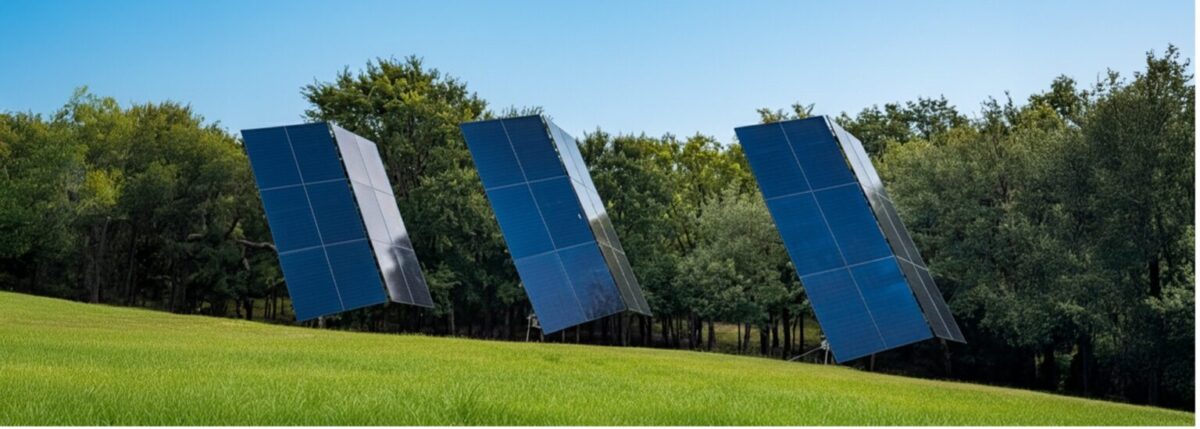
Janta Power closed $5.5 million in seed financing to develop its vertical solar tower, with pilot programs already underway at major global airports such as Dallas-Fort Worth and Munich International Airport.

October 27, 2025
Ryan Kennedy

By pv magazine USA

Janta Power, developer of vertical three-dimensional solar towers, announced that it has closed a $5.5 million seed funding round led by Mac Venture Capital and Collab Capital.

The money is expected to help the startup scale up its patented 3D solar towers, which are designed to have high energy density for areas with limited space. The product has applications for data centers, EV charging hubs, telecommunications towers, universities and a range of industrial facilities, Janta Power said.

Janta said the geometry of the single-axis sun tracking tower achieves approximately three times the solar surface exposure of traditional flat arrays on the same land surface. The stacked vertical design of each tower captures both morning and evening light from a low angle, creating a double-peak power curve that better matches actual energy demand, the company said.

The company said its solar tower has a capacity factor that is 50% greater than that of traditional solar installations. The capacity factor is the amount of electricity actually produced compared to the theoretical maximum capacity of the installed solar energy. While typical flat installations have a capacity factor of around 22%, Janta Power says its typical installations achieve a capacity factor of around 32%.

The company said it can achieve a levelized cost of electricity (LCOE) as low as $0.05 kWh.

The company currently offers a 5 kW solar tower, with 1.5 kW rooftop models and 8.5 kW and 10 kW towers in development.

See also  UK solar deployment will remain in the range of 1.5-2 GW in 2024

The towers are currently being deployed in pilot programs at major international airports, including Munich International Airport and Dallas-Fort Worth International Airport.

Each structure is designed to withstand wind speeds of at least 110 miles per hour and as much as 170 miles per hour, and features steel construction and modular spiral or pier foundations that eliminate the need for extensive grading, according to Janta Power.

While single-axis tracker installations concentrate output around noon, Janta says the 3D configuration smooths out energy delivery throughout the day, reducing strain on power grids and dependence on peaker power plants.

Image: Janta Power

This content is copyrighted and may not be reused. If you would like to collaborate with us and reuse some of our content, please contact: editors@pv-magazine.com.

Popular content

Source link

area capacity factor increases solar surface tower triples
Share. Facebook Twitter Pinterest LinkedIn Tumblr Email
solarenergy
  • Website

Related Posts

Origis is developing a 413 MW solar portfolio in West Texas

March 6, 2026

New Jersey expands state community solar program by 3 GW

March 6, 2026

How to address imbalance datasets in solar panel dust detection

March 5, 2026
Leave A Reply Cancel Reply

Don't Miss
Policy

Slovenia Planning 140 MW Floating Sun Factory – PV Magazine International

By solarenergySeptember 27, 20250

The Slovenian energy company HSE is developing a 140 MW floating solar project, with work…

CS Energy Commissions Three Tesla Megapack Bess projects in New York

February 9, 2025

Navisun is working with Queen City Solar on its community solar portfolio in Maryland

November 12, 2024

U.S. households claimed $6.3 billion in clean energy tax credits by 2023

August 8, 2024
Stay In Touch
  • Facebook
  • Twitter
  • Pinterest
  • Instagram
  • YouTube
  • Vimeo
Our Picks

A deep learning model tracks the status of the EV battery with high precision

March 6, 2026

Mitsubishi Electric Trane announces new heat pump line for hydronic heating – SPE

March 6, 2026

Origis is developing a 413 MW solar portfolio in West Texas

March 6, 2026

New Jersey expands state community solar program by 3 GW

March 6, 2026
Our Picks

A deep learning model tracks the status of the EV battery with high precision

March 6, 2026

Mitsubishi Electric Trane announces new heat pump line for hydronic heating – SPE

March 6, 2026

Origis is developing a 413 MW solar portfolio in West Texas

March 6, 2026
About
About

Stay updated with the latest in solar energy. Discover innovations, trends, policies, and market insights driving the future of sustainable power worldwide.

Subscribe to Updates

Get the latest creative news and updates about Solar industry directly in your inbox!

Facebook X (Twitter) Instagram Pinterest
  • Contact
  • Privacy Policy
  • Terms & Conditions
© 2026 Tsolarenergynews.co - All rights reserved.

Type above and press Enter to search. Press Esc to cancel.