

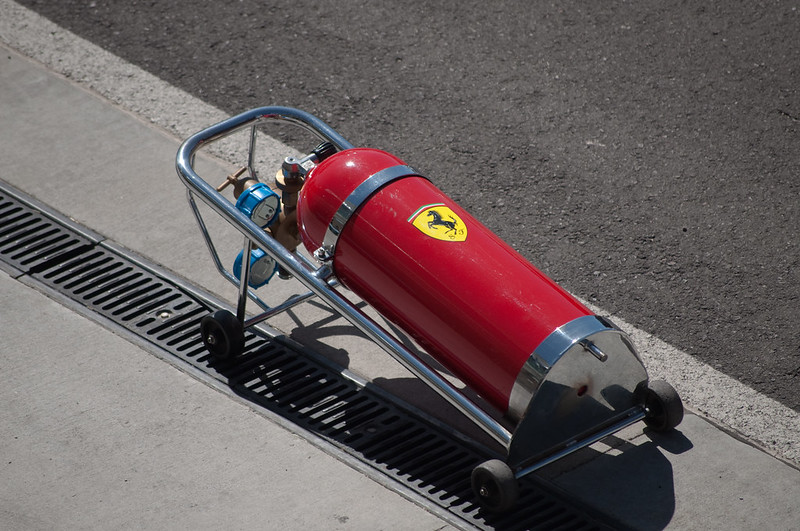
Researchers in Canada have created an experimental workbench for above-ground compressed air energy storage. Experimental data calibration reportedly ensured the model’s accuracy with an average absolute percent error of less than 4.0%.
Researchers from Canada have analyzed the performance of an above-ground compressed air energy storage system (CAES) using both an experimental setup and a numerical model. A quasi-steady-state system modeling approach was then able to predict several parameters of the experimental setup with a mean absolute percentage error (MAPE) of less than 4%.
“This study hypothesizes that the development of a fully instrumented test bench and an advanced numerical model, integrating real air properties and considering heat transfer dynamics, will significantly improve the model capability in representing the real behavior of CAES systems by minimize errors,” she explained. “It is further hypothesized that this improved model will enable detailed parametric analysis, which will help identify specific opportunities for system improvement.”
CAES can help leverage the intermittent nature of solar energy because it can store compressed air during times of production surpluses and release it during times of shortages. While underground CAES can be used at grid scale, an above-ground system is more flexible, although the research into it is less mature.
“The CAES system works as follows: during periods of surplus energy, electricity is used to power a motor that drives a compressor. This compressor then compresses the ambient air into a storage reservoir,” the academics explain. “When there is a demand for electricity, the compressed air is released from the reservoir and directed to a turbine. The turbine converts the air pressure energy into rotating motion, which is then used to drive a generator to produce electricity.”
The scientists’ experimental setup included a 45 kW compressor, a control unit, an adsorption dryer and 20 reservoirs with a combined volume of 5.86 m3. Based on the results obtained from the operation of this system and the reviewed literature, the scientist created a model to predict its operation, using a quasi-steady-state approach.
“The quasi-steady-state approach models the transient dynamics of the system, dividing calculations into smaller intervals characterized by steady-state conditions,” the group explains. “This method allows us to consider changes in environmental conditions over time, providing a dynamic simulation of the system’s response, which is an improvement over the steady-state assumptions used in other reviewed studies were used.”
The model was further calibrated and achieved a MAPE ranging between 0.21% and 3.58% for the 13 parameters. “With MAPE values consistently below 4.0%, confidence in the model’s ability to accurately simulate system dynamics is instilled, providing a robust foundation for subsequent parametric analyses,” the researchers said. they noted that the proposed model facilitates the deliberate manipulation of parameters. , allowing a systematic assessment of round-trip efficiency (RTE).
Based on the parametric analysis, the research group found that compressing air at lower temperatures reduces compressor workload and increases charging time, resulting in a 1% increase in RTE. They also found that decreasing the polytropic index towards a near isothermal process yielded a 7.5% increase in RTE upon preheating. Finally, the team also found that “increasing the number of expansion phases from one to three significantly improved RTE from 5.5% to 16%.”
The results are presented in “Above-ground compressed air energy storage systems: experimental and numerical approach”, published in Energy conversion and management. The research was conducted by Canada’s École de techno supérieure (ÉTS) and the Hydro-Québec Research Institute (IREQ).
This content is copyrighted and may not be reused. If you would like to collaborate with us and reuse some of our content, please contact: editors@pv-magazine.com.
