

Energy Minister Michael Shanks says community batteries can “put power back in the hands of local people”.
He commented on the potential of the technology as the UK government has launched a call for evidence to gather views on how shared battery storage could be rolled out in the UK.
The UK market is currently underdeveloped for community batteries, which enable shared access to the savings associated with battery energy storage systems (BESS), the government has said.
The call for evidence will gather insights on how to scale up implementation, remove regulatory and commercial barriers, ensure safety and ensure benefits reach those unable to install private energy storage in the home, such as tenants and people living in flats.
Shanks said: “If households want to experience the full benefit of clean energy, we need a more flexible energy system – and community batteries can help deliver this, giving tenants and people living in flats the chance to store cheaper renewable electricity and reduce their bills.”
Despite low uptake, there are some examples of the technology being deployed in Britain, including in one of Octopus Energy’s Zero Bills housing projects: built by gs8, a site with 113 homes, will have a centralized BESS and microgrid to enable electricity generated by solar energy to be “seamlessly shared” between households.
A federal one government subsidy scheme in Australia shows how the British government could step in to establish a network of community batteries in Britain.
Jack Taylor, managing director for Europe at Allume Energy, which provides shared solar technology to apartment tenants and operates in Australia, the UK and the US, welcomed the call for evidence.
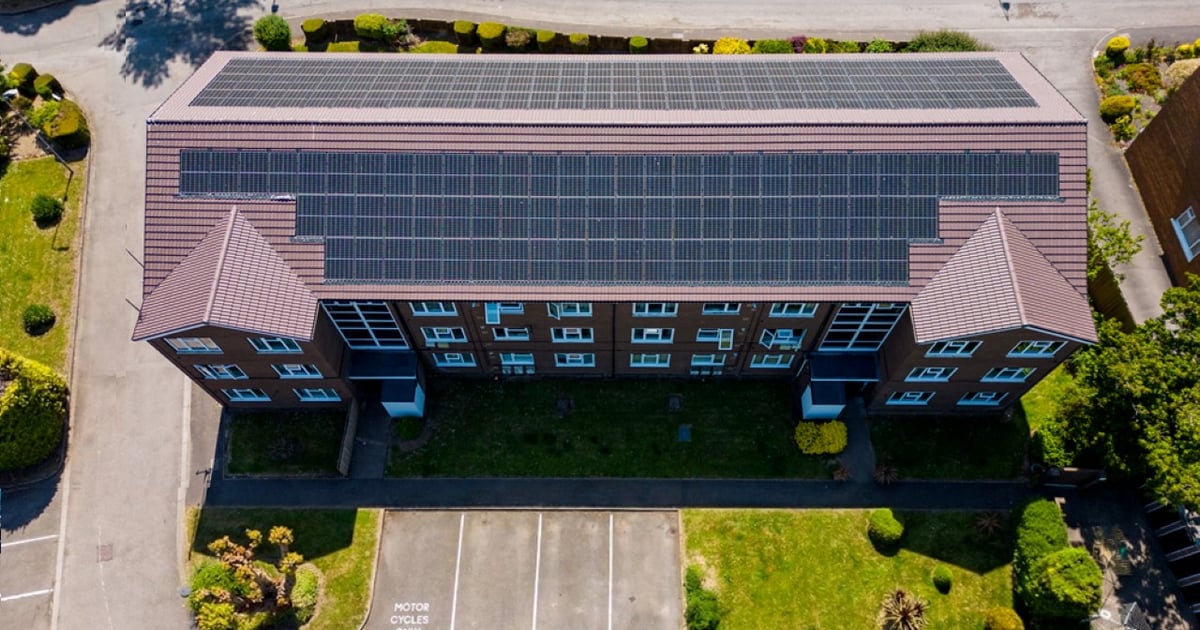
“When combined with rooftop solar, such integrated battery systems can really increase savings and help people take control of their energy bills,” said Taylor. The company in 2023 a battery installed at a shared solar facility in Cardiffwhich the company says has reduced demand for energy from the grid by 60-70%.
While the call for evidence is a positive sign, showing that the government is committed to supporting new and emerging technologies that enable cost savings for consumers, it is worth noting that this may not deliver results.
In May last year, the industry welcomed a call for evidence on the benefit of making solar canopies mandatory on new car parks. It is in November responded to part of the consultation which focused on electric vehicle charging, but late last month, almost a year after the consultation was launched, a spokesperson for the Department for Energy Security and Net Zero (DESNZ) confirmed the mandate would not go ahead.
Government policy and its impact on the UK market will be the focus of the Clean Power 2030 Summit, which takes its name from the government’s target. The event opening address from Chris Stark, head of clean energy at DESNZ will update progress and identify priority gaps in government policy.
Tickets are still available for the Clean Power 2030 Summit, which focuses on the industrial, economic and political needs of the renewable energy industry as it scales up. View the full agenda on the event website And book your ticket to attend. Our readers can get a 20% discount on tickets with the code SPP20.
