
Close Menu
  • News
  • Industry
  • Solar Panels
  • Commercial
  • Residential
  • Finance
  • Technology
  • Carbon Credit
  • More
    • Policy
    • Energy Storage
    • Utility
    • Cummunity
What's Hot

Vistra adds Enphase batteries to the Texas VPP program

March 6, 2026

ACME Solar signs 450 MW PPA in India, commissions new 38 MW/82 MWh BESS – SPE

March 6, 2026

Freight costs are rising due to military attacks in the Middle East

March 6, 2026
Facebook X (Twitter) Instagram
Solar Energy News
Friday, March 6
  • News
  • Industry
  • Solar Panels
  • Commercial
  • Residential
  • Finance
  • Technology
  • Carbon Credit
  • More
    • Policy
    • Energy Storage
    • Utility
    • Cummunity
Solar Energy News
Home - News - Roasted rice husk ash provides a lasting boost to battery performance
News

Roasted rice husk ash provides a lasting boost to battery performance

solarenergyBy solarenergyDecember 6, 2024No Comments3 Mins Read
Facebook Twitter Pinterest LinkedIn Tumblr Email
Share
Facebook Twitter LinkedIn Pinterest Email


Roasted rice husk ash provides a lasting boost to battery performance


Researchers at the University of Michigan have discovered that ash from burned rice husks contains a unique form of carbon capable of nearly doubling the energy density of lithium-ion and sodium-ion batteries. This innovation could provide a sustainable, high-performance alternative to graphite in battery electrodes.

This new ‘hard’ carbon, revealed through advanced spectroscopy techniques, significantly outperforms commercial hard carbon and graphite. It offers a storage capacity of more than 700 milliamp-hours (mAh) per gram, almost double that of graphite. “In this case, combustion can produce hard carbon because when you burn the carbon from rice husks you create a shell of silica around the remaining carbon and bake it like a cake,” explains Richard Laine, a professor at the University of Michigan. out. and corresponding author of the study published in *Advanced Sustainable Systems*.

It was previously thought that hard carbon required heating biomass to extreme temperatures of around 1200 C in an oxygen-free environment. The discovery that combustion can produce hard carbon opens the way to harnessing agricultural waste for battery materials.

Rice husks, which are usually discarded in landfills, are an untapped domestic resource. Approximately 20 billion pounds of rice are grown annually in the US alone, creating significant potential for scaling up the process. Furthermore, burning rice hulls for electricity, such as Wadham Energy in California, generates 200,000 megawatt hours annually while remaining carbon neutral. “The CO2 released when burning rice husks comes from the same CO2 that the rice plant absorbed from the atmosphere during photosynthesis, making the electricity produced green and carbon neutral,” Laine added.

See also  OnPath Energy is breaking new ground for the solar project in Yorkshire

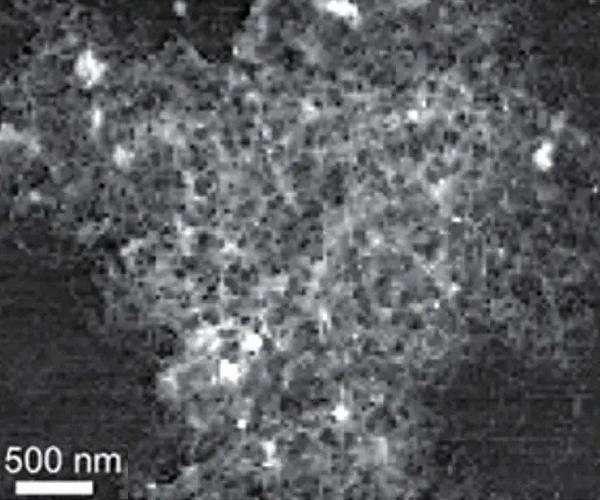
The process involves partially removing silica, which makes up about 90% of rice husk ash, leaving 60% to 70% carbon behind. Although initially thought to be amorphous, the material contains nanoscale graphite islands in an amorphous carbon matrix, giving rise to the superior “hard” carbon structure.

In battery applications, the nanoporous structure of hard carbon from rice hull ash increases lithium storage capacity, providing a crucial advantage for energy-dense batteries. This could help meet the growing demand for batteries in electric vehicles and renewable energy storage, while lowering costs and reducing environmental impact.

The team, with collaborators from the Karlsruhe Institute of Technology in Germany and supported by the National Science Foundation and Mercedes-Benz Research and Development North America, is working to bring this innovation to market. Patent protection has been applied for through UM Innovation Partnerships and the researchers are looking for industrial partners.


Source link

ash battery boost husk lasting performance Rice Roasted
Share. Facebook Twitter Pinterest LinkedIn Tumblr Email
solarenergy
  • Website

Related Posts

Vistra adds Enphase batteries to the Texas VPP program

March 6, 2026

A deep learning model tracks the status of the EV battery with high precision

March 6, 2026

Origis is developing a 413 MW solar portfolio in West Texas

March 6, 2026
Leave A Reply Cancel Reply

Don't Miss
Solar Industry

The fully perovskite tandem solar cell with dipolar passivation achieves an efficiency of 30.1%

By solarenergyDecember 1, 20250

Researchers in China have developed a dipolar passivation method that reduces defects and improves charge…

Virginia commission fixes major flaws in the Shared Solar program

November 25, 2025

Enphase begins accepting pre-orders for U.S.-made batteries

August 28, 2024

Norway to add 117 MW of solar power by 2025 – SPE

January 13, 2026
Stay In Touch
  • Facebook
  • Twitter
  • Pinterest
  • Instagram
  • YouTube
  • Vimeo
Our Picks

Vistra adds Enphase batteries to the Texas VPP program

March 6, 2026

ACME Solar signs 450 MW PPA in India, commissions new 38 MW/82 MWh BESS – SPE

March 6, 2026

Freight costs are rising due to military attacks in the Middle East

March 6, 2026

Solis launches new portfolio of residential storage systems – SPE

March 6, 2026
Our Picks

Vistra adds Enphase batteries to the Texas VPP program

March 6, 2026

ACME Solar signs 450 MW PPA in India, commissions new 38 MW/82 MWh BESS – SPE

March 6, 2026

Freight costs are rising due to military attacks in the Middle East

March 6, 2026
About
About

Stay updated with the latest in solar energy. Discover innovations, trends, policies, and market insights driving the future of sustainable power worldwide.

Subscribe to Updates

Get the latest creative news and updates about Solar industry directly in your inbox!

Facebook X (Twitter) Instagram Pinterest
  • Contact
  • Privacy Policy
  • Terms & Conditions
© 2026 Tsolarenergynews.co - All rights reserved.

Type above and press Enter to search. Press Esc to cancel.