
Close Menu
  • News
  • Industry
  • Solar Panels
  • Commercial
  • Residential
  • Finance
  • Technology
  • Carbon Credit
  • More
    • Policy
    • Energy Storage
    • Utility
    • Cummunity
What's Hot

Dutch solar owners asked to switch off during peak periods to ease the distribution crisis

June 7, 2026

The hydrogen flow: Toyota demonstrates its racing prototype on liquid hydrogen

June 7, 2026

Era of electrification exposing Australia’s weakest link

June 6, 2026
Facebook X (Twitter) Instagram
Solar Energy News
Sunday, June 7
  • News
  • Industry
  • Solar Panels
  • Commercial
  • Residential
  • Finance
  • Technology
  • Carbon Credit
  • More
    • Policy
    • Energy Storage
    • Utility
    • Cummunity
Solar Energy News
Home - Technology - Gulf heat dome and Arctic current determine May solar results – SPE
Technology

Gulf heat dome and Arctic current determine May solar results – SPE

solarenergyBy solarenergyMay 31, 2024No Comments3 Mins Read
Facebook Twitter Pinterest LinkedIn Tumblr Email
Share
Facebook Twitter LinkedIn Pinterest Email

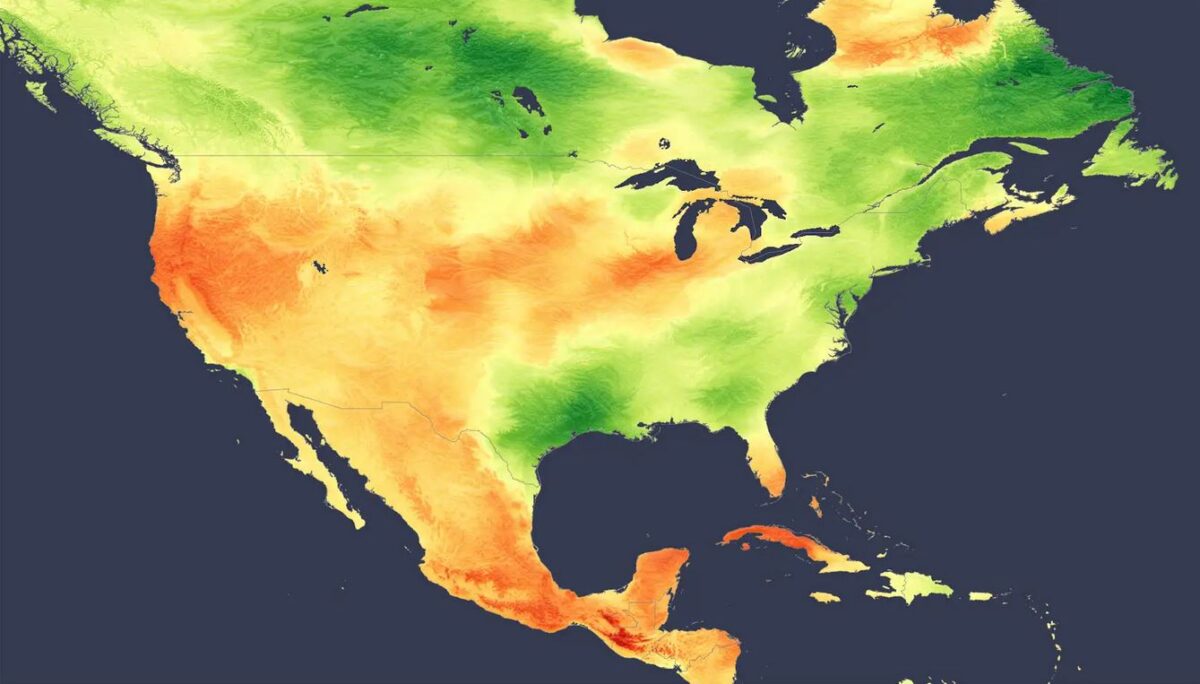
In a new weekly update for pv magazineSolcast, a DNV company, reports that a strong polar jet stream and a record-breaking heat dome in May resulted in a stark contrast in radiation patterns across North America. The western and central US, along with Mexico, experienced higher than normal insolation, while the Gulf and East Coast regions experienced lower insolation.

May 31, 2024 Solcast

A strong polar jet stream and a record-breaking heat dome in May resulted in a stark contrast in radiation patterns across North America. The western and central United States, along with Mexico, experienced higher-than-normal insolation, while the Gulf and East Coast regions saw lower insolation, according to analysis using the Solcast API.

The persistent heat dome over the Gulf of Mexico has led to hot conditions across Mexico, with radiation levels reaching nearly 130% of climatological averages. Most of Mexico and many Central American states are experiencing a record-breaking heat wave, which is being exacerbated by
clear skies thanks to a weak subtropical jet stream. This situation exacerbates existing conditions resulting from the dry winter Mexico has experienced. The heat dome is expected to continue into June, shifting its influence toward the southern US.

In the southeastern US, wind and stormy weather have caused insolation levels to be nearly 20% below average. The East Coast has also seen a decrease in insolation of about 10% compared to long-term averages in May. Southerly winds from the tropics brought warm and moist air
northward, contributing to the unusually warm conditions and lower-than-normal insolation in Gulf states like Texas, Mississippi, Georgia and Alabama. This is a preview of the expected stronger-than-normal hurricane season, which will not bode well for solar energy production due to the risk of damage, increased cloud cover and temperature-related losses. The moist, hot air has also led to severe storms, like the ones that hit Texas earlier this week and neighboring states this weekend. These storms put strain on the electrical grid, causing numerous outages and leaving many without power in the above-average temperatures.

See also  Spain updates grid rules to expand energy storage and integration of renewables – SPE

In contrast, the strong polar jet stream has created favorable conditions for asset and network managers in the western US. The jet stream over the northern Pacific Ocean caused unusually cool temperatures in the Northwest, creating higher-than-normal cold temperatures
irradiation. Solar radiation in this region is almost 20% higher than the long-term average. This cool weather, combined with long daylight hours, has provided optimal conditions for solar energy generation ahead of the expected hot and dry summer.

Solcast produces these figures by tracking clouds and aerosols worldwide at a resolution of 1-2 km, using proprietary satellite data AI/ML algorithms. This data is used to drive irradiance models, allowing Solcast to calculate high-resolution irradiance, with a typical deviation of less than 2%, as well as cloud tracking predictions. This data is used by more than 300 companies that manage more than 150 GW of solar energy worldwide.

The views and opinions expressed in this article are those of the author and do not necessarily reflect those of the author pv magazine.

This content is copyrighted and may not be reused. If you would like to collaborate with us and reuse some of our content, please contact: editors@pv-magazine.com.

Source link

Arctic current determine dome Gulf heat results solar SPE
Share. Facebook Twitter Pinterest LinkedIn Tumblr Email
solarenergy
  • Website

Related Posts

Dutch solar owners asked to switch off during peak periods to ease the distribution crisis

June 7, 2026

Letter from China’s PV Industry: Arctech wins 2.1 GW solar deal

June 5, 2026

ComEd starts a new energy pilot with a solar rebate on the roof of a brewery

June 5, 2026
Leave A Reply Cancel Reply

Don't Miss
Solar Industry

Tata Power touches 4 GW production capacity for solar module

By solarenergyJune 10, 20250

The PV module daughter of Tata Power, TP Solar, has produced more than 4 GW…

5 Big Solar Trends from CLEANPOWER: Utility-scale Solar on the Rise

May 24, 2024

New 200-KW Solar Project Powers Office Building along San Francisco Embarcadero

August 7, 2025

Perovskite solar cell based on a hole-selective intermediate layer achieves an efficiency of 26.39%

January 2, 2025
Stay In Touch
  • Facebook
  • Twitter
  • Pinterest
  • Instagram
  • YouTube
  • Vimeo
Our Picks

Dutch solar owners asked to switch off during peak periods to ease the distribution crisis

June 7, 2026

The hydrogen flow: Toyota demonstrates its racing prototype on liquid hydrogen

June 7, 2026

Era of electrification exposing Australia’s weakest link

June 6, 2026

‘Come out from behind your screen, our industry is ultimately about people’

June 6, 2026
Our Picks

Dutch solar owners asked to switch off during peak periods to ease the distribution crisis

June 7, 2026

The hydrogen flow: Toyota demonstrates its racing prototype on liquid hydrogen

June 7, 2026

Era of electrification exposing Australia’s weakest link

June 6, 2026
About
About

Stay updated with the latest in solar energy. Discover innovations, trends, policies, and market insights driving the future of sustainable power worldwide.

Subscribe to Updates

Get the latest creative news and updates about Solar industry directly in your inbox!

Facebook X (Twitter) Instagram Pinterest
  • Contact
  • Privacy Policy
  • Terms & Conditions
© 2026 Tsolarenergynews.co - All rights reserved.

Type above and press Enter to search. Press Esc to cancel.