
Close Menu
  • News
  • Industry
  • Solar Panels
  • Commercial
  • Residential
  • Finance
  • Technology
  • Carbon Credit
  • More
    • Policy
    • Energy Storage
    • Utility
    • Cummunity
What's Hot

A deep learning model tracks the status of the EV battery with high precision

March 6, 2026

Mitsubishi Electric Trane announces new heat pump line for hydronic heating – SPE

March 6, 2026

Origis is developing a 413 MW solar portfolio in West Texas

March 6, 2026
Facebook X (Twitter) Instagram
Solar Energy News
Friday, March 6
  • News
  • Industry
  • Solar Panels
  • Commercial
  • Residential
  • Finance
  • Technology
  • Carbon Credit
  • More
    • Policy
    • Energy Storage
    • Utility
    • Cummunity
Solar Energy News
Home - News - New method increases the efficiency and lifespan of organic solar cells
News

New method increases the efficiency and lifespan of organic solar cells

solarenergyBy solarenergyJanuary 10, 2025No Comments2 Mins Read
Facebook Twitter Pinterest LinkedIn Tumblr Email
Share
Facebook Twitter LinkedIn Pinterest Email

New method increases the efficiency and lifespan of organic solar cells


Researchers from Abo Akademi University in Finland have uncovered and addressed a previously unknown loss mechanism in organic solar cells, significantly improving their efficiency and operational lifespan. The findings provide a route for advancing the performance and stability of these renewable energy devices.

Abo Akademi University’s Organic Electronics Research Group worked with Professor Chang-Qi Ma’s team from the Suzhou Institute for Nano-Tech and Nano-Bionics to achieve these results. Major contributions from Abo Akademi University include Ronald Osterbacka, Sebastian Wilken and Oskar Sandberg.

The research indicates an exceptional efficiency of more than 18% for solar cells with inverted structure and a surface area of ​​1 cm. In addition, these cells demonstrated a record lifetime of 24,700 hours when exposed to white light, corresponding to a predicted operational life of more than 16 years.

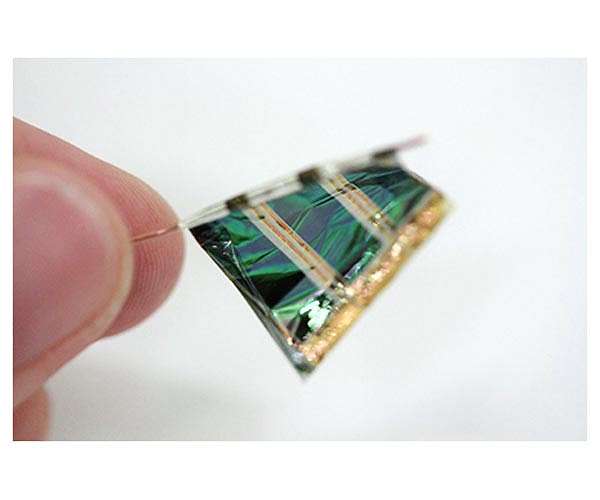
Organic solar photovoltaics (OPVs) are attractive for commercial applications due to their lightweight and flexible properties and energy-efficient production. Over the past five years, the energy conversion efficiency of OPVs has increased dramatically, with conventionally structured cells exceeding 20% ​​under laboratory conditions. However, the materials used in these devices degrade when exposed to sunlight and air, limiting their long-term stability.

To extend service life, researchers advocate using the most robust material for the top contact layer. Inverted structure solar cells (or nip solar cells) offer greater durability, but their efficiency lags behind that of conventional designs. This new discovery addresses this gap and shows a clear route to improving both the performance and durability of these inverted solar cells.

See also  Residential installer Purelight Power shutter work, blames OBBBA

The study identified a narrow recombination region caused by the ground contact – typically made of metal oxides such as zinc oxide – as a critical loss mechanism. By introducing a thin, solvent-processed passivation layer of silicon oxide nitrate (SiOxNy) onto the bottom contact, the researchers eliminated the recombination region. This innovation improved the photocurrent and overall efficiency of the solar cells. The findings suggest that this approach is feasible for large-scale production of efficient and stable organic solar cells.

Research report:Inverted organic solar cells with an in situ derived SiOxNy passivation layer and an energy conversion efficiency of more than 18%


Source link

cells efficiency increases lifespan method organic solar
Share. Facebook Twitter Pinterest LinkedIn Tumblr Email
solarenergy
  • Website

Related Posts

A deep learning model tracks the status of the EV battery with high precision

March 6, 2026

Origis is developing a 413 MW solar portfolio in West Texas

March 6, 2026

New Jersey expands state community solar program by 3 GW

March 6, 2026
Leave A Reply Cancel Reply

Don't Miss
Solar Industry

Agrivoltaics on rice fields, no lost business

By solarenergyAugust 7, 20250

Researchers in Japan have made another attempt to make agrivoltaisies on rice fields technically and…

Treaty Eiken Schone Energy breaks the land on 100-MW Arkansas Solar project

March 6, 2025

Perovskite solar cell based on an electron-rich surface passivation layer achieves an efficiency of 23.27%

July 3, 2024

New cleaning aid for roll-to-roll production equipment for perovskite and organic PV – SPE

October 25, 2024
Stay In Touch
  • Facebook
  • Twitter
  • Pinterest
  • Instagram
  • YouTube
  • Vimeo
Our Picks

A deep learning model tracks the status of the EV battery with high precision

March 6, 2026

Mitsubishi Electric Trane announces new heat pump line for hydronic heating – SPE

March 6, 2026

Origis is developing a 413 MW solar portfolio in West Texas

March 6, 2026

New Jersey expands state community solar program by 3 GW

March 6, 2026
Our Picks

A deep learning model tracks the status of the EV battery with high precision

March 6, 2026

Mitsubishi Electric Trane announces new heat pump line for hydronic heating – SPE

March 6, 2026

Origis is developing a 413 MW solar portfolio in West Texas

March 6, 2026
About
About

Stay updated with the latest in solar energy. Discover innovations, trends, policies, and market insights driving the future of sustainable power worldwide.

Subscribe to Updates

Get the latest creative news and updates about Solar industry directly in your inbox!

Facebook X (Twitter) Instagram Pinterest
  • Contact
  • Privacy Policy
  • Terms & Conditions
© 2026 Tsolarenergynews.co - All rights reserved.

Type above and press Enter to search. Press Esc to cancel.