
Close Menu
  • News
  • Industry
  • Solar Panels
  • Commercial
  • Residential
  • Finance
  • Technology
  • Carbon Credit
  • More
    • Policy
    • Energy Storage
    • Utility
    • Cummunity
What's Hot

Fraunhofer ISE develops colored film technology for patterned solar panels

April 23, 2026

Thermoacoustic heat pumps are on the verge of commercial breakthrough – SPE

April 23, 2026

The federal court has halted Trump administration orders that hinder solar and wind energy development

April 23, 2026
Facebook X (Twitter) Instagram
Solar Energy News
Thursday, April 23
  • News
  • Industry
  • Solar Panels
  • Commercial
  • Residential
  • Finance
  • Technology
  • Carbon Credit
  • More
    • Policy
    • Energy Storage
    • Utility
    • Cummunity
Solar Energy News
Home - News - New method increases the efficiency and lifespan of organic solar cells
News

New method increases the efficiency and lifespan of organic solar cells

solarenergyBy solarenergyJanuary 10, 2025No Comments2 Mins Read
Facebook Twitter Pinterest LinkedIn Tumblr Email
Share
Facebook Twitter LinkedIn Pinterest Email

New method increases the efficiency and lifespan of organic solar cells


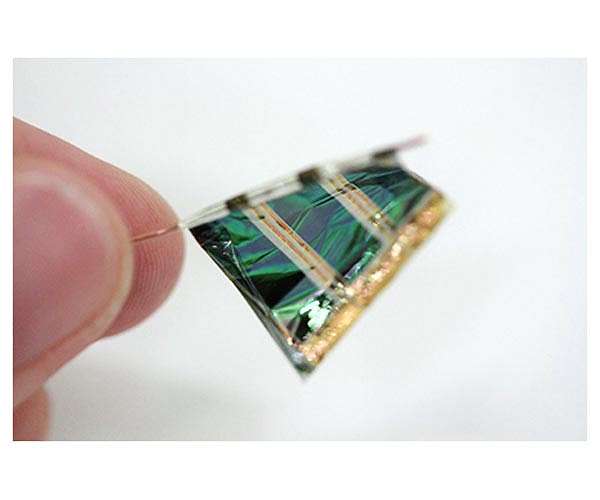
Researchers from Abo Akademi University in Finland have uncovered and addressed a previously unknown loss mechanism in organic solar cells, significantly improving their efficiency and operational lifespan. The findings provide a route for advancing the performance and stability of these renewable energy devices.

Abo Akademi University’s Organic Electronics Research Group worked with Professor Chang-Qi Ma’s team from the Suzhou Institute for Nano-Tech and Nano-Bionics to achieve these results. Major contributions from Abo Akademi University include Ronald Osterbacka, Sebastian Wilken and Oskar Sandberg.

The research indicates an exceptional efficiency of more than 18% for solar cells with inverted structure and a surface area of ​​1 cm. In addition, these cells demonstrated a record lifetime of 24,700 hours when exposed to white light, corresponding to a predicted operational life of more than 16 years.

Organic solar photovoltaics (OPVs) are attractive for commercial applications due to their lightweight and flexible properties and energy-efficient production. Over the past five years, the energy conversion efficiency of OPVs has increased dramatically, with conventionally structured cells exceeding 20% ​​under laboratory conditions. However, the materials used in these devices degrade when exposed to sunlight and air, limiting their long-term stability.

To extend service life, researchers advocate using the most robust material for the top contact layer. Inverted structure solar cells (or nip solar cells) offer greater durability, but their efficiency lags behind that of conventional designs. This new discovery addresses this gap and shows a clear route to improving both the performance and durability of these inverted solar cells.

See also  Solar cell efficiency improved with innovative perovskite technology

The study identified a narrow recombination region caused by the ground contact – typically made of metal oxides such as zinc oxide – as a critical loss mechanism. By introducing a thin, solvent-processed passivation layer of silicon oxide nitrate (SiOxNy) onto the bottom contact, the researchers eliminated the recombination region. This innovation improved the photocurrent and overall efficiency of the solar cells. The findings suggest that this approach is feasible for large-scale production of efficient and stable organic solar cells.

Research report:Inverted organic solar cells with an in situ derived SiOxNy passivation layer and an energy conversion efficiency of more than 18%


Source link

cells efficiency increases lifespan method organic solar
Share. Facebook Twitter Pinterest LinkedIn Tumblr Email
solarenergy
  • Website

Related Posts

Fraunhofer ISE develops colored film technology for patterned solar panels

April 23, 2026

The federal court has halted Trump administration orders that hinder solar and wind energy development

April 23, 2026

Solar energy’s rebound effect could increase European electricity demand by 5% by 2050 – SPE

April 23, 2026
Leave A Reply Cancel Reply

Don't Miss
Technology

How to achieve a higher energy yield with east-west oriented solar panels on flat roofs – SPE

By solarenergyJanuary 13, 20250

Researchers in Switzerland investigated different setups to maximize energy yield per surface area for PV…

Utrecht Waste Water plant launches the largest heat pump in the Netherlands – PV Magazine International

March 1, 2025

Dyness launches new C&I battery – SPE

August 12, 2024

Apatura affects 1.4GW permission storage pipeline in Scotland

February 28, 2025
Stay In Touch
  • Facebook
  • Twitter
  • Pinterest
  • Instagram
  • YouTube
  • Vimeo
Our Picks

Fraunhofer ISE develops colored film technology for patterned solar panels

April 23, 2026

Thermoacoustic heat pumps are on the verge of commercial breakthrough – SPE

April 23, 2026

The federal court has halted Trump administration orders that hinder solar and wind energy development

April 23, 2026

Zendure launches battery ranges for residential PV – SPE

April 23, 2026
Our Picks

Fraunhofer ISE develops colored film technology for patterned solar panels

April 23, 2026

Thermoacoustic heat pumps are on the verge of commercial breakthrough – SPE

April 23, 2026

The federal court has halted Trump administration orders that hinder solar and wind energy development

April 23, 2026
About
About

Stay updated with the latest in solar energy. Discover innovations, trends, policies, and market insights driving the future of sustainable power worldwide.

Subscribe to Updates

Get the latest creative news and updates about Solar industry directly in your inbox!

Facebook X (Twitter) Instagram Pinterest
  • Contact
  • Privacy Policy
  • Terms & Conditions
© 2026 Tsolarenergynews.co - All rights reserved.

Type above and press Enter to search. Press Esc to cancel.