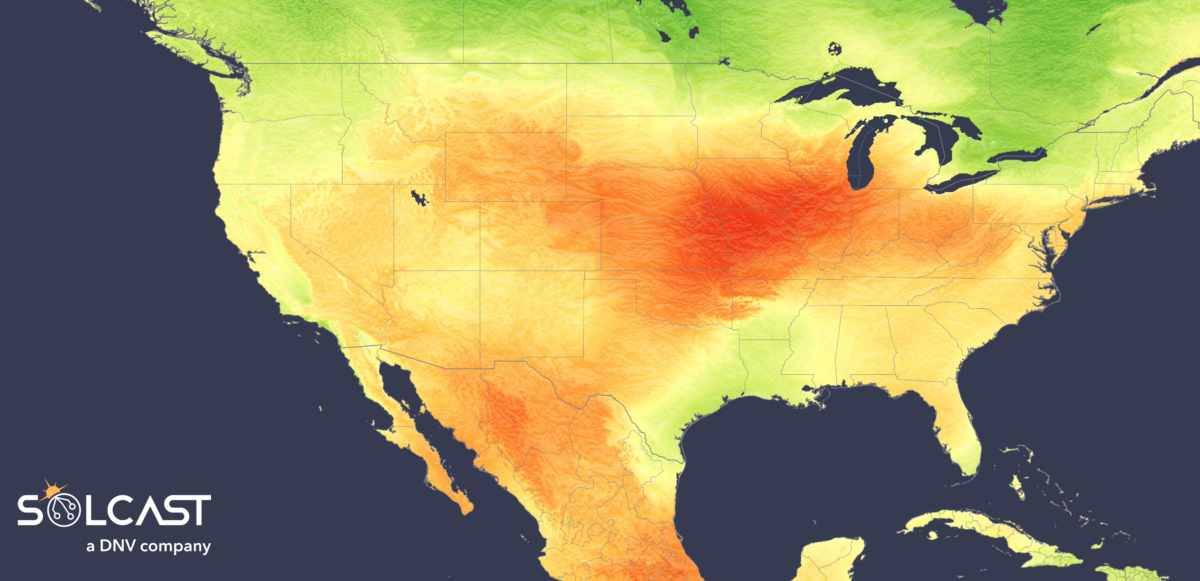
In a new weekly update for pv magazineSolcast, a DNV company, reports that the US Midwest experienced exceptional conditions with insolation up to 10% higher than normal year-round, while areas along the Gulf Coast and much of the West Coast received slightly less than average sunshine knew.
2024 presented regional contrasts of solar radiation in the United States. The Midwest experienced exceptional conditions with insolation up to 10% above normal year-round, while areas along the Gulf Coast and much of the West Coast suffered slightly
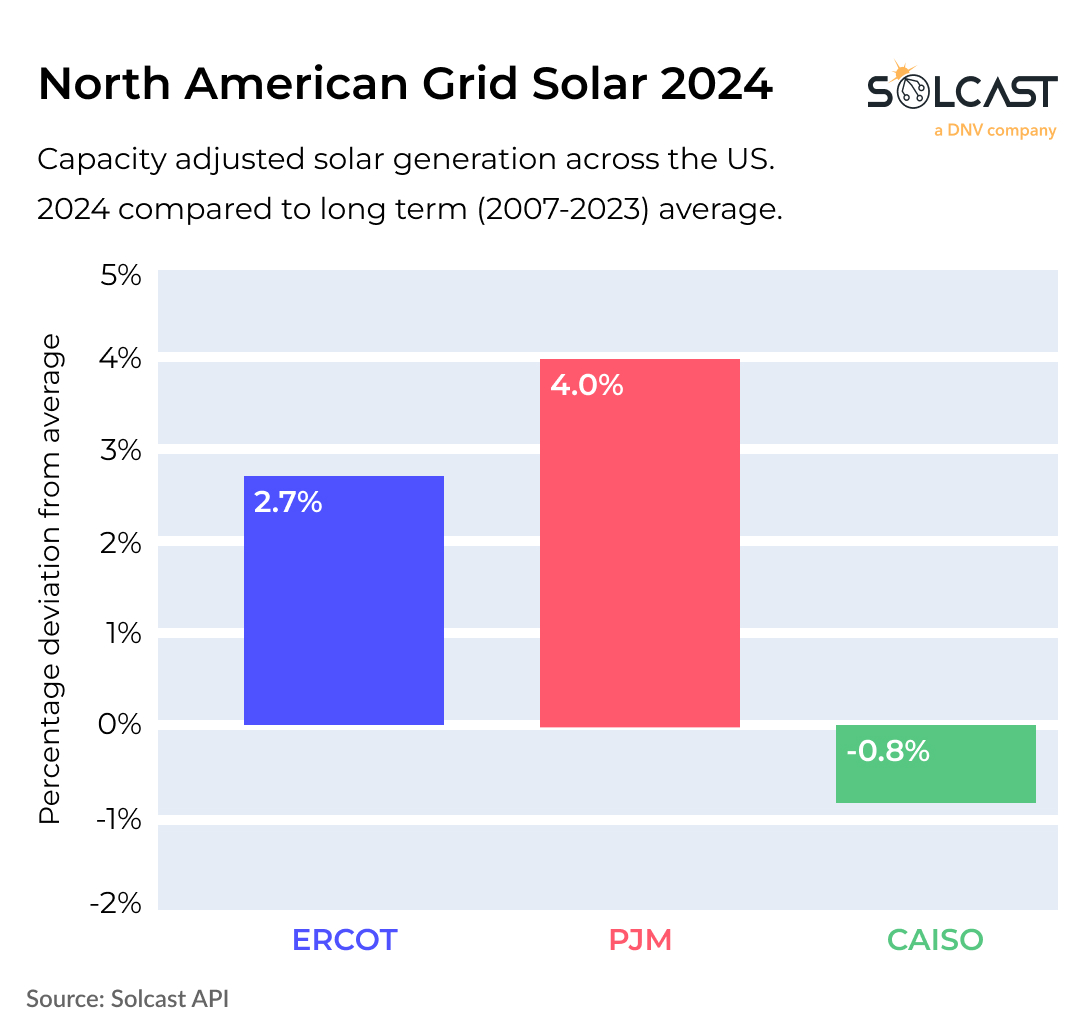
below average sunshine. According to analysis using the Solcast APIERCOT and PJM both showed better capacity-adjusted performance during the year compared to long-term trends, while CAISO performed slightly below average. But as solar capacity increases
Year after year, this analysis is based solely on the weather influences on current capacity.
The Midwest’s solar performance stood out in 2024, with states like Indiana, Illinois, Missouri, Iowa and Kansas experiencing solar irradiance 10% above average. Adjacent areas, including Michigan to Idaho, the Great Plains and western Texas, also saw radiation levels up to 5% above normal. Although there was some variation throughout the year, consistently clear conditions, particularly a variance of more than 20% in October, contributed to strong annual performance for solar installations in the Midwest.
These regions coincided with areas heavily affected by drought, which likely contributed to the reduced cloud cover and higher sunshine. This increase in solar energy translated into higher production for regional networks, with ERCOT achieving a 2.7% increase in capacity-normalized solar production and PJM recording a 4% increase compared to average values.
In contrast, the West Coast recorded a moderate year for solar energy generation, with northern areas seeing irradiance up to 5% below average, while most of California experienced only minor deviations from the norm. The main cause was the prevalence of multiple intense cases
low-pressure systems moving in from the Pacific Ocean, bringing clouds and moisture to the region. These conditions have contributed to CAISO seeing a modest 0.8% decline in solar production normalized by capacity in 2024 than average.
States along the Gulf Coast, including East Texas and Louisiana, also experienced declines in solar radiation, with levels up to 5% below average. Southeast Texas had a year of normal to above-normal rainfall after several years of drought. This shift was caused by
higher than average sea surface temperatures, which funneled more moisture inland and increased cloud cover. These conditions limited the region’s solar energy potential, although drier, clearer conditions in inland Texas still allowed ERCOT to outperform the long-term trend.

Despite these regional differences, the United States experienced slightly higher insolation in 2024, with levels 0.8% above climatological averages. Major cities in the Midwest, including Kansas City and St. Louis, reported above-average insolation, while Chicago set a record for average insolation this year. This reinforces the region’s strong performance in 2024.
Solcast produces these figures by tracking clouds and aerosols worldwide at a resolution of 1-2 km, using proprietary satellite data AI/ML algorithms. This data is used to drive irradiance models, allowing Solcast to calculate high-resolution irradiance, with a typical deviation of less than 2%, as well as cloud tracking predictions. This data is used by more than 300 companies that manage more than 150 GW of solar energy worldwide.
The views and opinions expressed in this article are those of the author and do not necessarily reflect those of the author pv magazine.
This content is copyrighted and may not be reused. If you would like to collaborate with us and reuse some of our content, please contact: editors@pv-magazine.com.
Popular content