

Bifacial Cuinse2 solar cells achieve record efficiency on transparent substrates
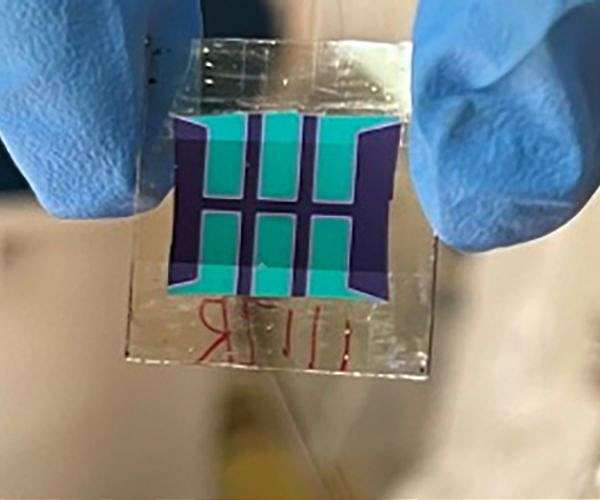
The distribution of energy and environmental technology at the Daegu Gyeongbuk Institute of Science and Technology (DGIST) has developed a thin film solar cell of the next generation that can generate electricity from both sides. Spearhead led by main investigators Daehwan Kim and Shijoon Sung, the Team Smalle Band Gap Cuinse2 made up solar cells with the help of copper, indium and selenium on transparent electrodes substrates, which introduces a bifacial architecture that increases the energy yield.
Bifacial solar cells are designed to harvest sunlight from both the front and back, which increases the power generation without increasing the installation printing. However, producing powerful thin film devices on transparent electrodes has been a challenge because of their limited heat tolerance. Traditional manufacturing methods require high temperatures, which break down transparent materials and compromise cell efficiency.
To overcome this, the Dgist team Silver (AG) included in the Cuinse2 connection, making the deposition process possible at a reduced temperature below 420 ° C. They have also optimized the device structure by creating a gallium (GA) gradient at the basis of the absorber layer, which improved charge transport and reduced recombination losses. These innovations considerably improved the performance of Cuinse2 bifacial solar cells on heat -sensitive transparent substrates.
The resulting devices achieved a remarkable efficiency of 15.3% from the front and 8.44% of the back, with a bifacial current generation density of 23.1 MW/cm ranking order below the highest worldwide for thin film cells of this type.
“This study offers a new opportunity to increase the efficiency for thin film solar cells based on transparent substrates,” Kim and Sung said. “We will further expand the scope of applications for highly efficient bifacial solar cell technology based on transparent substrates.”
The study became co-author of PhD student Ali Amanat and researcher Donghwan Jeon. It appeared as the cover article in the online edition of 17 June of Advanced Energy Materials.
Research report:Highly efficiency bifacial narrow bandgap AG-Cinse2 solar cells on ITO
