

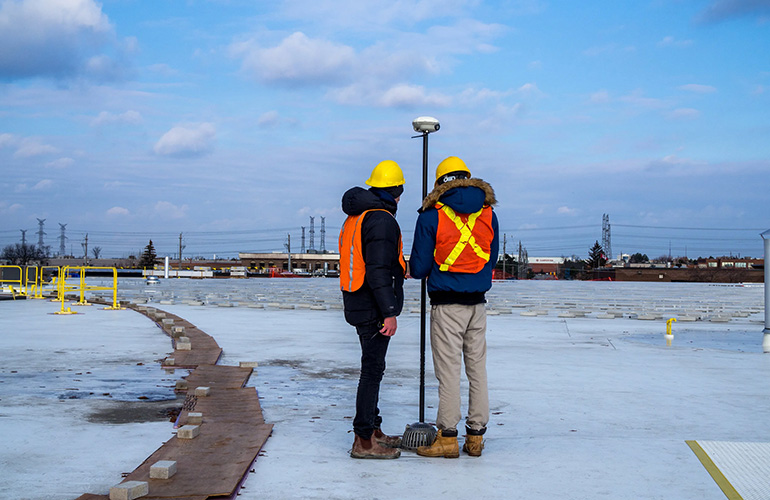
Survey of solar energy sites.
The solar industry is no stranger to abrupt market changes, and 2025 was no exception. Many solar contractors have a full installation calendar, with customers eager to capture the full value of the federal Solar Investment Tax Credit (ITC) in the United States. This urgency means that solar companies must ensure that their post-sales process runs without delays.
One of the most crucial steps to keeping projects on a tight schedule is prompt solar permitting and inspections. A stalled or denied solar permit application can take weeks, jeopardize deadlines and strain customer relationships. First pass approval is more important than ever because the clock is ticking.
AHJ Solar Permit Requirements: What Contractors Need to Know
An authority having jurisdiction (AHJ) approves solar permits within the designated area and is responsible for enforcing building and electrical codes. Some approve solar permits in a few days, while others take weeks to review applications. Permit processing times can vary widely by jurisdiction and project type.
Likewise, local licensing requirements vary by AHJ. Tools like SolarAPP+, developed by NREL, help automate residential solar permitting when adopted by AHJs, although the platform is not available for commercial projects.
As a result, it is critical to ensure solar permit applications meet AHJ requirements. This can be especially challenging as solar companies expand into new areas and must work with new AHJs that have different requirements.
Some jurisdictions or utility interconnection regulations require structural or electrical stampings. Structural outriggers are more common in areas with heavy snow loads, high wind speeds, or greater seismic risk.
These stamps must be issued by a licensed professional engineer (PE) in the state where the project is located. For example, an AHJ on the Florida coast may require careful wind load calculations for hurricane conditions.
Common reasons why solar permit applications are rejected
There are several preventable culprits that are the cause of the majority of permit resubmissions. These errors include missing structural load calculations, incomplete or inaccurate one- or three-line diagrams, and failure to meet required codes. This includes the NEC (National Electric Code), building codes, and local code changes.
Top issues with solar permit denials
- Incomplete or inaccurate PV plans – Missing floor plans, mislabeled equipment, or incomplete one- or three-line diagrams
- Missing structural load calculations – Especially in areas with heavy snow, high winds or seismic activity
- Incorrect or missing electrical details – Errors in conductor sizing, incorrect circuit breaker ratings, and missing equipment ground conductors
- Failure to comply with NEC or IBC codes – AHJs often cite sections NEC Article 690 (PV systems), 705 (interconnections), and International Building Code (IBC), but local changes may also apply
- Improper system labels and placards – Missing quick shutdown labels, incorrect disconnect signs, or incorrectly formatted warnings
- Missing Specification Sheets – Missing module, inverter, rack, or battery cut sheets with UL listings
- Improper setbacks and fire access routes – Violations of local fire codes or insufficient clearance on roofs
- Lack of required technical stamps – Structural or electrical PE stamps not included, or not from a professional licensed in that state
Unfortunately, past permit denials can reduce a solar company’s credibility with the AHJ and delay project timelines. When in doubt, solar contractors should clarify permit requirements before applying, especially if they are working to tight deadlines.
Quick strategies for permitting solar energy
As solar companies rush to meet ITC solar deadlines, it’s easy to make small mistakes that lead to project delays. Following best practices to initially submit a complete solar permit package is critical.
- The requirements for an AHJ solar permit typically include:
- A solar site plan
- Electrical single or three line schemes
- Structural load calculations
- Equipment specifications
- Required labeling and warnings
- Fire access paths and setbacks
- Details of grid interconnection
Additionally, it is helpful to understand interconnection requirements as some utilities may require additional paperwork or assessment steps. Waiting for solar permit approval can delay the project and cause unpleasant surprises.
A quality application for a solar permit begins with an accurate assessment of site conditions. By identifying design and layout limitations early, companies can avoid permit denials. The use of innovative drone technology ensures that systems fit within the allocated space.
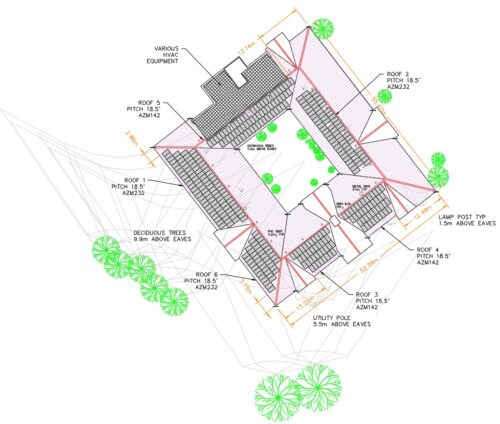
Some solar companies utilize solar permit design, site survey or engineering services, especially for larger commercial projects that have more extensive permitting requirements or when their teams are overloaded. This strategy can be especially effective if you’re working to tight deadlines or dealing with new AHJs.
The most effective design partners, like Exactus Energy, go beyond just completing the solar permit paperwork. Using drones and proprietary software, they ensure that solar designs fit on the roof and spot problems such as roof damage or electrical hazards before they become expensive surprises. An experienced company will also be aware of the specific requirements of AHJs, allowing contractors to submit customized permit applications that meet local criteria on the first attempt.
As solar contractors press the accelerator to meet solar tax credit deadlines, speedy solar permitting can make or break many projects. Businesses can have staff and equipment on site, but without permit approval everything comes to a standstill. Delays of just a few weeks can result in missed deadlines, lower return on investment and a reduction in customer confidence.
Balancing speed and code compliance is essential for first-pass approval. Unfortunately, cutting corners is not an option as inspectors and utilities expect designs that meet NEC, IBC and interconnection standards.
Solar companies that thrive in the turbulent solar market of 2025 are those that take solar permit applications and inspections seriously. Accurate PV drawings, proactive interconnection planning and required structural calculations keep renewable energy projects moving forward.
