
Close Menu
  • News
  • Industry
  • Solar Panels
  • Commercial
  • Residential
  • Finance
  • Technology
  • Carbon Credit
  • More
    • Policy
    • Energy Storage
    • Utility
    • Cummunity
What's Hot

Dutch solar owners asked to switch off during peak periods to ease the distribution crisis

June 7, 2026

The hydrogen flow: Toyota demonstrates its racing prototype on liquid hydrogen

June 7, 2026

Era of electrification exposing Australia’s weakest link

June 6, 2026
Facebook X (Twitter) Instagram
Solar Energy News
Monday, June 8
  • News
  • Industry
  • Solar Panels
  • Commercial
  • Residential
  • Finance
  • Technology
  • Carbon Credit
  • More
    • Policy
    • Energy Storage
    • Utility
    • Cummunity
Solar Energy News
Home - News - MXene additive increases heat resistance and efficiency in perovskite solar cells
News

MXene additive increases heat resistance and efficiency in perovskite solar cells

solarenergyBy solarenergyOctober 30, 2025No Comments2 Mins Read
Facebook Twitter Pinterest LinkedIn Tumblr Email
Share
Facebook Twitter LinkedIn Pinterest Email

MXene additive increases heat resistance and efficiency in perovskite solar cells


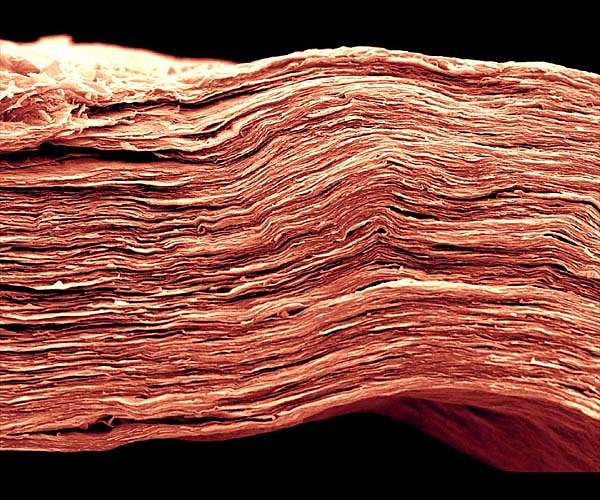
As perovskite solar cells move closer to mass production, heat-induced degradation continues to hinder their long-term stability. Researchers from the University of Electronic Science and Technology of China, led by Professors Zhongquan Wan, Junsheng Luo and Chunyang Jia, have now demonstrated a multifunctional approach using Ti3C2Tx MXene nanosheets that improve both thermal conductivity and optoelectronic properties.

The incorporation of Ti3C2Tx MXene into the perovskite layer significantly improves thermal transport, increases conductivity from 0.236 to 0.413 Wm-1-K-1 and reduces operating temperatures by approximately 3 C under illumination. At the same time, surface terminations on the nanosheets passivate Pb2+ defects, reducing non-radiative recombination losses. Adjustments to the material’s work function further optimize charge extraction and transport across device interfaces.

By embedding Ti3C2Tx nanosheets along perovskite grain boundaries, the team established efficient thermal conduction pathways and achieved a smoother film morphology, reducing surface roughness from 24.9 to 15.2 nm. This integrated approach combines heat removal, defect suppression and energy level tuning within a single additive, providing a route to more sustainable and efficient perovskite photovoltaics.

The modified devices achieved a peak power conversion efficiency of 25.13 percent, compared to 23.70 percent in control samples. They also showed superior thermal endurance, maintaining 80 percent of initial performance after 500 hours at 85 C and 30 +/- 5 percent relative humidity, while the control devices dropped to 58 percent after 200 hours. During continuous monitoring of maximum power in nitrogen, the MXene-enhanced cells retained 70 percent of their efficiency after 500 hours, compared to only 20 percent for unmodified cells.

See also  Planning Inspection accepts more than 1 GW of Zonne -PV

The researchers note that future work will focus on large-scale synthesis, cost optimization and compatibility with encapsulation processes. The findings underscore the potential of MXene materials to overcome thermal management challenges in perovskite solar technology, enabling the next generation of highly efficient, thermally resilient solar photovoltaics.

Research report:Multifunctional MXene for thermal management in Perovskite solar cells


Source link

additive cells efficiency heat increases MXene perovskite resistance solar
Share. Facebook Twitter Pinterest LinkedIn Tumblr Email
solarenergy
  • Website

Related Posts

Dutch solar owners asked to switch off during peak periods to ease the distribution crisis

June 7, 2026

Letter from China’s PV Industry: Arctech wins 2.1 GW solar deal

June 5, 2026

ComEd starts a new energy pilot with a solar rebate on the roof of a brewery

June 5, 2026
Leave A Reply Cancel Reply

Don't Miss
News

Due to the overproduction of renewable energy sources, electricity prices become negative

By solarenergyJuly 27, 20240

Due to the overproduction of renewable energy sources, electricity prices become negative With the increase…

J&B Solar is developing an internally registered internship program

January 24, 2026

AI-powered process reveals chemical keys to solar energy advances

September 1, 2024

Longi, Pertamina Plan 1.4 GW Solar cell, Module factory in Indonesia

June 27, 2025
Stay In Touch
  • Facebook
  • Twitter
  • Pinterest
  • Instagram
  • YouTube
  • Vimeo
Our Picks

Dutch solar owners asked to switch off during peak periods to ease the distribution crisis

June 7, 2026

The hydrogen flow: Toyota demonstrates its racing prototype on liquid hydrogen

June 7, 2026

Era of electrification exposing Australia’s weakest link

June 6, 2026

‘Come out from behind your screen, our industry is ultimately about people’

June 6, 2026
Our Picks

Dutch solar owners asked to switch off during peak periods to ease the distribution crisis

June 7, 2026

The hydrogen flow: Toyota demonstrates its racing prototype on liquid hydrogen

June 7, 2026

Era of electrification exposing Australia’s weakest link

June 6, 2026
About
About

Stay updated with the latest in solar energy. Discover innovations, trends, policies, and market insights driving the future of sustainable power worldwide.

Subscribe to Updates

Get the latest creative news and updates about Solar industry directly in your inbox!

Facebook X (Twitter) Instagram Pinterest
  • Contact
  • Privacy Policy
  • Terms & Conditions
© 2026 Tsolarenergynews.co - All rights reserved.

Type above and press Enter to search. Press Esc to cancel.