

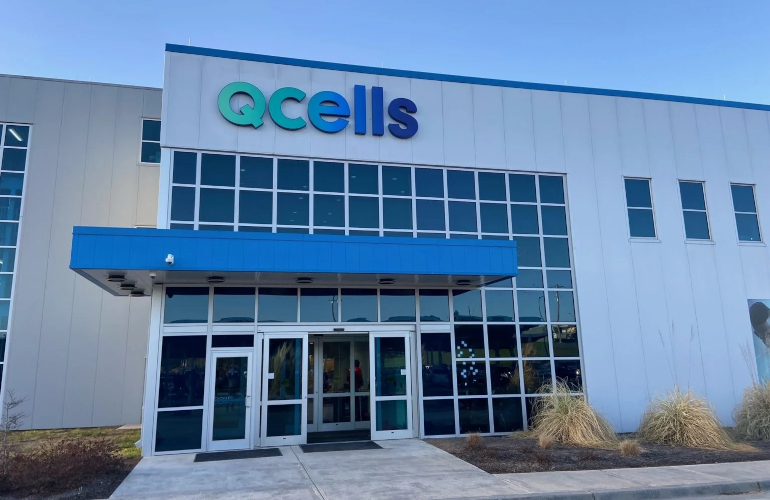
Manufacturer of solar panels Qcells announced on Friday that it would lay off a third of its workers at its two factories in Georgia. The 1,000 employees will temporarily see reduced wages and hours due to increased U.S. Customs and Border Protection (CBP) apprehensions of solar cells and other upstream panel components. Qcells will also lay off 300 agency workers at the two factories.
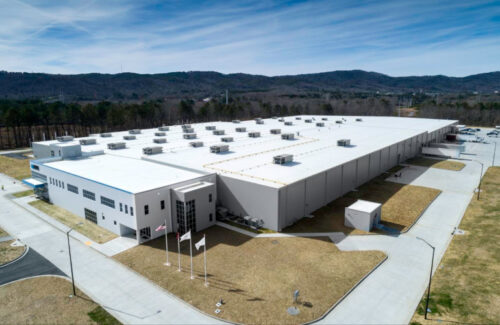
Qcell’s 1.7 GW module factory in Dalton, Georgia
The federal government has stepped up enforcement of the Uyghur Forced Labor Prevention Act (UFLPA), which bans Chinese goods made with forced labor from entering the United States. Earlier this summer, CBP began detaining silicon solar cells from South Korea’s Qcells. Qcells has repeatedly stated that its products do not use Chinese components. The company has a long history of using polysilicon from South Korean company OCI and manufacturing components in Southeast Asia.
Qcells announces that its shipments are now being cleared by customs, but that a temporary reduction in working hours is necessary in the meantime. Despite being one of the first domestic manufacturers to begin building new solar cell and wafer manufacturing operations, the company still only performs panel assembly in the United States and requires a consistent supply of solar cells to complete panel assembly.
A similar CBP arrest has affected Maxeon, a solar panel manufacturer with some Chinese funding but no documented link to forced labor in China. Maxeon’s panels assembled in Mexico have been banned from entering the country since summer 2024, despite the company providing thousands of pages of documents demonstrating full UFLPA compliance. Maxeon has resorted to filing a complaint with the US Court of International Trade and is awaiting updates amid the government shutdown.
In the case of Maxeon, the once global company now focuses solely on the American market. Maxeon sold its European, Asian and Latin American sales channels and entities, while retaining its Mexican assembly plant and moving forward with plans for a 2 GW solar panel factory in New Mexico. With most of its products unable to enter the country, Maxeon’s financial institutions have nosedived. The company reported $39 million in revenue for the first six months of 2025, while it reached $371 million for the same period in 2024. Plans for the US factory have been put on hold.
Marta Stoepker, Qcells senior director of corporate communications, said in a statement to local news that the company was forced to scale back production “while our shipments to the US were delayed during the customs clearance process.
“Qcells expects to resume full production in the coming weeks and months. Our commitment to building the entire solar supply chain in the United States remains,” she continued. “We will soon be back on track with the full strength of our Georgia team delivering American energy to communities across the country.”
