
Close Menu
  • News
  • Industry
  • Solar Panels
  • Commercial
  • Residential
  • Finance
  • Technology
  • Carbon Credit
  • More
    • Policy
    • Energy Storage
    • Utility
    • Cummunity
What's Hot

Dutch solar owners asked to switch off during peak periods to ease the distribution crisis

June 7, 2026

The hydrogen flow: Toyota demonstrates its racing prototype on liquid hydrogen

June 7, 2026

Era of electrification exposing Australia’s weakest link

June 6, 2026
Facebook X (Twitter) Instagram
Solar Energy News
Sunday, June 7
  • News
  • Industry
  • Solar Panels
  • Commercial
  • Residential
  • Finance
  • Technology
  • Carbon Credit
  • More
    • Policy
    • Energy Storage
    • Utility
    • Cummunity
Solar Energy News
Home - Commercial & Industrial - UK solar capacity is growing by 1 GW year on year
Commercial & Industrial

UK solar capacity is growing by 1 GW year on year

solarenergyBy solarenergyNovember 29, 2024No Comments3 Mins Read
Facebook Twitter Pinterest LinkedIn Tumblr Email
Share
Facebook Twitter LinkedIn Pinterest Email
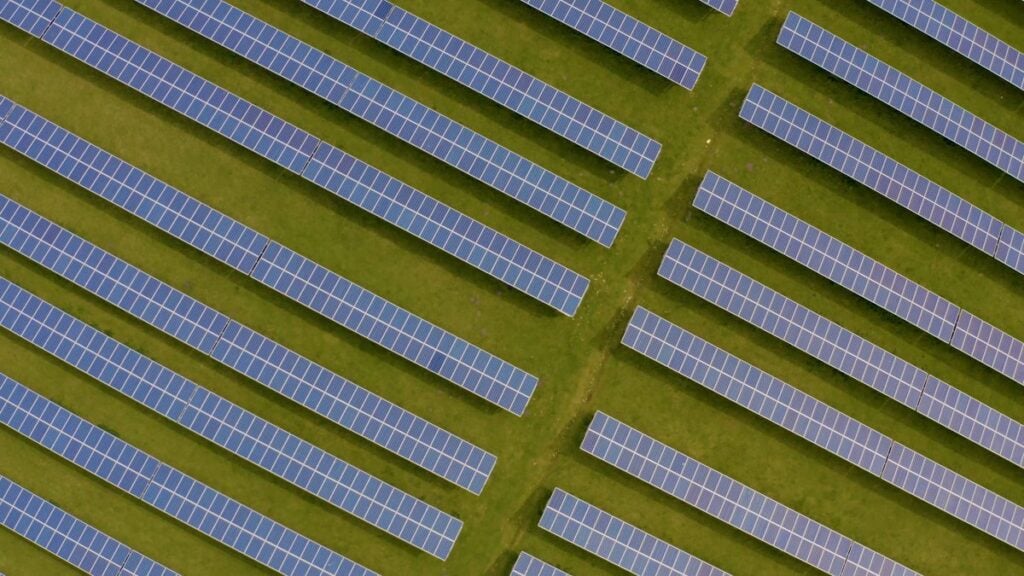
UK solar capacity has grown by 1 GW since October 2023. Image: Octopus Energy.

The latest solar energy statistics from the Department for Energy Security and Net Zero (DESNZ) have revealed that Britain now has 17GW of installed solar capacity.

At the end of October 2024, Britain had a total of 17.2 GW of solar generation capacity, an increase of 1 GW or 6.3% since October 2023. In October 2024, 76 MW of capacity was added across 20,102 new solar installations. Of this, 73% were residential, which amounts to 58 MW of the added installed capacity. This broadly reflects the solar trend in Britain, where the majority of solar installations are domestic. However, domestic installations only make up around 30% of total UK capacity, with around 5.2GW of solar energy coming from residential roofs.

At the end of September 2023 (Q3 2024), at least 45% of the UK’s solar capacity, totaling 7.71 GW, was from ground-mounted or stand-alone solar installations, including two operational solar PV power plants accredited under the Contracts for Difference (CfD ) mechanism. However, DESNZ estimates that around half of unaccredited UK capacity comes from ground-mounted installations, meaning around 55% of total UK solar capacity comes from ground-mounted projects.

In 2023, 196,760 new solar installations came online – the second-highest number in any recorded year, surpassed only by 2011’s record of 208,586 installations. So far this year, 155,256 new installations have taken place, meaning that 41,504 installations will need to be completed by November and December of this year to surpass last year’s total by 2024 – an unlikely but not impossible scenario.

A graph showing solar energy deployment in the UK separated by capacity.
A graph showing solar energy deployment in the UK separated by capacity. Image: DESNZ

What could 2025 look like for solar energy?

As we approach the end of 2024, it’s worth considering what the next year could look like for the UK solar sector – especially as 2025 marks the first year that will start with a Labor government in more than a decade year.

See also  EagleView and Aurora Solar offer enhanced 3D modeling integration to streamline design

So far, the Labor Party, and especially DESNZ Minister Ed Miliband, are arguably more positive about solar energy than their predecessors, with Miliband’s almost immediate granting of Development Consent Orders (DCOs) for three solar projects, as well as the recent relaunch of the Solar Taskforce, which was met with praise from the wider solar industry. However, Labour’s first autumn budget received a lukewarm response from the solar sector, particularly in relation to a lack of clarity on a potential solar mandate for new-build homes.

Furthermore, some in the industry suggest that the solar energy targets set out by the National Energy System Operator (NESO) as part of the 2030 Clean Power Plan are not ambitious enough, with solar industry trade body Solar Energy UK plan as “lacking ambition”, and criticizes it for betraying a “limited understanding” of solar power generation and battery energy storage systems (BESS) technologies. Since then, Solar Energy UK has published research from the University of Durham showing that increasing solar capacity targets from 47.4 GW to 60 GW could reduce energy costs by around 12%.

The recent encouraging success of the sixth auction round (AR6) of the government’s CfD scheme could encourage more significant and significant developments in 2025 and beyond. AR6 saw new records for the solar sector, with 93 ground-based solar projects with a combined capacity of 3.3 GW winning support.

Source link

capacity growing solar year
Share. Facebook Twitter Pinterest LinkedIn Tumblr Email
solarenergy
  • Website

Related Posts

Dutch solar owners asked to switch off during peak periods to ease the distribution crisis

June 7, 2026

Britain’s next energy dependency is already taking shape

June 5, 2026

Letter from China’s PV Industry: Arctech wins 2.1 GW solar deal

June 5, 2026
Leave A Reply Cancel Reply

Don't Miss
Commercial & Industrial

SSE, Ortus partner for 130 MW commercial rooftop solar pipeline

By solarenergyJuly 19, 20240

SSE Renewables’ first solar project, the 31MW Littleton Pastures solar farm in Worcestershire, started in…

Xpansiv chosen to open Carbon Credit Exchange in Saudi Arabia

April 26, 2024

Chinese PV industry assignment: prices for solar glasses rise in the rise

March 4, 2025

Fifth Contracts for Difference round drives UK solar energy forward

April 27, 2024
Stay In Touch
  • Facebook
  • Twitter
  • Pinterest
  • Instagram
  • YouTube
  • Vimeo
Our Picks

Dutch solar owners asked to switch off during peak periods to ease the distribution crisis

June 7, 2026

The hydrogen flow: Toyota demonstrates its racing prototype on liquid hydrogen

June 7, 2026

Era of electrification exposing Australia’s weakest link

June 6, 2026

‘Come out from behind your screen, our industry is ultimately about people’

June 6, 2026
Our Picks

Dutch solar owners asked to switch off during peak periods to ease the distribution crisis

June 7, 2026

The hydrogen flow: Toyota demonstrates its racing prototype on liquid hydrogen

June 7, 2026

Era of electrification exposing Australia’s weakest link

June 6, 2026
About
About

Stay updated with the latest in solar energy. Discover innovations, trends, policies, and market insights driving the future of sustainable power worldwide.

Subscribe to Updates

Get the latest creative news and updates about Solar industry directly in your inbox!

Facebook X (Twitter) Instagram Pinterest
  • Contact
  • Privacy Policy
  • Terms & Conditions
© 2026 Tsolarenergynews.co - All rights reserved.

Type above and press Enter to search. Press Esc to cancel.