

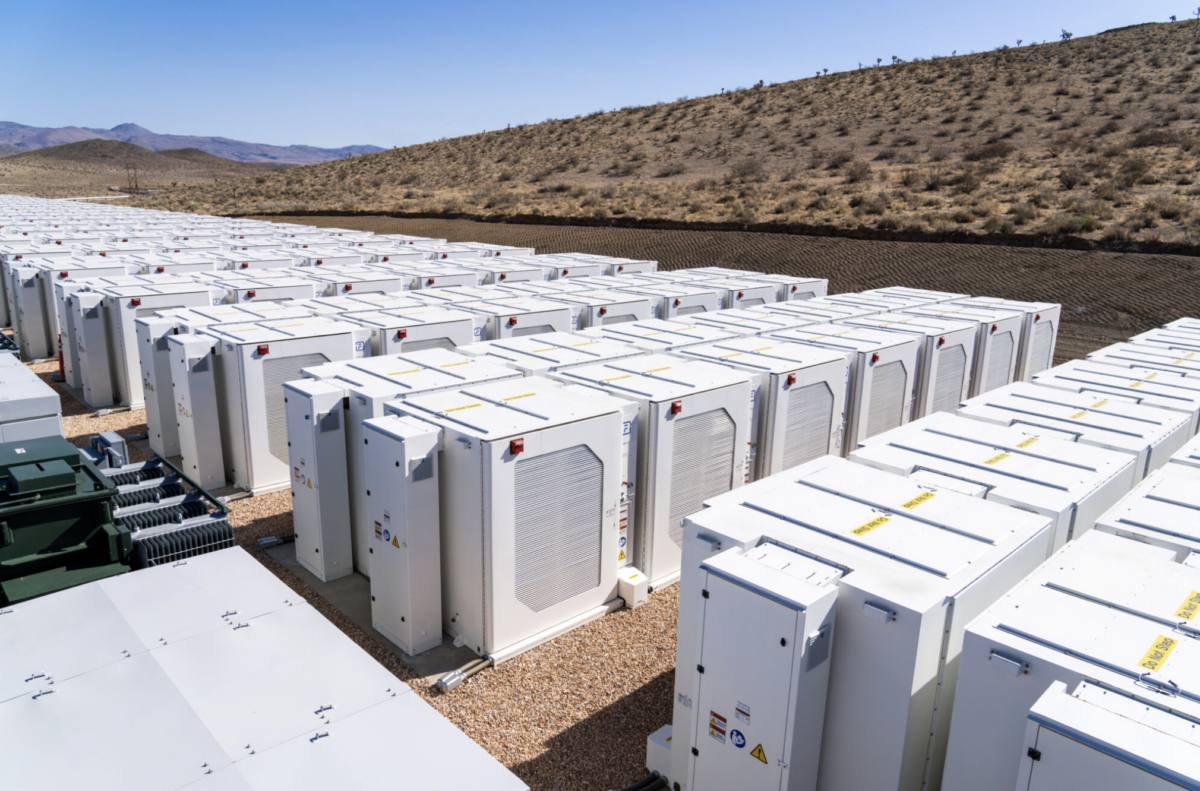
Energy think tank Ember says the cost of utility-scale batteries outside China and the United States has fallen to $65/MWh, allowing solar power to be delivered when needed.
Battery costs have fallen sharply over the past two years. A steep decline in 2024 was followed by further declines in 2025, putting storage within reach for dispatchable solar, Ember said.
The energy think tank’s analysis, based on October 2025 auctions in Italy, Saudi Arabia and India and interviews with active developers, shows the cost of a fully grid-connected battery system at $125/kWh for long-term projects of four hours or more outside China and the United States. Nuclear battery equipment supplied from China now costs about $75/kWh, while installation and grid connection add about $50/kWh.
Levelized Cost of Storage (LCOS) is calculated at $65/MWh, taking into account capital costs, financing, efficiency, lifetime and degradation. Longer lifespans, higher efficiency and lower financing costs, supported by clearer revenue models such as auctions, have all contributed to this reduction. Ember provides a live calculator that allows users to assess LCOS based on custom assumptions.
“After a 40% drop in battery equipment costs in 2024, it is clear we are on track for another big drop in 2025,” said Kostantsa Rangelova, global electricity analyst at Ember. “The economics of batteries are unrecognizable, and the industry is just beginning to come to grips with this new paradigm.”
Most solar energy generation takes place during the day, so only some of it needs to be stored to provide a deliverable energy supply. If half of the daytime solar energy is shifted to nighttime, the $65/MWh storage cost adds about $33/MWh to the total solar cost. The global average price of solar energy in 2024 was $43/MWh, which when combined with storage resulted in a total electricity cost of $76/MWh.
“Solar energy is no longer just cheap electricity during the day, it is now electricity that can be dispatched at any time,” Rangelova said. “This is a game-changer for countries with fast-growing demand and strong solar energy resources.”
This content is copyrighted and may not be reused. If you would like to collaborate with us and reuse some of our content, please contact: editors@pv-magazine.com.
