

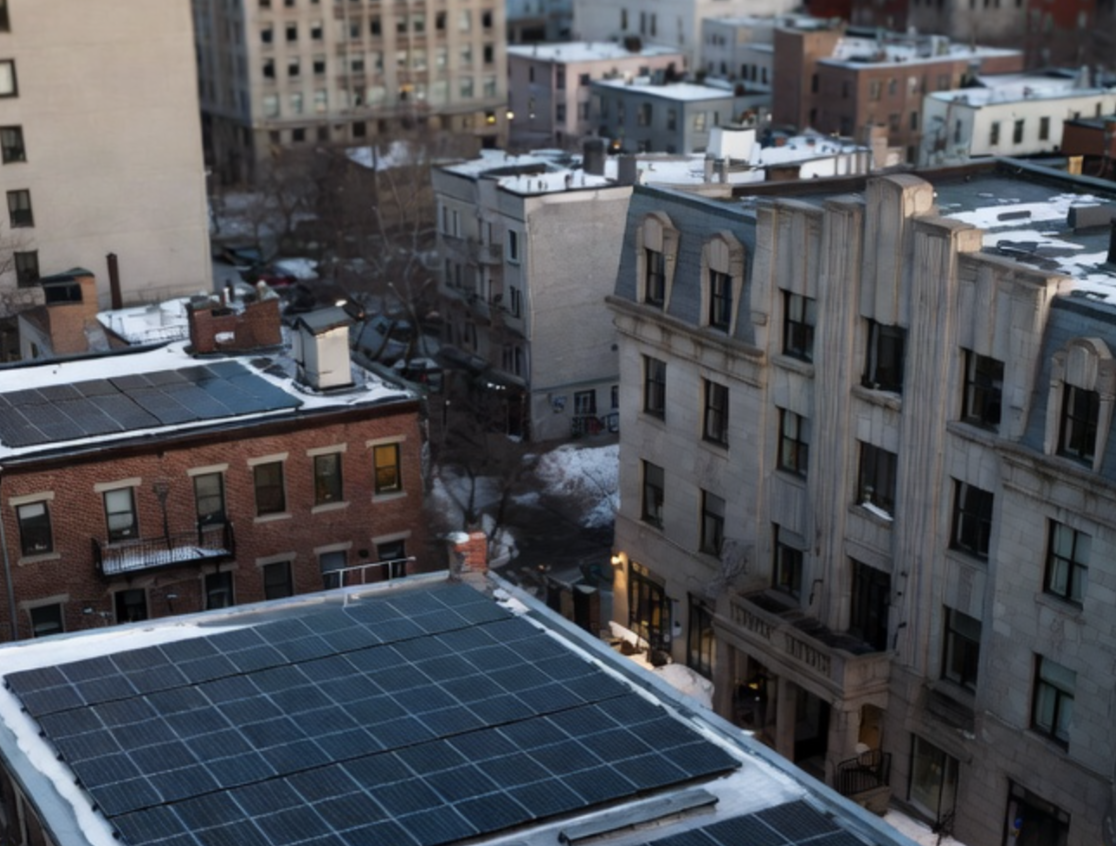
Awendio Solaris says it plans to invest approximately CAD 1 billion ($726.7 million) in a vertically integrated solar cell and module manufacturing facility and research center in Montreal, Quebec, targeting the Canadian and U.S. markets.
Awendio Solaris, a UK-based solar manufacturer, has unveiled plans to develop a large-scale solar manufacturing and research facility in Montreal, Quebec, positioning the project as one of North America’s largest fully integrated silicon PV manufacturing sites.
The privately led project would require an investment of approximately CAD 1 billion and is expected to create nearly 1,000 manufacturing and R&D jobs, the company said. Awendio Solaris said in an online statement that the facility would primarily serve the U.S. market but would also supply Canada, using what it described as an entirely North American supply chain.
The company said the first phase of the plant is designed to produce up to 2,500 MW of solar cells and modules per year, with a planned expansion to 5,000 MW. Production would use n-type tunnel oxide passivated contact technology (TOPCon), which is already being used by utilities and developers in the United States and Canada.
Awendio Solaris said it is assessing industrial sites in Montreal and working with Canadian developer Broccolini on the acquisition and construction of sites. German solar energy production engineering firm RCT Solutions and Canadian engineering group AtkinsRéalis are listed as project partners.
The proposed supply chain would include silicon production in North America, polysilicon and wafer processing in the US state of Michigan, and final cell production and module assembly in Quebec. Operations would be powered primarily by Quebec’s hydroelectric grid, supplemented by on-site solar, the company said.
Awendio Solaris said three First Nations groups – the Naskapi Nation of Kawawachikamach, the Huron-Wendat Nation and the Kanien’kehá:ka of Kahnawà:ke – have agreed to participate in the project as investor-partners. The company has also signed research partnerships with Université de Montréal, Polytechnique Montréal and Université de Sherbrooke, and plans to establish a non-profit applied research hub focused on PV manufacturing and workforce training.
It claimed that a recent economic impact assessment by EY estimates the project could contribute CAD5.5 billion to Canada’s gross domestic product over the first ten years, including construction, while supporting approximately 2,500 full-time jobs annually nationally. During construction, the project is expected to contribute approximately CAD442 million to Quebec’s gross domestic product and support more than 1,400 full-time jobs.
Awendio Solaris said it is working with federal and provincial authorities, including Investissement Quebec, Montreal International and Hydro-Quebec. National Bank of Canada acts as financial advisor. The company targets financial close by the end of the first quarter of 2026, a start of construction in the second quarter of 2026 and volume production in 2028, subject to regulatory and environmental approvals.
The London-based company’s proposal comes as Quebec accelerates efforts to build a domestic solar market alongside its hydropower-dominated energy system, creating potential downstream demand for locally manufactured equipment. Provincial policy has increasingly focused on combining utility-scale purchasing with incentives for distributed generation.
For example, in May, Hydro-Québec outlined plans to deploy up to 3 GW of solar capacity by 2035 as part of an 11 GW clean energy strategy, starting with a tender for 300 MW of solar for projects no larger than 25 MW and expanding support for residential and commercial self-generation.
In August, Canada’s provincial utility said it would also offer financial support incentives for residential and commercial solar installations from 2026, providing CAN 1,000 for every kilowatt of capacity installed, capped at 40% of the total installation cost, which could amount to approximately CAN 5,000 for a typical home system.
This content is copyrighted and may not be reused. If you would like to collaborate with us and reuse some of our content, please contact: editors@pv-magazine.com.
