

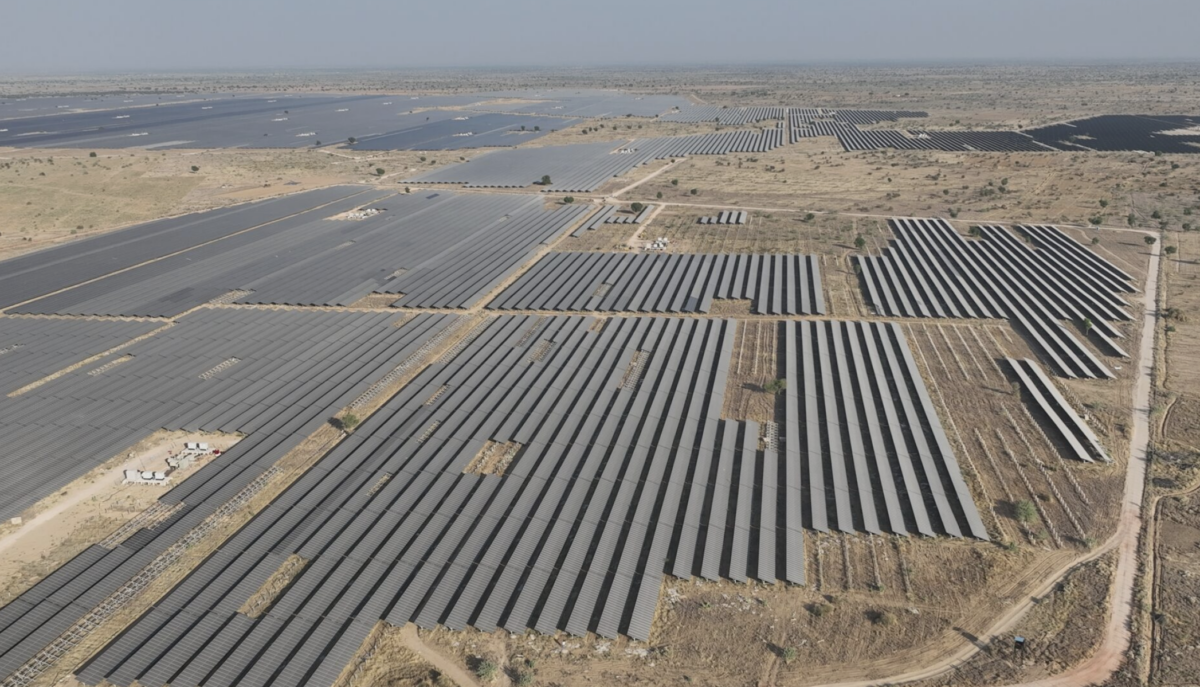
India is estimated to add 40 GW of solar capacity in the calendar year 2025, driven by utility-scale projects and rooftop growth. Tenders for energy storage also gained momentum.
India added a “record” 40 GW of new solar power generation capacity in the calendar year 2025, according to a new report from SBICAPS, supported by steady utility-scale execution and sharp acceleration of rooftop installations under Prime Minister Surya Ghar Muft Bijli Yojana.
Despite the capacity growth, the report said the average utilization rate of solar power plants fell to about 16.5% in the first eleven months of calendar year 2025, down from 19.2% in calendar year 2022.
Cloudy conditions and a prolonged monsoon reduced irradiation, while lower daytime demand led to curtailment during peak production hours, especially in resource-rich western states. Additional renewable capacity continues to stall due to land acquisition challenges, unsigned power purchase agreements, equipment transportation issues and transmission approval delays.
Transmission infrastructure expansions are lagging behind renewable capacity growth, creating bottlenecks for grid integration. Less than 50% of the targeted transmission capacity for the first eight months of fiscal year 2026 has been completed, the report said.
Land acquisition under complex valuation regimes has caused priority issues, while shortages of critical equipment, including transformers, have delayed implementation. High voltage DC projects have been particularly affected by the dependence on highly customized equipment. The situation is further complicated by the requirements for underground transmission lines.
Energy storage procurement has accelerated in the 2025 calendar year and is broadly in line with expected requirements, although very little battery energy storage system capacity is operational to date. After a period of stability, rates for standalone battery storage projects have returned to a downward trend, raising concerns about the long-term viability of projects. The report attributed some of the decline to falling battery costs, with lithium-ion battery pack prices falling about 8% year-on-year.
About 27 GWh of energy storage capacity remains without tariff approval, the report said. About 22% of storage capacity tendered since calendar year 2018 has been canceled, although no cancellations have been recorded in calendar year 2025.
This content is copyrighted and may not be reused. If you would like to collaborate with us and reuse some of our content, please contact: editors@pv-magazine.com.
Popular content

