

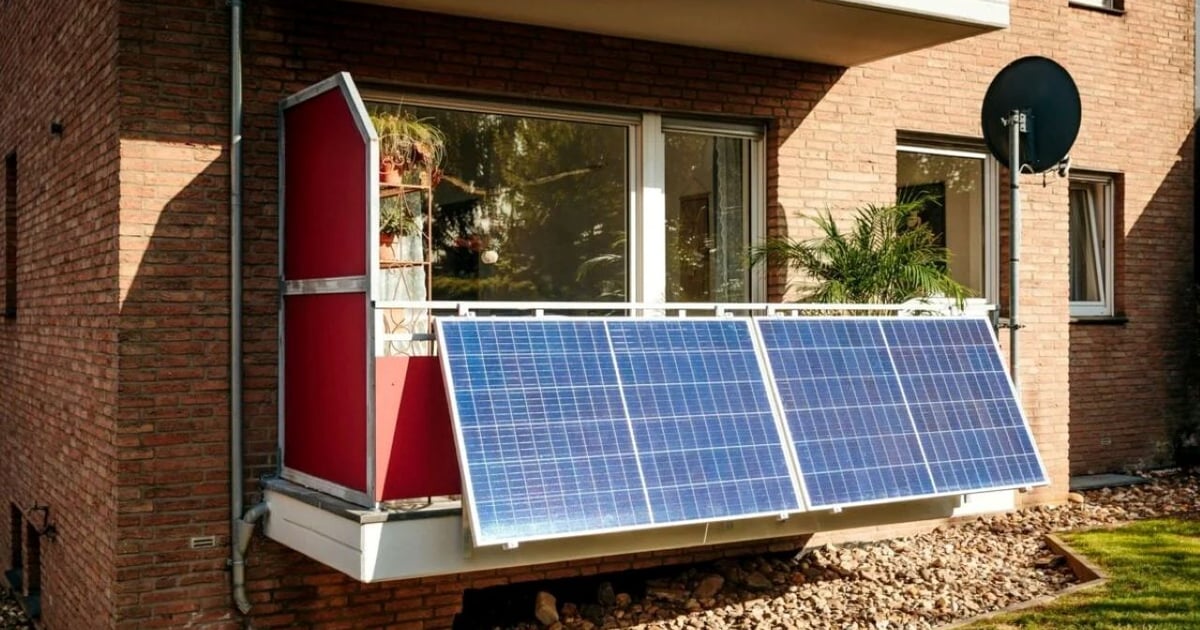
Plans to bring plug-in solar panels to the UK market are progressing, but the electricity industry is urging some caution from the government.
The Electrical Contractors’ Association (ECA) said it supports the government’s decision to introduce changes to the Plugs and Sockets etc. (Safety) Regulations (PSSR) 1994 to allow more UK homes to use plug-in solar panels and the Plug-in Solar Device Interim Product Specification (IPS).
ECA deputy technical director Gary Parker said: “We are saying very clearly to the government: don’t put speed before safety.”
The trade body warned that the technology will only be useful “if regulations are strict, products are safe and consumers fully understand the safety implications of DIY installations”.
The government said it planned to investigate the use of the technology in Britain published the British Solar Roadmap back in June 2025, but measures accelerated in response to the fear of a new energy crisis.
In early June it launched a consultation on the best way to sell plug-in solar in Britain, with many major retailers including Amazon, B&Q, Currys and Lidl saying they would be happy to offer the technology.
The proposed policy changes would allow people to plug some battery-less solar panel systems directly into a regular electrical outlet, as long as the products meet stated safety requirements.
ECA joined other trade groups Electrical Safety First (ESF), the Institution of Engineering and Technology (IET), NICEIC and SELECT to publish a public response to the consultation in June.
The groups urged the government to implement a “robust and enforceable British standard” to ensure consumers are not exposed to “inconsistent quality, unclear compliance requirements and unsafe imports”.
Following the consultation, the ECA’s Parker commented: “If done right, plug-in solar could get more people involved in the clean energy transition. If done poorly, it could damage public confidence and create avoidable safety risks. The government must work with electricity experts now before these products are rolled out on a large scale.”
Grid capacity is also a problem for plug-in solar energy
The plug-in solar panels that will appear on the British market this year will have a maximum capacity of 800W. Compared to a rooftop PV installation, the technology is intended to be quick to implement and a cheaper alternative, theoretically not requiring a trained installer.
As an option available to those without easy access to rooftop space, such as those living in apartment buildings, and to those who cannot afford the upfront cost of a larger installation, plug-in solar has been presented by the government as a one-stop solution.
However, the open letter sent by the electricity industry last month notes that grid capacity restrictions will impact even plug-in solar.
Industry advice has long been that new domestic installations, such as rooftop PV and EV chargers, should be registered with the local distribution network operator (DNO), as cumulative demand and generation affects local network capacity and stability.
Making plug-in solar units a normalized off-the-shelf consumer purchase without any oversight or notification process risks reducing the visibility of the system when it matters most, as pressure on the UK electricity grid threatens major disruptions if not managed properly.
Therefore, the electricity industry cautioned against treating the systems as negligible simply because the individual unit is small.
