

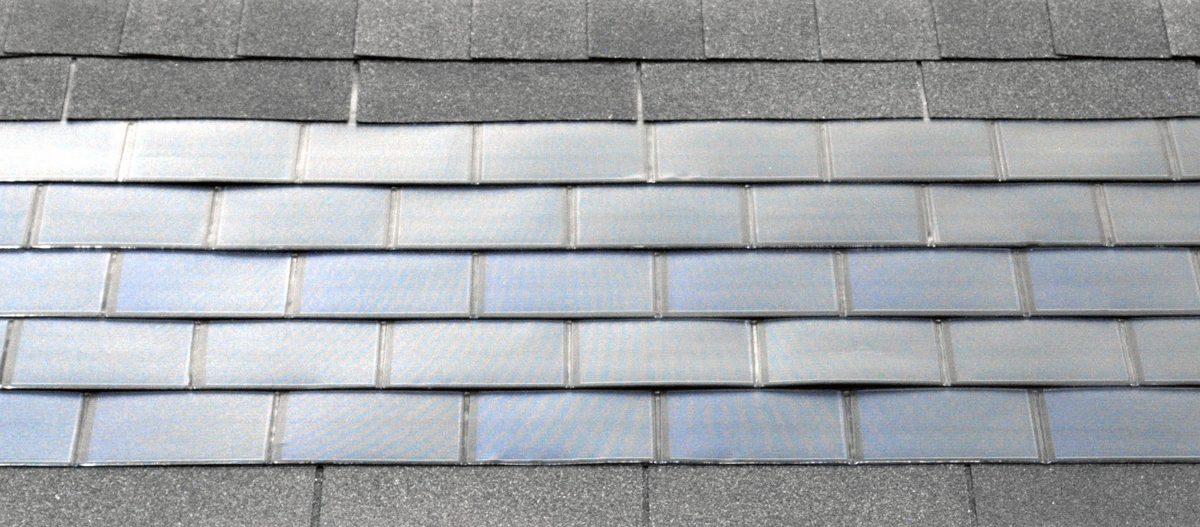
IEA-PVPS Task 15 has launched its first cross-comparison exercise in the field of colored building-integrated solar photovoltaics (BIPV), inviting PV modelers and researchers to evaluate their methods using real-world performance data.
IEA PVPS Task 15 has launched its first cross-comparison exercise in the field of colored building-integrated solar photovoltaics (BIPV), inviting PV modelers and researchers to evaluate their methods using real-world performance data.
The activity aims to assess how accurately current models can predict the performance of colored BIPV systems and to quantify the differences between various modeling approaches. The results will be analyzed and published in a scientific report and a journal publication
“There has been a major growth in colored BIPV products recently, ranging from new printing technologies to colored encapsulants and other innovative solutions. But there are many open questions – not only regarding their long-term reliability – but also how to accurately predict their performance. As a first step, we want to assess whether established methods and models are suitable for these technologies, which is why we have launched this activity,” explains Task 15 expert Markus Babin.
Two facade-integrated systems
The comparison is based on one year of measured irradiation, weather and system data from two colored BIPV facade installations.
The first system, supplied by Helmholtz-Zentrum Berlin (HZB), consists of 63 blue CIGS modules installed on a two-storey facade. The modules are connected in nine strings to a single inverter. Several ventilation gaps behind the modules (50mm and 150mm) allow participants to evaluate the effect of mounting conditions on operating temperature and system performance.
The second system, supplied by the Technical University of Denmark (DTU), consists of six differently colored modules installed on a west-facing facade and connected to power optimizers. Detailed optical data, including external quantum efficiency, spectral reflectance, and incident angle modifier measurements, are provided to support color-related loss modeling.
How to participate
Participants are asked to simulate the electrical power, operating temperature and loss factors for one or both systems. Modeling both systems is encouraged, but not required.
The full dataset, system descriptions and modeling instructions are available under a CC BY 4.0 license at https://doi.org/10.11583/DTU.30158077.
After completing the simulations, results must be entered into the template provided and submitted via an online form at https://forms.gle/9DuxmpSAneWVg3EN8 or by email to Markus Babin at marbab@dtu.dk. The deadline for submission is March 31, 2026.
Questions can be sent to the same email address. The answers will be shared with all participants via an updated FAQ on the IEA PVPS website https://iea-pvps.org/research-tasks/enabling-framework-for-the-development-of-bipv/1st-iea-pvps-task-15-blind-modelling-intercomparison/.
IEA PVPS Task 15 plans to publish the intercomparison results in a scientific report and a peer-reviewed journal, while also providing participants with feedback to compare their results with the broader modeling community.
The views and opinions expressed in this article are those of the author and do not necessarily reflect those of the author pv magazine.
This content is copyrighted and may not be reused. If you would like to collaborate with us and reuse some of our content, please contact: editors@pv-magazine.com.
