
Close Menu
  • News
  • Industry
  • Solar Panels
  • Commercial
  • Residential
  • Finance
  • Technology
  • Carbon Credit
  • More
    • Policy
    • Energy Storage
    • Utility
    • Cummunity
What's Hot

Dutch solar owners asked to switch off during peak periods to ease the distribution crisis

June 7, 2026

The hydrogen flow: Toyota demonstrates its racing prototype on liquid hydrogen

June 7, 2026

Era of electrification exposing Australia’s weakest link

June 6, 2026
Facebook X (Twitter) Instagram
Solar Energy News
Sunday, June 7
  • News
  • Industry
  • Solar Panels
  • Commercial
  • Residential
  • Finance
  • Technology
  • Carbon Credit
  • More
    • Policy
    • Energy Storage
    • Utility
    • Cummunity
Solar Energy News
Home - Technology - Scientists investigate potential of diatomaceous earth as a raw material for solar cells – SPE
Technology

Scientists investigate potential of diatomaceous earth as a raw material for solar cells – SPE

solarenergyBy solarenergyOctober 4, 2024No Comments2 Mins Read
Facebook Twitter Pinterest LinkedIn Tumblr Email
Share
Facebook Twitter LinkedIn Pinterest Email

A German-Algerian research team has investigated ways to produce silicon from diatomaceous earth, a fossil material containing amorphous silicon dioxide. The researchers said that for potential solar cell applications, it will be crucial to extract silion with low impurity content.

October 4, 2024 Jochen Siemer

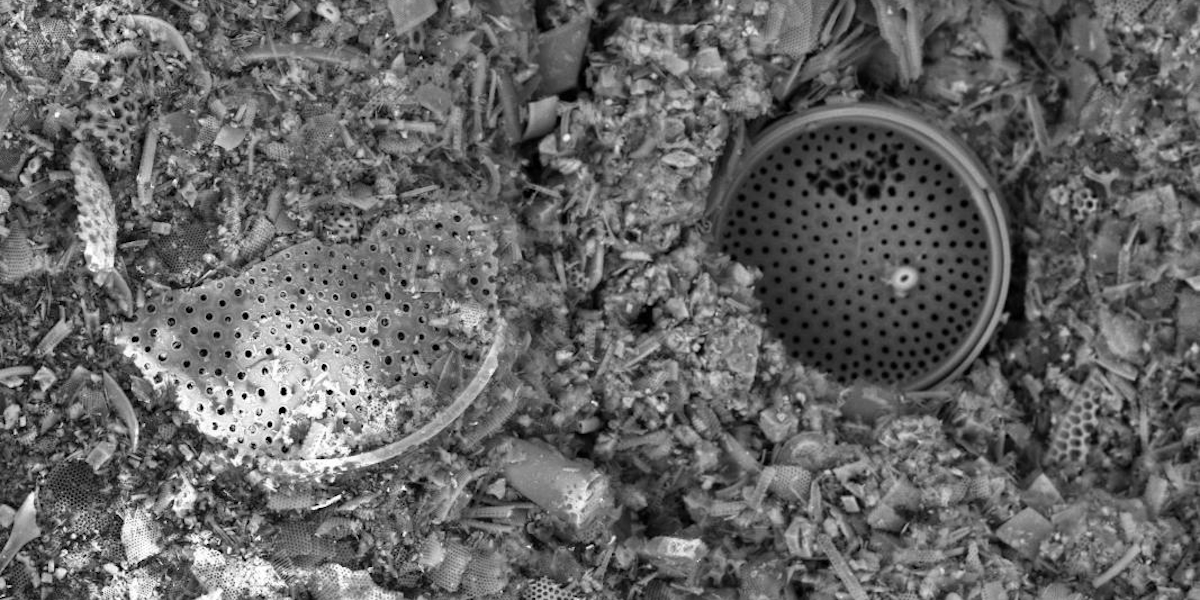
Diatomaceous earth has many uses: it can also be used to extract silicon

Image: Hawk

By pv magazine Germany

Diatomaceous earth, also called diatomaceous earth, has been used as a material for liquid filters since the 19th century. It is also used in the manufacture of thermal insulation materials, grinding and polishing agents, cleaning agents and insect repellents.

The use of this material could be extended to the production of solar cells, according to a group of researchers from HAWK University of Applied Sciences and Arts Hildesheim/Holzminden/Göttingen in Germany and Algeria’s University of Oran.

The sediment consists largely of the shells of fossil diatoms containing amorphous silica. Diatomite mining in northern Germany began around 1840 and ceased in 1994. Until the early 20th century, the deposits covered almost all global demand, and later the material was also mined in many other countries. Currently there are large deposits in the US, Denmark, Turkey and China.

The scientists explained that the detection of impurities in diatomaceous earth will be a critical issue during the silicon extraction process, noting that impurities can significantly affect the performance of silicon solar cells.

To solve this problem and assess the quality of diatomite, they applied a sensitivity-enhanced calibration Laser-induced degradation spectroscopy (LIBS) measurement methodology.

See also  Research shows that PV systems in Germany perform better than lifespan expectations – SPE

The academics also assessed the morphology and properties of the diatomite surface using energy dispersive X-ray spectroscopy and scanning electron microscopy analysis.

Their findings are available in the study “Quantification of impurities in diatomite via sensitivity-enhanced calibration-free laser-induced degradation spectroscopy”, published in the Journal of Analytical Atomic Spectrometry. “This research contributes to process optimization in the production of electronic-grade silicon from diatomaceous earth for photovoltaic technology and other applications,” they concluded.

This content is copyrighted and may not be reused. If you would like to collaborate with us and reuse some of our content, please contact: editors@pv-magazine.com.

Popular content
Source link

cells diatomaceous Earth investigate material potential raw scientists solar SPE
Share. Facebook Twitter Pinterest LinkedIn Tumblr Email
solarenergy
  • Website

Related Posts

Dutch solar owners asked to switch off during peak periods to ease the distribution crisis

June 7, 2026

Letter from China’s PV Industry: Arctech wins 2.1 GW solar deal

June 5, 2026

ComEd starts a new energy pilot with a solar rebate on the roof of a brewery

June 5, 2026
Leave A Reply Cancel Reply

Don't Miss
Technology

Researchers use artificial neural networks to optimize PV tilt angles – SPE

By solarenergyAugust 21, 20240

Scientists tested various machine learning algorithms to predict the optimal tilt angle (OTA) of solar…

Narada Power debuts 783 AH Cell, 8.3 MWH Solid State Battery – PV Magazine International

April 25, 2025

Big Sun Solar completes project for San Antonio worship space

December 19, 2024

Gore Street closes fund for European battery storage

January 23, 2026
Stay In Touch
  • Facebook
  • Twitter
  • Pinterest
  • Instagram
  • YouTube
  • Vimeo
Our Picks

Dutch solar owners asked to switch off during peak periods to ease the distribution crisis

June 7, 2026

The hydrogen flow: Toyota demonstrates its racing prototype on liquid hydrogen

June 7, 2026

Era of electrification exposing Australia’s weakest link

June 6, 2026

‘Come out from behind your screen, our industry is ultimately about people’

June 6, 2026
Our Picks

Dutch solar owners asked to switch off during peak periods to ease the distribution crisis

June 7, 2026

The hydrogen flow: Toyota demonstrates its racing prototype on liquid hydrogen

June 7, 2026

Era of electrification exposing Australia’s weakest link

June 6, 2026
About
About

Stay updated with the latest in solar energy. Discover innovations, trends, policies, and market insights driving the future of sustainable power worldwide.

Subscribe to Updates

Get the latest creative news and updates about Solar industry directly in your inbox!

Facebook X (Twitter) Instagram Pinterest
  • Contact
  • Privacy Policy
  • Terms & Conditions
© 2026 Tsolarenergynews.co - All rights reserved.

Type above and press Enter to search. Press Esc to cancel.