

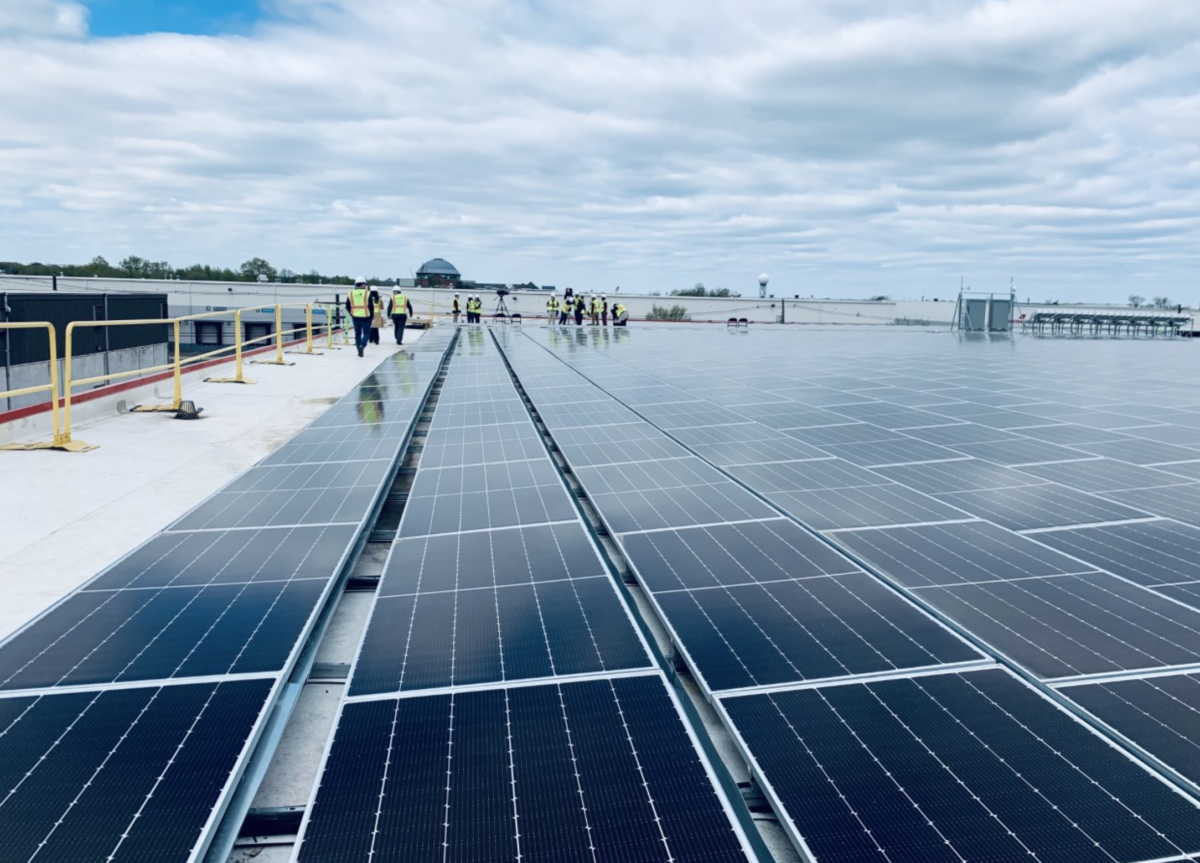
New Jersey Governor Mikie Sherrill has signed two executive orders directing state regulators to accelerate utility-scale solar, expand community solar to 3 GW and promote up to 750 MW of battery energy storage as part of an effort to contain rising electricity prices and address expected capacity shortages.
On her first day in office, New Jersey Governor Mikie Sherrill signed Executive Order No. 1 And No. 2which respectively focus on maintaining electricity prices and providing solar energy and energy storage.
Governor Sherrill issued Executive Order No. 1 to address rising electricity prices, then directed its Board of Public Utilities (BPU) to freeze or limit electricity supply increases. Sherrill said demand – which is expected to grow by 20 percent by 2030 – is outpacing supply. She then issued Executive Order No.2 to resolve the slower-growing supply.
Executive Order No.2 puts two solar programs and one energy storage program into effect within 45 days. The first solar program is the Competitive solar incentive (CSI), which sells solar energy on wholesale markets. Projects through this program have an average capacity of more than 5 MWdc.
At the same time the Community Solar Energy Program was instructed to make 3 gigawatts of solar capacity available. The program enables solar power plants with an AC capacity of up to 5 megawatts. The program’s website now shows the above message, indicating that they are preparing to register the new capacity.
No.2 then requires that an energy storage device be used via the Garden State Energy Storage Program within 45 days. Tranche 1, which was first launched in 2025, is expected to have a capacity of between 350 and 750 MW. Phase 2 of the program must start within 90 days of #2.
Finally, No. 2 directs the BPU to begin developing an energy program for a virtual power plant within 180 days. The paper notes that “merging distributed energy sources such as rooftop solar with battery storage, electric vehicles and smart home and building controls into “virtual power plants” offers an opportunity to leverage community energy to reduce peak demand by 10 to 20%.”
A report from Independent market monitor says independent system operator PJM’s massive increase in energy capacity costs – which skyrocketed from a few billion dollars just a few years ago to over $16 billion by 2026 – was almost 70% due to data centers. Issue 2 makes several comments regarding recent PJM price increases, including an expected capacity shortfall of 4.5 GW.
The PJM Network Region, which serves 65 million customers from Chicago to New Jersey, must add 16 GW of four-hour battery storage by 2032 to remain usable due to dwindling electricity supplies, according to a Brattle study.
An ACORE report showing how accelerated battery interconnection at scale could increase the accredited capacity available to PJM by almost 8 GW.
No.2 also referenced President Trump’s executive orders on energy, as well as the different construction start and completion dates (July 4, 2026 and December 31, 2027) are required to receive the investment deduction for solar energy.
New Jersey has recently made progress on a deployment program 65 MW of agrivoltaic energy.
This content is copyrighted and may not be reused. If you would like to collaborate with us and reuse some of our content, please contact: editors@pv-magazine.com.
