
Close Menu
  • News
  • Industry
  • Solar Panels
  • Commercial
  • Residential
  • Finance
  • Technology
  • Carbon Credit
  • More
    • Policy
    • Energy Storage
    • Utility
    • Cummunity
What's Hot

Fraunhofer ISE develops colored film technology for patterned solar panels

April 23, 2026

Thermoacoustic heat pumps are on the verge of commercial breakthrough – SPE

April 23, 2026

The federal court has halted Trump administration orders that hinder solar and wind energy development

April 23, 2026
Facebook X (Twitter) Instagram
Solar Energy News
Thursday, April 23
  • News
  • Industry
  • Solar Panels
  • Commercial
  • Residential
  • Finance
  • Technology
  • Carbon Credit
  • More
    • Policy
    • Energy Storage
    • Utility
    • Cummunity
Solar Energy News
Home - Solar Industry - Perovskite solar cell based on an electron-rich surface passivation layer achieves an efficiency of 23.27%
Solar Industry

Perovskite solar cell based on an electron-rich surface passivation layer achieves an efficiency of 23.27%

solarenergyBy solarenergyJuly 3, 2024No Comments3 Mins Read
Facebook Twitter Pinterest LinkedIn Tumblr Email
Share
Facebook Twitter LinkedIn Pinterest Email

Chinese in China have used two sulfone-based organic molecules known as diphenyl sulfone (DPS) and 4,4′-dimethyldiphenyl sulfone (DMPS) to passivate absorber defects in perovskite solar cells. The result is a device with a higher electron cloud density at the interface between the perovskite material and the passivation layer.

July 3, 2024 Emiliano Bellini

A group of researchers led by Zhejiang University of Technology in China has proposed using two sulfone-based organic molecules known as diphenyl sulfone (DPS) and 4,4′-dimethyldiphenyl sulfone (DMPS) to improve the performance of perovskite solar cells.

They used the molecules to improve charge distribution at the interface between the cell’s perovskite absorber and the passivation layer, which reportedly creates electron-rich systems on the perovskite surface. Using density functional theory (DFT), a quantum mechanical atomistic simulation method to calculate a wide variety of properties of virtually any kind of atomic system, they simulated the charge density distributions of the interactions of DPS and DMPS with formamidinium lead iodide (FAPbI).3) perovskite material.

In the study “Engineering an organic, electron-rich surface passivation layer for efficient and stable perovskite solar cells,” published in Cell reports natural sciencesthe scientists explained that the higher electron cloud density they found in DMPS creates a stronger bond of this material with the perovskite absorber, resulting in improved cell stability. They also stated that the electronic-rich environment provided by DPS and DMPS reduces the positive charge of lead (Pb) in the perovskite absorber, contributing to increased electron cloud density.

“These results indicate that the uncoordinated Pb2+ ions on the surface of the perovskite film were effectively passivated by the small molecules, suggesting the improved performance and stability of the cell,” the academics emphasized, noting that these results were confirmed by further analysis performed via X-ray diffraction (XRD), scanning -electron microscopy (SEM), atomic force microscopy (AFM).

See also  Technical manual for building-integrated photovoltaic

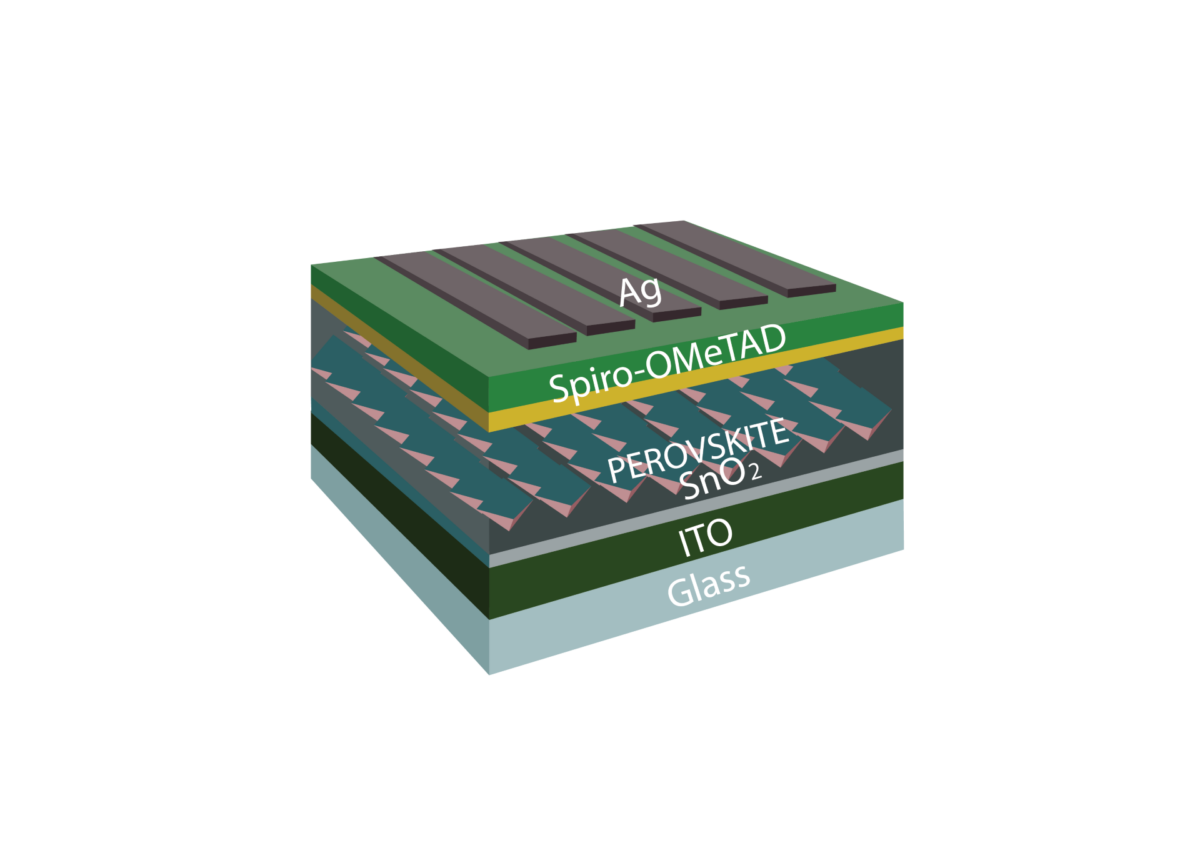
The proposed approach was also tested by constructing a physical cell treated with DMPS and consisting of a substrate made of glass and indium tin oxide (ITO), a tin oxide (SnO2) electron transport layer (ETL), the cadmium doped FAPbI3 absorber, a hole transport layer on base of Spiro-OMeTAD and a silver (Ag) metal contact. “A study on the effect of treatment concentration on device performance revealed a significant improvement in photovoltaic performance at concentrations of 1 and 3 mg ml−1 for DPS and DMPS, respectively,” the scientists said.

The cell achieved an energy conversion efficiency of 23.27%, an open-circuit voltage of 1.141 V and a short-circuit current density of 25.21 mA cm3.−2and a fill factor of 80.93%. The device was found to retain 92.5% of its original efficiency even after 1000 hours. “The efficiency of devices treated with DMPS increased from the original 21.21% to 23.27%,” the group pointed out, noting that reference devices built without DMPS and DPS treatment achieved significantly lower results.

“The surface passivation strategy using efficient organic conjugated small molecules offers a novel approach to improve the photovoltaic performance of perovskite solar cells, the researchers concluded.

Popular content

This content is copyrighted and may not be reused. If you would like to collaborate with us and reuse some of our content, please contact: editors@pv-magazine.com.

Source link

achieves based cell efficiency electronrich layer passivation perovskite solar surface
Share. Facebook Twitter Pinterest LinkedIn Tumblr Email
solarenergy
  • Website

Related Posts

Fraunhofer ISE develops colored film technology for patterned solar panels

April 23, 2026

The federal court has halted Trump administration orders that hinder solar and wind energy development

April 23, 2026

The CFO’s Guide To Nature Based Solutions

April 23, 2026
Leave A Reply Cancel Reply

Don't Miss
Finance

EU invests €3 billion in decarbonising buildings and road transport – SPE

By solarenergyFebruary 10, 20260

The ETS2 Frontloading Facility will provide €3 billion ($3.5 billion) to sectors that will be…

Increasing the voltage in cadmium telluride solar cells via a nickel oxide back buffer layer

August 5, 2024

Scientists stimulate the efficiency of the organic solar cells using polymer -switterions – PV Magazine International

September 18, 2025

CfD AR6 budget set at over £1 billion

May 3, 2024
Stay In Touch
  • Facebook
  • Twitter
  • Pinterest
  • Instagram
  • YouTube
  • Vimeo
Our Picks

Fraunhofer ISE develops colored film technology for patterned solar panels

April 23, 2026

Thermoacoustic heat pumps are on the verge of commercial breakthrough – SPE

April 23, 2026

The federal court has halted Trump administration orders that hinder solar and wind energy development

April 23, 2026

Zendure launches battery ranges for residential PV – SPE

April 23, 2026
Our Picks

Fraunhofer ISE develops colored film technology for patterned solar panels

April 23, 2026

Thermoacoustic heat pumps are on the verge of commercial breakthrough – SPE

April 23, 2026

The federal court has halted Trump administration orders that hinder solar and wind energy development

April 23, 2026
About
About

Stay updated with the latest in solar energy. Discover innovations, trends, policies, and market insights driving the future of sustainable power worldwide.

Subscribe to Updates

Get the latest creative news and updates about Solar industry directly in your inbox!

Facebook X (Twitter) Instagram Pinterest
  • Contact
  • Privacy Policy
  • Terms & Conditions
© 2026 Tsolarenergynews.co - All rights reserved.

Type above and press Enter to search. Press Esc to cancel.