

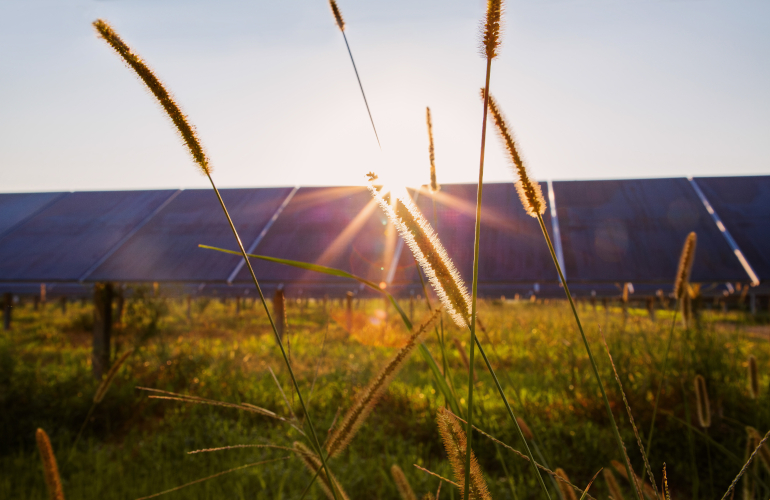
Solar energy is expanding faster than any other new energy source in the United States. According to the MERAmerica is expected to add nearly 70 GW of new solar generation capacity in 2026 and 2027, a 49% increase compared to the end of 2025. That pace is good news for decarbonization, but still raises familiar questions about how to expand responsibly. Can we build enough projects with respect for working areas, neighbors and local ecosystems? The short answer is yes. With smart design and site management, solar farms can simultaneously support agriculture and biodiversity, turning clean energy projects into conservation assets for their communities.
The dual-use model

Credit: Lightsource bp and JERA Nex
Agrivoltaic sites are managed to generate energy and support a secondary land use, such as habitat restoration or livestock grazing. These locations can provide practical benefits to project activities while improving outcomes for wildlife and nearby farms.
The Happy solar park in White County, Arkansas, is a good example of this. The 95 MW installation supplies approximately 21,000 homes with energy. It is planted with native wildflowers that provide nectar and host plants for monarch butterflies and other pollinators. During the warmer months, a local flock of sheep graze between the rows. The sheep keep vegetation under control around the racks and fences, reducing the need for mechanical mowing and returning nutrients to the soil. The result is an operating model that controls costs, supports soil health, and creates a protected patchwork of habitat within an operational energy site. Happy Solar Farm was designed from the start to show how agrivoltaic energy can work in practice in a southern agricultural landscape.
Converting projects into conservation assets

A frog found at a JERA Nex solar project in Arkansas
There is growing interest in how native vegetation under and around solar panels can improve the quality of wildlife and soil. While some studies have examined individual species or a few sites, the solar industry lacks large-scale, multi-taxa research that can distinguish the effects of site design, regional context, and vegetation management. This evidence gap is important as developers, operators, regulators, and communities seek reliable guidance on siting and management.
To help build that scientific base, the University of Arkansas has begun a survey of approximately 90 solar sites in Arkansas and neighboring states. A wide variety of mammals, birds, butterflies, amphibians and reptiles have been documented at the sites, including rare or endangered species such as the American badger, highland sandpiper, slender glass lizard, dainty box turtle and monarch butterfly. Happy Solar Farm is one of the focus locations, given its established pollinator habitat and managed sheep pasture. The study compares solar sites that use native vegetation with traditionally managed sites that rely on turf or gravel, and with representative agricultural fields that resemble pre-construction conditions.
Why Arkansas is a useful testing ground
Arkansas has abundant sunshine and extensive agricultural land that is well suited for solar energy development, especially in the Mississippi Delta region. Utility-scale projects in the state are expected to grow significantly in the coming years, meaning location decisions made now could shape outcomes for natural and working areas for decades. Research in this setting can help identify dual-use best practices that are relevant in similar agricultural regions in the United States.
Benefits beyond the fence line

Credit: Lightsource bp and JERA Nex
Pollinator-friendly solar energy can provide services that extend to neighboring farms, as many crops rely on insects and birds for pollination and pest control. Establishing native flowering species among ranges can strengthen local pollinator communities during parts of the growing season when resources are scarce, which in turn can support yields on adjacent lands. The University of Arkansas research will help quantify these landscape-scale spillovers and identify the site characteristics that most reliably produce them.
There are also benefits at the community level. Dual-use sites create seasonal jobs for grazing and habitat management, provide educational opportunities for local schools and colleges, and can enhance the visual character of projects by replacing monoculture grasses with diverse, regionally appropriate plantings. For landowners, grazing revenue and reduced maintenance disruptions can be a meaningful addition to the lease value of solar.
A blueprint for responsible scaling

A snake found at a JERA Nex solar project in Arkansas
As the industry builds the next wave of capacity, we must normalize dual-use planning from the initial site assessment. That means panel heights that accommodate vegetation and sheep, fence designs that take small wildlife into account, and O&M contracts that include biodiversity monitoring. It also means working with local researchers and conservation groups to ensure management is based on regional ecology and not just generic best practices. The partnership with the University of Arkansas is structured with just that goal in mind, so that the findings translate directly into site and management guidelines for future projects.
To support a just energy transition, we must consider the impact of renewable energy projects on biodiversity and the environment, both at local and global levels. By designing models that deliver benefits for biodiversity and soil in addition to reliable generation, we can accelerate the transition while improving the resilience of rural landscapes. That’s the promise of agrivoltaics, and with evidence-based and practical design, it’s a promise we can deliver.
 Richard Scott has spent most of his career working in the sustainable energy sector on five continents for more than twenty years. At JERA Nex, Richard is responsible for the delivery of the company’s global onshore renewable energy portfolio, both operationally and developmentally.
Prior to launching JERA Nex, Richard was Business Development Director for JERA’s offshore sustainable energy business and was closely involved in the acquisition of Parkwind, serving in an interim role as Chief Strategy Officer. Richard previously worked at SSE Renewables, including head of Business Development and operational asset management of offshore and onshore wind projects. Richard is a civil engineer by training and has lived in Singapore, the UAE, Kenya, Sierra Leone and Iraq, and currently in the UK.
