

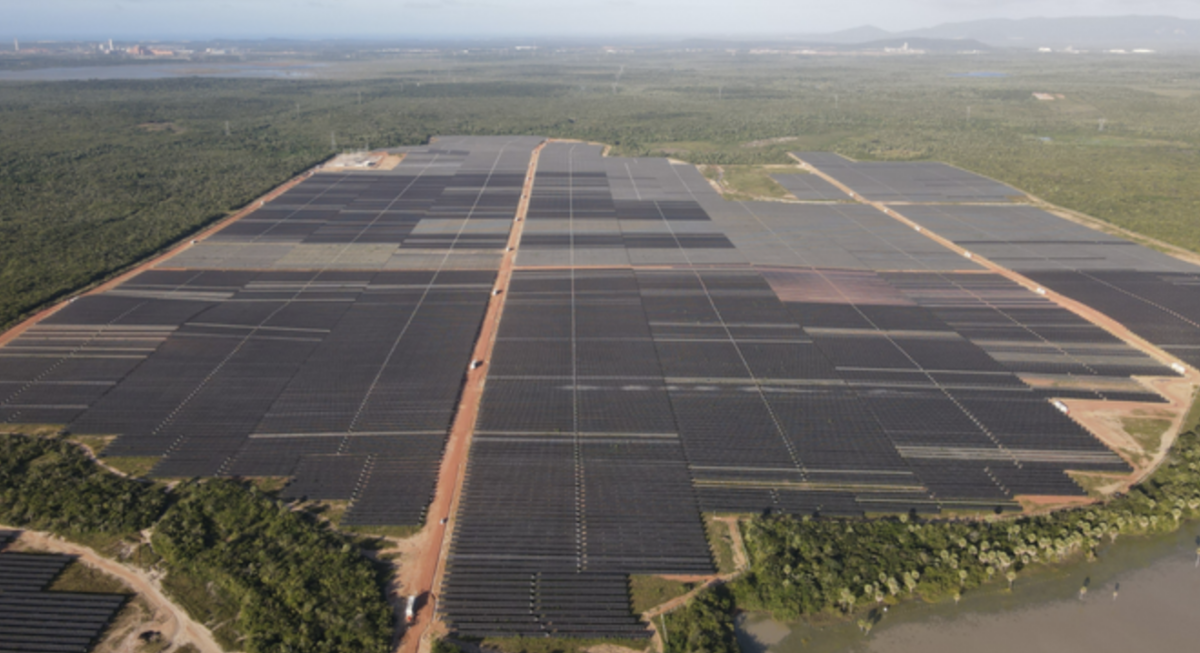
Brazil installed 2.3 GW of solar capacity in January and February, with centralized generation more than doubling while distributed growth slowed.
Brazil added 2,331 MW of solar capacity in January and February 2026, with growth driven by utility-scale installations despite a slowdown in distributed generation.
According to data from the National Electric Energy Agency (Aneel), distributed generation accounted for 1,145 MW of new capacity in the two-month period, while centralized generation contributed 1,186 MW.
Distributed solar additions fell 37% compared to the same period in 2025. In contrast, centralized solar capacity has more than doubled year over year.
In the first two months of 2025, Brazil added 2,392 MW of solar capacity, of which 1,825 MW was in distributed generation and 567 MW in centralized installations.
Within distributed generation, the residential segment was the leader in new connections at the beginning of 2026 with 739 MW, followed by commercial installations with 220 MW and national projects with 93 MW. During the same period of 2025, residential installations reached 1 GW, while the commercial and rural segments added 468 MW and 206 MW, respectively.
Aneel noted that recent connection data may still need to be revised.
Brazil’s cumulative installed PV capacity now stands at 68 GW, including 46 GW of distributed generation and 22.3 GW of centralized capacity.
Brazil’s Photovoltaic Solar Energy Association (Absolar) expects solar additions to fall by 7% in 2026 compared to 2025, with total new capacity projected at 10.6 GW, compared to 11.4 GW last year.
Aneel predicts that centralized solar power generation will add 4,954 MW in 2026, up from the 2,816 MW installed in 2025.
This content is copyrighted and may not be reused. If you would like to collaborate with us and reuse some of our content, please contact: editors@pv-magazine.com.
