
Close Menu
  • News
  • Industry
  • Solar Panels
  • Commercial
  • Residential
  • Finance
  • Technology
  • Carbon Credit
  • More
    • Policy
    • Energy Storage
    • Utility
    • Cummunity
What's Hot

Dutch solar owners asked to switch off during peak periods to ease the distribution crisis

June 7, 2026

The hydrogen flow: Toyota demonstrates its racing prototype on liquid hydrogen

June 7, 2026

Era of electrification exposing Australia’s weakest link

June 6, 2026
Facebook X (Twitter) Instagram
Solar Energy News
Sunday, June 7
  • News
  • Industry
  • Solar Panels
  • Commercial
  • Residential
  • Finance
  • Technology
  • Carbon Credit
  • More
    • Policy
    • Energy Storage
    • Utility
    • Cummunity
Solar Energy News
Home - Technology - High-temperature sodium-zinc batteries reveal causes of rapid capacity loss – SPE
Technology

High-temperature sodium-zinc batteries reveal causes of rapid capacity loss – SPE

solarenergyBy solarenergyFebruary 23, 2026No Comments2 Mins Read
Facebook Twitter Pinterest LinkedIn Tumblr Email
Share
Facebook Twitter LinkedIn Pinterest Email

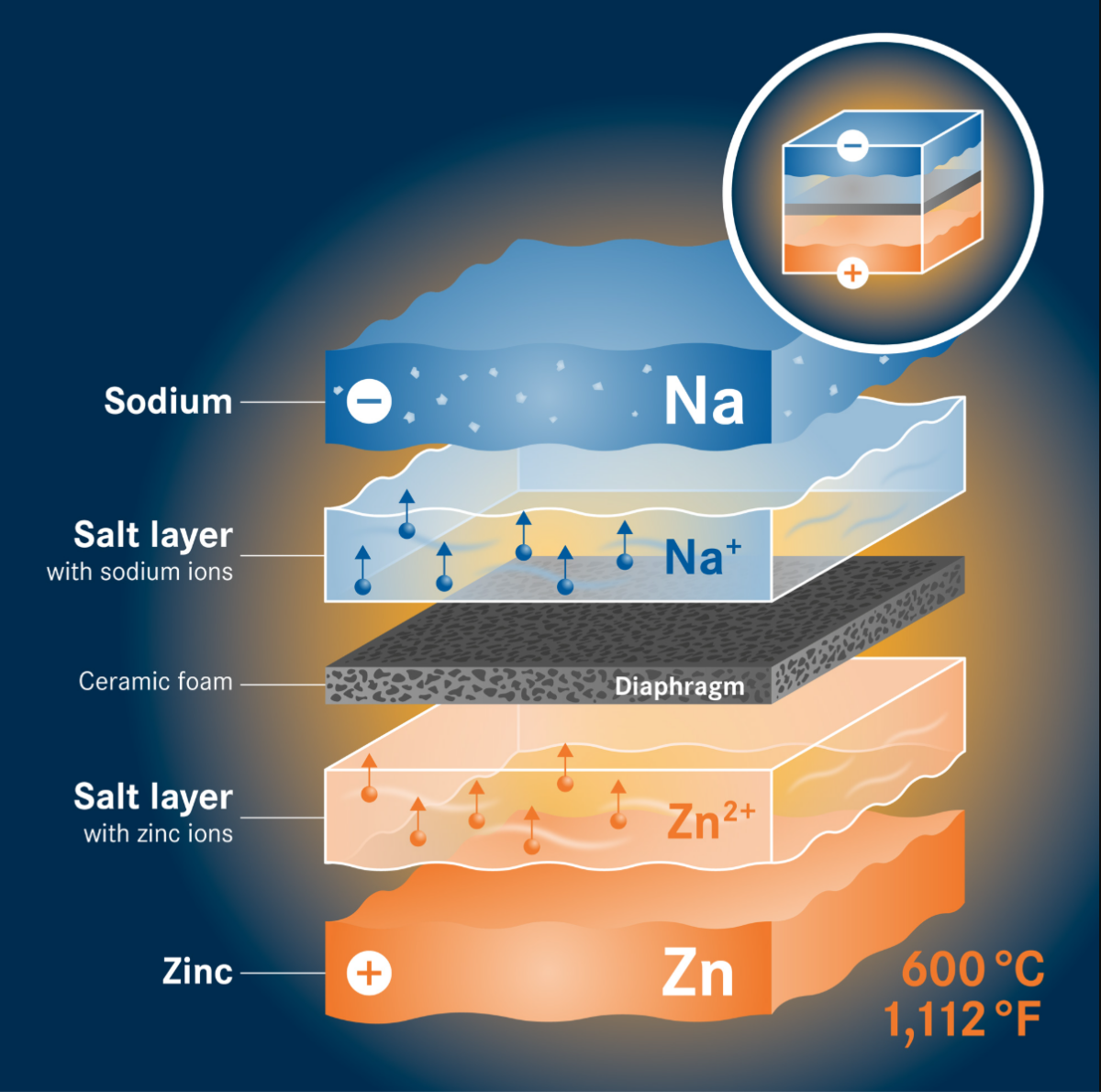
Researchers at Helmholtz-Zentrum Dresden-Rossendorf (HZDR) have used operando X-ray imaging to reveal why sodium-zinc molten salt batteries, which operate at around 600 C and hold promise for stationary energy storage due to cheap, abundant materials, experience persistent capacity loss.

February 23, 2026
Jochen Siemer

By ESS news

A research team from HZDR in Germany has directly observed previously hidden aging processes in sodium-zinc-molten-salt batteries for the first time, using operando X-ray radiography to image the cells while they were actively working at around 600 C.

The technology has long been considered promising for stationary energy storage, given its low cost and availability of raw materials, but has so far failed to achieve the stability needed for real-world implementation.

The extreme operating temperature is in a sense a plus, because the metals are liquid at those temperatures and can be transported quickly through the cell. But those same dynamics make the systems difficult to control, and so far there is “no clear understanding of why the cells lose so much of their performance during operation,” according to HZDR researcher Norbert Weber, who coordinates the EU project SOLSTICE, under which various sodium-zinc storage concepts are being systematically investigated.

To read further, visit our ESS news website.

This content is copyrighted and may not be reused. If you would like to collaborate with us and reuse some of our content, please contact: editors@pv-magazine.com.

Popular content
Source link

See also  Novel Switched Condenser Boosting Inverter for PV - use - PV Magazine International
batteries capacity hightemperature loss Rapid reveal sodiumzinc SPE
Share. Facebook Twitter Pinterest LinkedIn Tumblr Email
solarenergy
  • Website

Related Posts

Mexico exceeds 5 GW of distributed solar capacity

June 4, 2026

Rooftop PV ensures that South Africa has no loss of load for a year

June 2, 2026

France’s cumulative solar capacity is 33 GW

June 1, 2026
Leave A Reply Cancel Reply

Don't Miss
Energy Storage

Sales of European residential heat pumps will increase by 2025 – SPE

By solarenergyMarch 23, 20260

Analyzes in 16 European countries show that the number of sales of residential heat pumps…

ILI Group submits a planning application for 1.5GW PHES in Scotland

July 13, 2024

Indian Startup Testing 15%-efficient Perovskite Solar Modules-PV Magazine International

March 14, 2025

China’s module market eyes 2026 export discount signals as polysilicon consolidation platform company registered

December 12, 2025
Stay In Touch
  • Facebook
  • Twitter
  • Pinterest
  • Instagram
  • YouTube
  • Vimeo
Our Picks

Dutch solar owners asked to switch off during peak periods to ease the distribution crisis

June 7, 2026

The hydrogen flow: Toyota demonstrates its racing prototype on liquid hydrogen

June 7, 2026

Era of electrification exposing Australia’s weakest link

June 6, 2026

‘Come out from behind your screen, our industry is ultimately about people’

June 6, 2026
Our Picks

Dutch solar owners asked to switch off during peak periods to ease the distribution crisis

June 7, 2026

The hydrogen flow: Toyota demonstrates its racing prototype on liquid hydrogen

June 7, 2026

Era of electrification exposing Australia’s weakest link

June 6, 2026
About
About

Stay updated with the latest in solar energy. Discover innovations, trends, policies, and market insights driving the future of sustainable power worldwide.

Subscribe to Updates

Get the latest creative news and updates about Solar industry directly in your inbox!

Facebook X (Twitter) Instagram Pinterest
  • Contact
  • Privacy Policy
  • Terms & Conditions
© 2026 Tsolarenergynews.co - All rights reserved.

Type above and press Enter to search. Press Esc to cancel.