

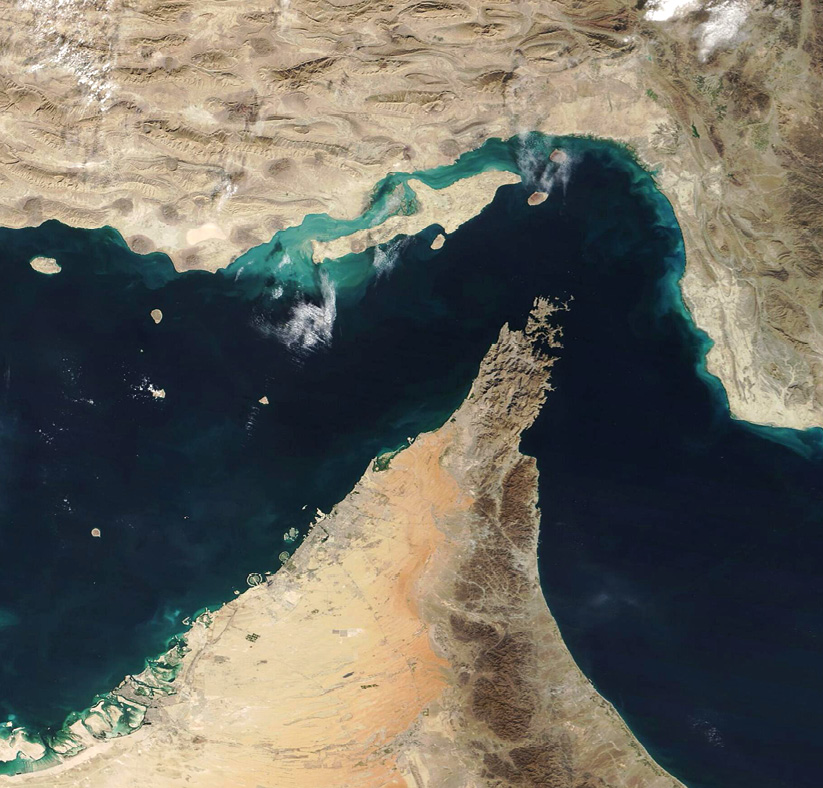
For now, the US-Israeli conflict with Iran is unlikely to have a material impact on solar energy production projects in the Middle East, as most of these investments are still in the early stages. OPIS analyst Brian Ng sees the most immediate risk in logistics. If disruptions continue, shipments of solar products to the region could be delayed and export prices could become volatile.
From the magazine
The Middle East remains a key destination for Chinese module exports and an increasingly important market for new investments in photovoltaic manufacturing. Recent clashes have so far had limited impact on China’s downstream trade in modules and cells, as the situation is still evolving and the broader implications for the entire supply chain remain uncertain.
China’s solar shipments to the Middle East in 2025 consisted mainly of cells and modules, totaling 1.2 GW and 25.9 GW respectively, while wafer shipments were low at 10 MW, according to global think tank Ember.
The clearest short-term impact will be on container shipping, the main transportation route for solar energy products into the region. Short-term delivery schedules have become less predictable, increasing the risk of rerouting and putting pressure on logistics. Some cargoes originally intended for the Middle East have been diverted to other markets, including Southeast Asia and South Asia, as exporters reassess supply risks.
For the time being, deliveries to the Middle East appear to have been postponed rather than cancelled. Several solar energy projects in Saudi Arabia, Oman and the United Arab Emirates will come online this year, with the module supply already allocated. However, some short-term shipments may need to be rerouted and may experience booking restrictions or conflict-related surcharges depending on how the situation evolves.
To reduce shipping risks, more cargo is being moved around the Cape of Good Hope, reducing dependence on the Suez Canal and the Red Sea Corridor. While this has helped maintain supply flows, longer journey times have limited vessel capacity, making schedules less predictable and increasing shipping costs.
War risk conditions for travel to the Gulf region have been tightened as insurers reassess exposure, which could increase shipping costs to the region if tensions persist. In some cases, standard war risks coverage is being withdrawn, with reintroduction only possible through buyback arrangements at higher costs and lower liability limits.
Despite the logistical uncertainty, module pricing has had little impact so far, as Middle Eastern buyers typically secure supply one to two years in advance. The longer contract cycle has insulated price talks from recent spot volatility, making it more likely that buyers will delay new tenders rather than revisit existing deals.
OPIS estimated the FOB China forward curve price for Q1 2027 at $0.125/Wp on March 10, with indications ranging from $0.120/Wp to $0.130/Wp.
Impact of investments
According to market sources and company publications, at least fifteen photovoltaic manufacturing projects have been announced or implemented in the Middle East since 2023. These manufacturing projects span the entire value chain, from polysilicon to wafers, cells and modules, and are located in markets such as the UAE, Saudi Arabia, Oman and Egypt.
One newly commissioned polysilicon project in the region (see pp. 62-64) was scheduled to begin trial deliveries in March, with initial customer feedback expected to guide subsequent production adjustments and price negotiations. However, that process may be delayed if logistical conditions deteriorate.
For the time being, the immediate operational impact appears limited. Newly started factories are still in the pilot phase, with delivery schedules typically more flexible and some manufacturers may also maintain sufficient raw material inventories to deal with short-term disruptions. The biggest risk lies in a prolonged disruption scenario, where extensive logistics restrictions could delay raw material purchases, increase freight costs and increase price volatility.
In the long term, the greater risk may lie with projects that are still under construction or in the planning stages. Prolonged disruptions can delay implementation times and negatively impact investor confidence, especially for projects still seeking financing. Currently, some wafer and cell projects in the region are believed to be in a sensitive fundraising phase, leaving them more exposed to uncertainty.
Geopolitical tensions alone are unlikely to change the long-term trajectory of solar energy production in the region, as demand growth in the photovoltaic sector remains the underlying driving force. At the same time, firmer conventional energy prices are having a mixed effect on the solar sector. While they increase fuel and freight costs, they also strengthen the relative economics of solar projects and support project revenues.
The short-term impact appears manageable, but longer-term prospects will depend on whether the conflict leads to more persistent concerns about regional stability, logistics and energy security.
About the author
 Brian Ng is a senior analyst on the APAC editorial team at OPIS, a Dow Jones company. He covers market pricing, news analysis, policy developments and research across the solar supply chain, with a focus on Asia’s downstream segments, including solar cells and modules.
The views and opinions expressed in this article are those of the author and do not necessarily reflect those of the author pv magazine.
This content is copyrighted and may not be reused. If you would like to collaborate with us and reuse some of our content, please contact: editors@pv-magazine.com.
Popular content

