

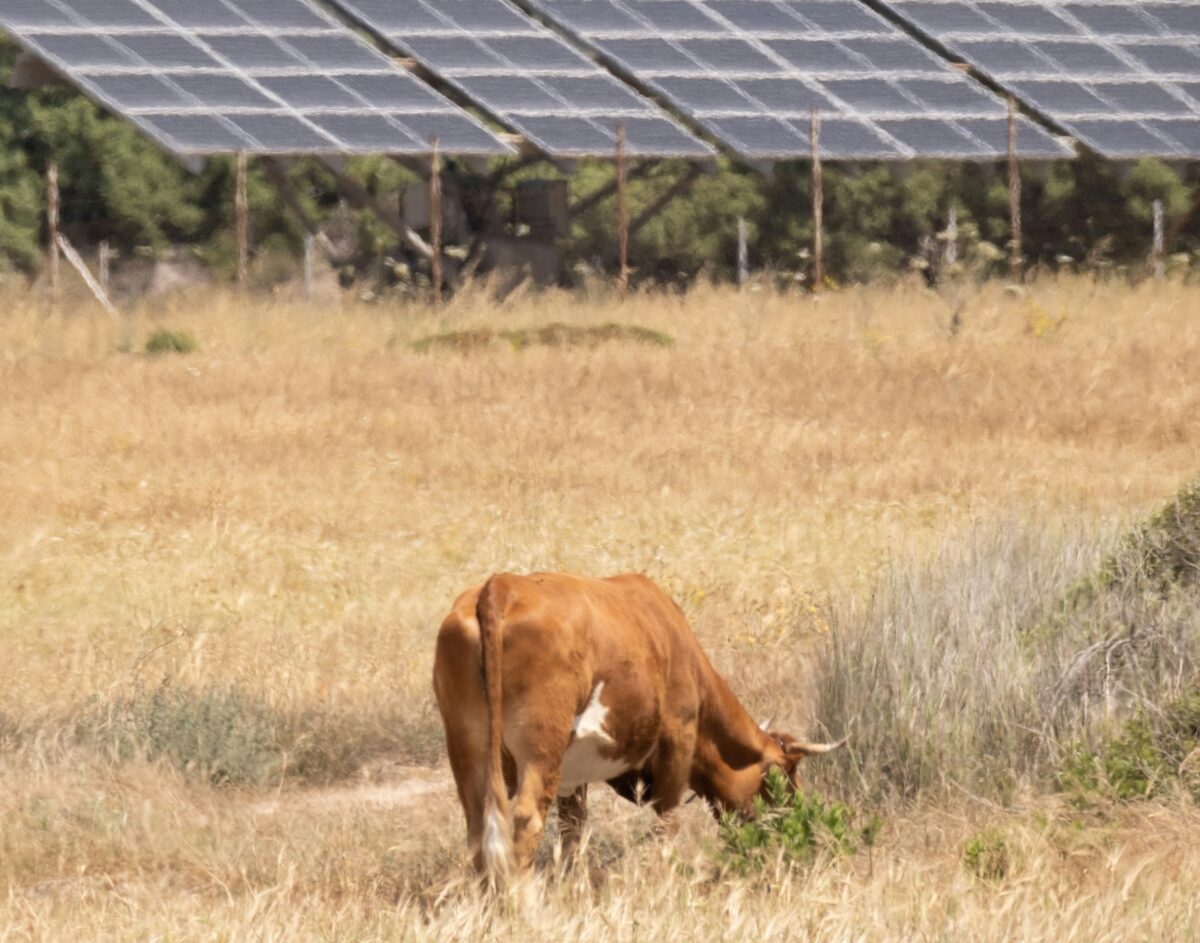
Researchers from the University of Rhode Island examined why citizens who expressed pro-solar sentiments voted against the development of a solar energy project in a 2019 municipal referendum. Their analysis found that land use concerns far outweigh concerns about proximity.
Land use concerns outweigh concerns about proximity when it comes to local public support for new solar developments, new research suggests.
A research team from the University of Rhode Island used the example of a 2019 municipal referendum on a utility-scale solar proposal in the city of North Kingstown, Rhode Island, to understand why citizens with pro-solar attitudes voted against the proposal. Their findings are presented in the research paper “Social divide at the ballot box: Using a municipal referendum to understand why overall support for solar energy is decliningavailable in the magazine Energy research and social sciences.”
The newspaper says the referendum came at a time when Rhode Island “a few years deep into grappling with the realities of utility-scale solar development.”
“The deployment became highly controversial because most of the proposed and developed solar panels were located on forest and agricultural land, resulting in a loss of ecosystem services and rural character,” the paper adds. “In many ways, North Kingstown can be seen as a microcosm of a larger debate, because location patterns and land use conflicts are similar elsewhere in the United States and around the world.”
To identify the existence of an individual support gap, defined as having a pro-solar attitude but voting no in the referendum, the research team developed and administered an exit poll survey at voting locations, asking voters about their referendum vote, attitudes toward solar energy in general and standard demographic data.
Corey Lang, professor of environmental and natural resource economics at the University of Rhode Island and corresponding author of the report, said pv magazine that, to the team’s knowledge, this is the first paper to quantitatively assess the social divide at the individual level.
Although the referendum passed relatively easily, with 66.5% approval, researchers found that among voters with pro-solar attitudes, 28.9% voted no, thus showing an individual support gap.
“The main drivers of this behavior, compared to voters who support solar energy in general and in this specific project, are less trust in government, disbelief in anthropogenic climate change and only weakly positive attitudes toward solar energy,” Lang explained.
“While this particular referendum passed, pro-solar attitudes are the norm in North Kingstown,” the research article adds. “However, if you think of other locations with less positive attitudes toward solar energy, it is easy to imagine how a 29% drop in approval could lead to a failed proposal.”
The team’s exit poll also included a survey experiment on two hypothetical solar projects – one installation in a nearby city covering 20 hectares of forested land and another proposing rooftop arrays in North Kingstown on the roofs of schools and municipal buildings – to determine how land use and proximity to the array affect support levels.
“Our results suggest that concerns about land use and deforestation far outweigh concerns about proximity, suggesting that qualified support is a two to three times greater determinant of the support gap behavior than self-interest,” Lang said.
Lang added that while the specific quantitative findings of this study may not apply to every proposed solar project, the general findings would, pointing to other studies that confirm people’s concerns about deforestation and land use change.
“The support gap will always be there, so it will impact every project,” he explains. “It will always be there, because supporting solar energy in general is very easy because it is abstract. As soon as a project takes on specific characteristics, people will start to object. That alone creates support.”
Lang told it too pv magazine that two key findings stand out in minimizing the support gap.
“First, trust must be built with stakeholders and residents,” he said. “Second, select locations that do not require deforestation. Both factors significantly increase support and reduce the size of the support gap.”
This content is copyrighted and may not be reused. If you would like to collaborate with us and reuse some of our content, please contact: editors@pv-magazine.com.
