

Researchers in the UK have found that, when used correctly, thermostatic radiator valves can reduce energy consumption for space heating with air source heat pumps by 6 to 8% without affecting system efficiency. TRVs should be used carefully in well-designed, balanced systems with at least one open flow path because they serve primarily as a secondary aid to room-level comfort control and not as a substitute for good heat pump design and operation at low supply temperatures.
Researchers from the University of Salford in the UK have investigated how thermostatic radiator valves (TRVs) could improve the performance of air source heat pumps (ASHPs) and found that these devices can reduce ASHP space heating energy consumption by 6-8% without reducing the efficiency of appliances and systems.
A TRV is a device usually fitted to radiators that automatically controls the room temperature by adjusting how much hot water flows through the radiator. TRVs can be used with heat pumps, but they must be applied carefully. Heat pumps work best with a steady, continuous flow of water at lower temperatures, so closing too many TRVs at once can reduce efficiency. To prevent this, at least one radiator must be left open or a bypass valve must be installed.
“Unlike gas central heating systems, TRVs are often omitted from ASHP installations due to concerns that they may reduce system efficiency and increase energy consumption,” the scientists explain. “However, the open circuit design is dependent on accurate sizing calculations and the use of an appropriate weather compensation curve, neither of which can be guaranteed. In addition, the open circuit design limits occupant control and can lead to overheating in rooms with uncontrolled heat gains.”
The research team conducted a series of tests to evaluate how adjusting room temperature with TRVs affects indoor conditions, ASHP performance, and overall space heating energy consumption.
The tests took place in a life-size replica of a Victorian house with an end terrace, built in a controlled climate chamber. The setup allows accurate simulation of weather conditions and occupant behavior while using a conventional radiator-based heating system powered by a gas boiler or an ASHP.
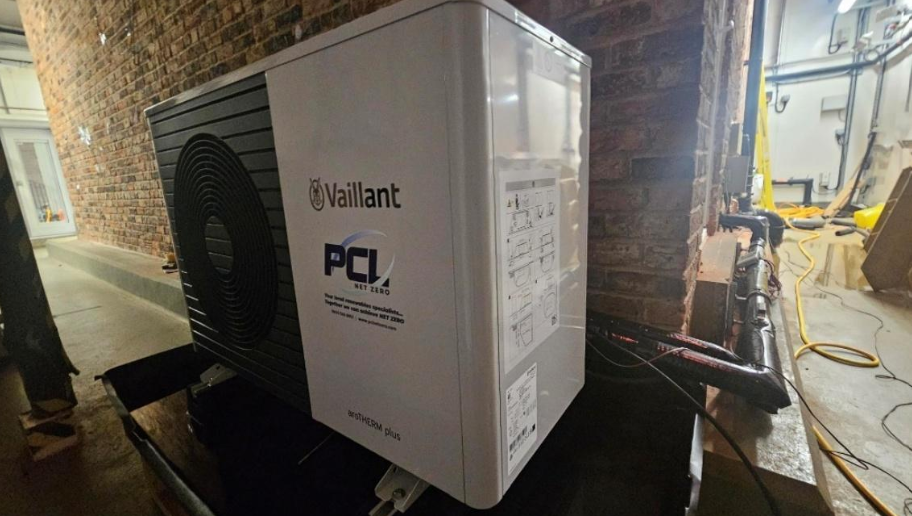
The system was sized with a design temperature of −3 C externally and 21 C internally to ensure comfort and simplify modeling. To avoid oversizing, the ASHP and radiators were based on measured fabric performance rather than standard assumptions. This resulted in the choice of a Vaillant aroTHERM plus heat pump system of 5 kW, with a total system flow rate of 0.86 m³/h, distributed among the rooms based on heat loss.
Radiators are designed for a supply temperature of 45 C, balancing functionality and performance, with the total capacity slightly exceeding the calculated demand. Slight oversizing occurred in some rooms due to availability and planning errors, but the total system capacity was only 4% above requirements. Each radiator was equipped with traditional or smart TRVs, including models of Danfoss And Schneider Electricsupported by room thermostats and a central hub. Additional flow control valves are installed to balance the system and ensure proper operation.
A pre-assembled hot water boiler (DHW) from Vaillant was installed to represent a typical ASHP setup, but hot water testing was excluded due to repeatability issues. The system included a bypass valve and a volume regulator to maintain flow. System balancing was performed at a constant room temperature of 4.5 C to assess flow control and system performance. Flow control valves (FRVs) were initially set using design calculations and then refined using flow meter readings until a stable, nearly uniform internal temperature was achieved.
Overall, the tests showed that the ASHP current at the system level changed only slightly, but that the local radiator currents varied significantly depending on the control strategy. These current shifts also affected the downstream behavior in temperature differences and power throughout the system.
Furthermore, the tests have shown that TRV-based temperature controls reduce ASHP space heating energy consumption by 6 to 8% without affecting heat pump efficiency. The savings closely matched the reduction in the whole house temperature difference between inside and outside. Traditional TRVs behaved like analog controls, while smart TRVs exhibited on/off digital behavior, but neither harmed system efficiency.
Using TRV was also found to reduce temperatures in trimmed zones and shift heat demand to other rooms, increasing power and output elsewhere in the system. This redistribution can compensate for some local effects, but may require careful balancing or system adjustments.
“People with ASHP systems should be made aware that TRVs should be used as a secondary measure to reduce internal temperatures,” the scientists emphasized. “To ensure the most efficient ASHP operation, the first action should be to reduce the supply temperature until the worst performing room reaches a comfortable temperature. TRVs should then be used to reduce the temperature in other rooms.”
They concluded that TRVs can be a useful secondary tool for comfort control in ASHP systems, but that they should not replace proper system sizing, low supply temperature design, and hydraulic balancing for optimal efficiency.
The test results were presented in the study “University of Salford & BEAMA TRV Energy House Report”, published on the university’s website.
This content is copyrighted and may not be reused. If you would like to collaborate with us and reuse some of our content, please contact: editors@pv-magazine.com.
